Bring us in at RIBA Stage 2.
Not as the PV sub-contractor at Stage 5. As the design and build partner who already knows which modules laminate to which colour, which vertical arrays unlock which grid connections, and which BIPV promises don't survive first winter.
Early thought partner
We come in when the massing is still fluid. Roof pitch, façade rhythm, fenestration, grid entry, every one is a PV decision, and every one is cheaper to make now than at Stage 4.
Design & build
We're not just installers. We hold the technical specification with you, run the DNO conversation, size the storage, and take single-point responsibility for the finished system.
Premium install + O&M
Global-quality product, locally installed to a standard your client will still thank you for in year fifteen. Ongoing O&M is included in the relationship, not sold on afterwards.
PV is a material now, not a bolt-on.
We've spent the last year at Intersolar and on European factory floors so you don't have to. Below is a sample of the product lines we're tracking for UK projects.
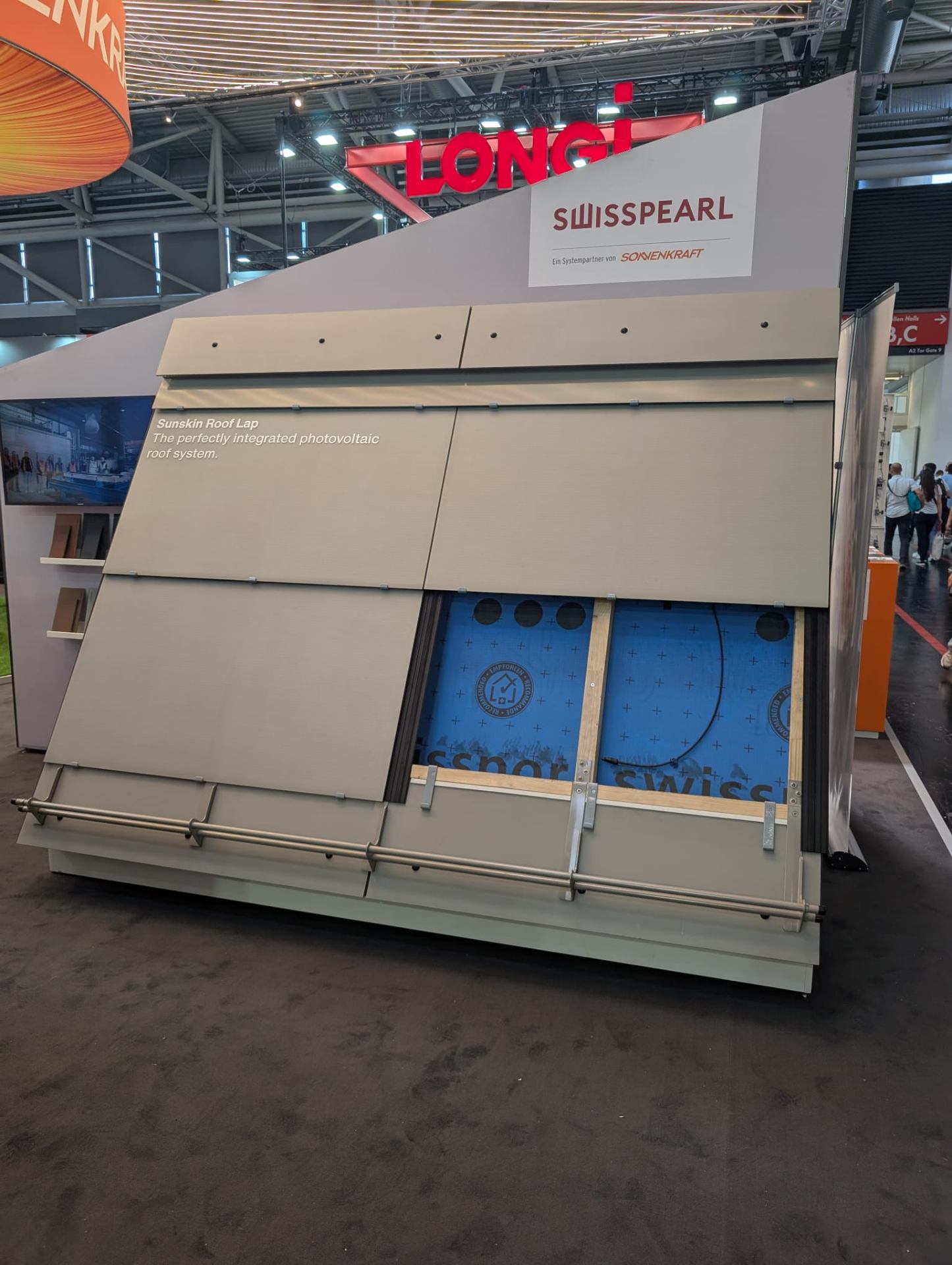
Fibre-cement roof lap with laminated PV, a fully-integrated Swiss roof system delivered to us direct through Thomas Wedde's Sonnenkraft team. No UK middleman markup.
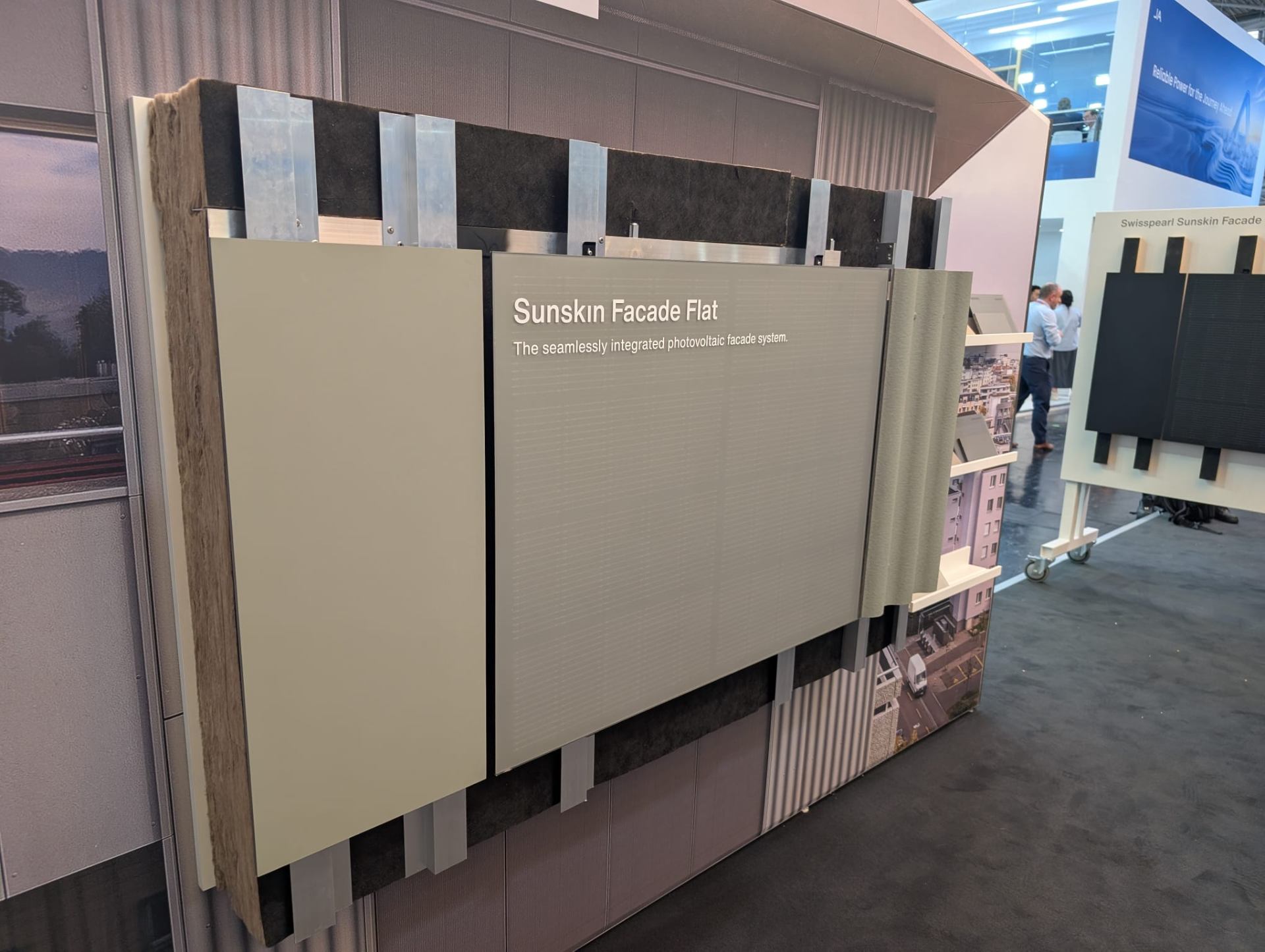
Seamless photovoltaic façade cladding, the same fibre-cement quality as the roof system, wrapped down the walls. For architects who want power without a visible array.
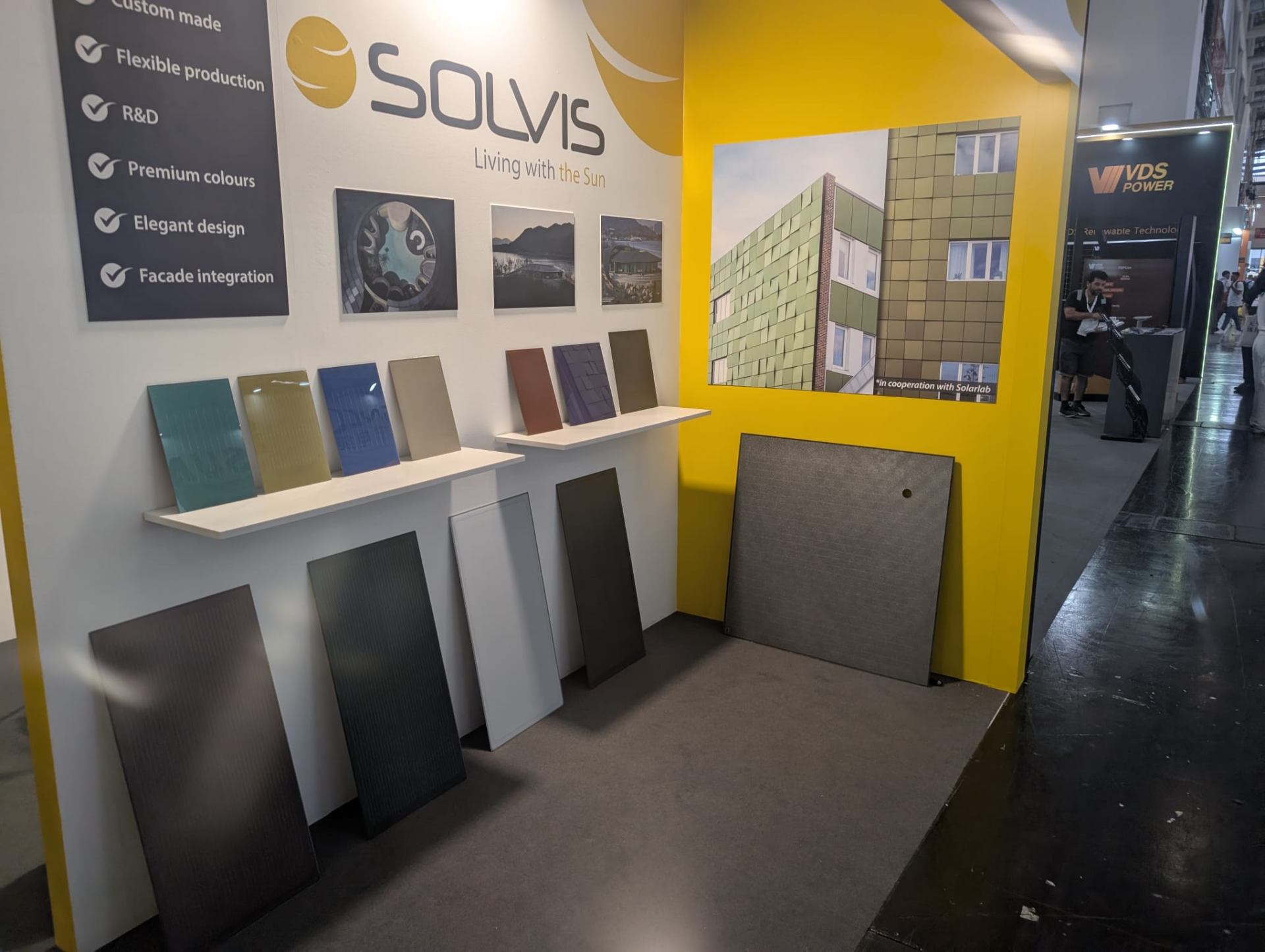
Custom colours, custom sizes, custom textures. European production, small-batch friendly, R&D team who'll answer specifier questions directly.
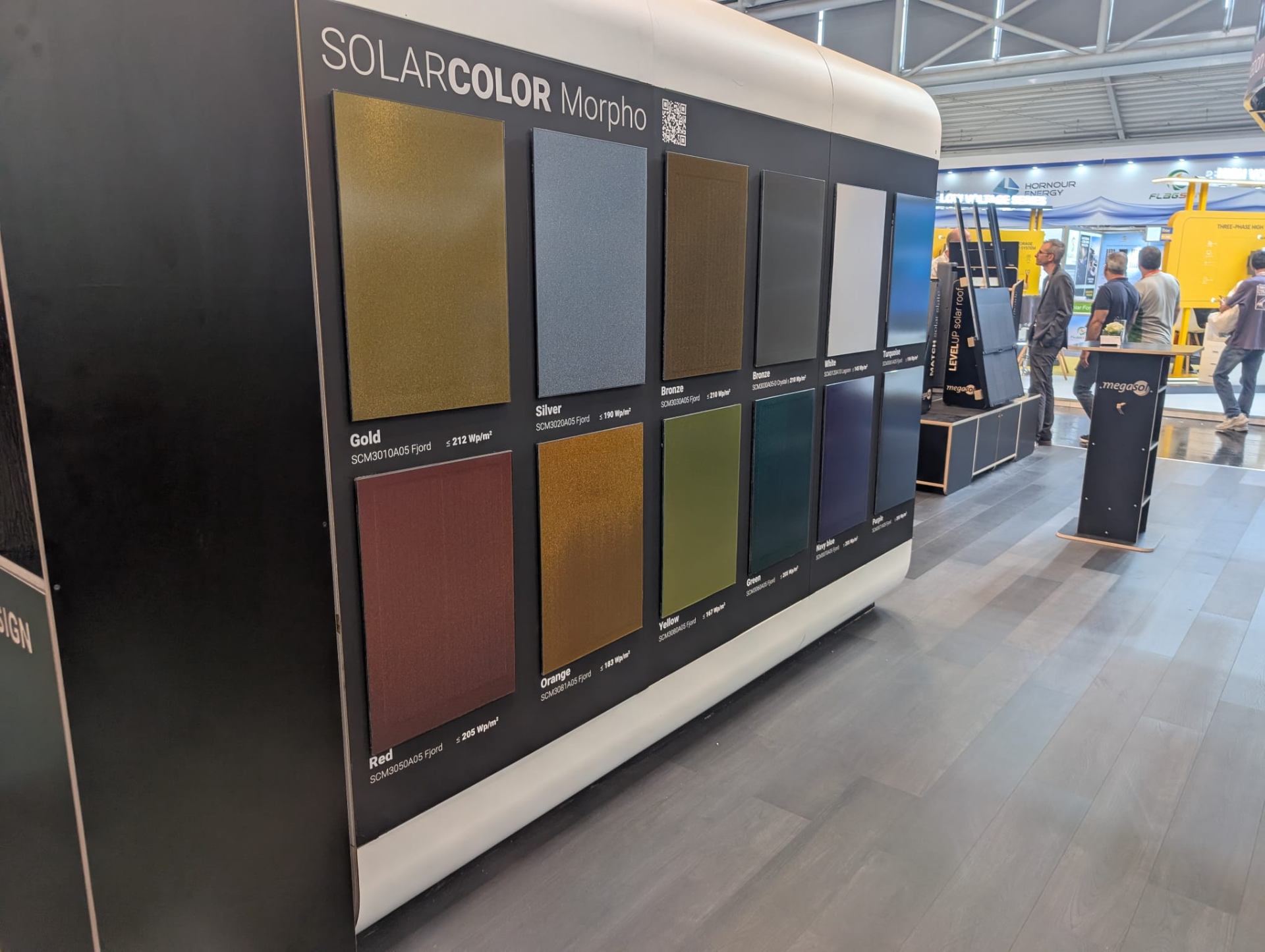
Ten stock colours from Gold to Turquoise, 167–212 Wp/m². Swiss-made, warranty that outlives the mortgage.
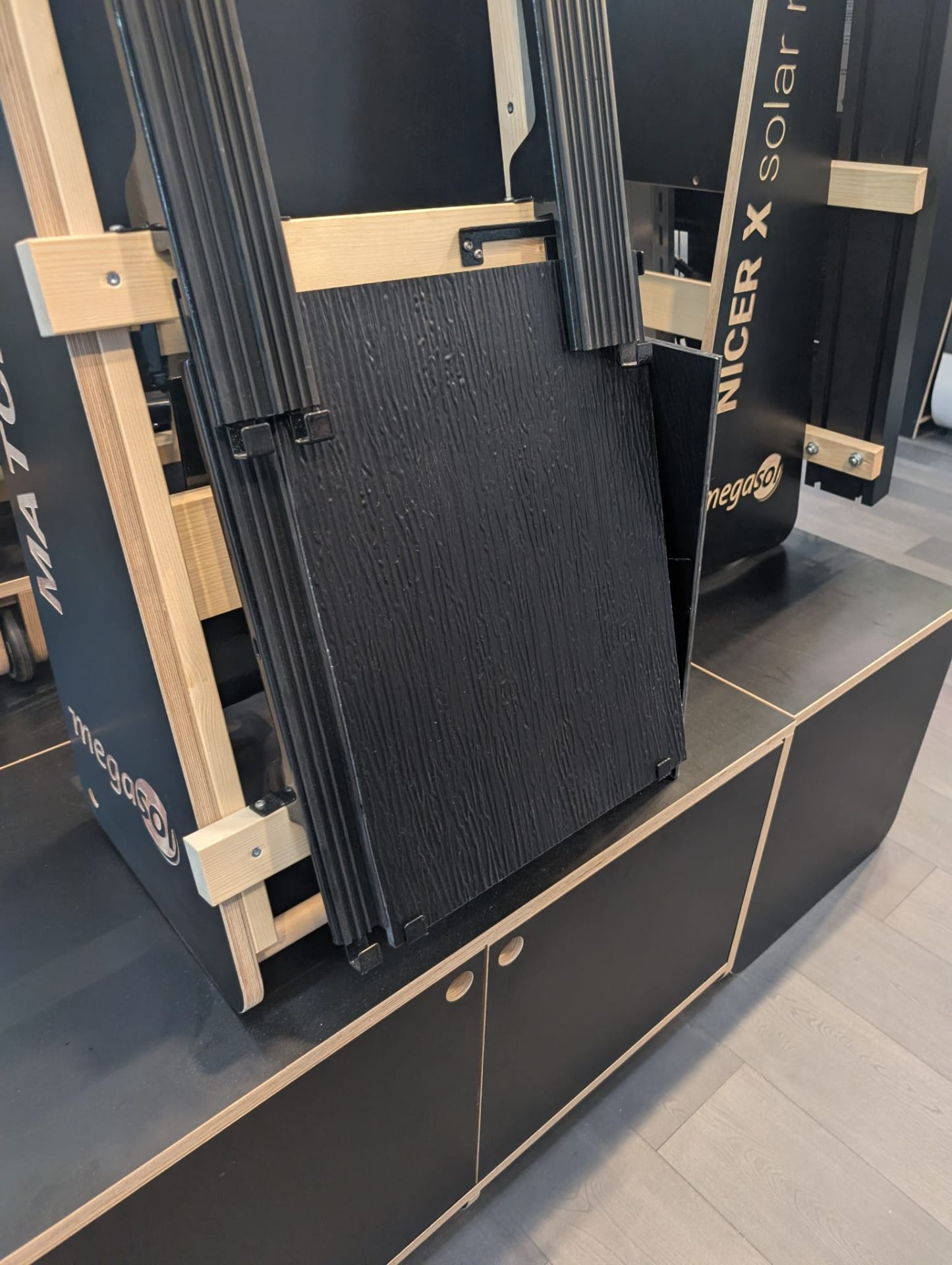
Textured black slate look, integrates cleanly with heritage roofscapes where a rectangular array is refused.
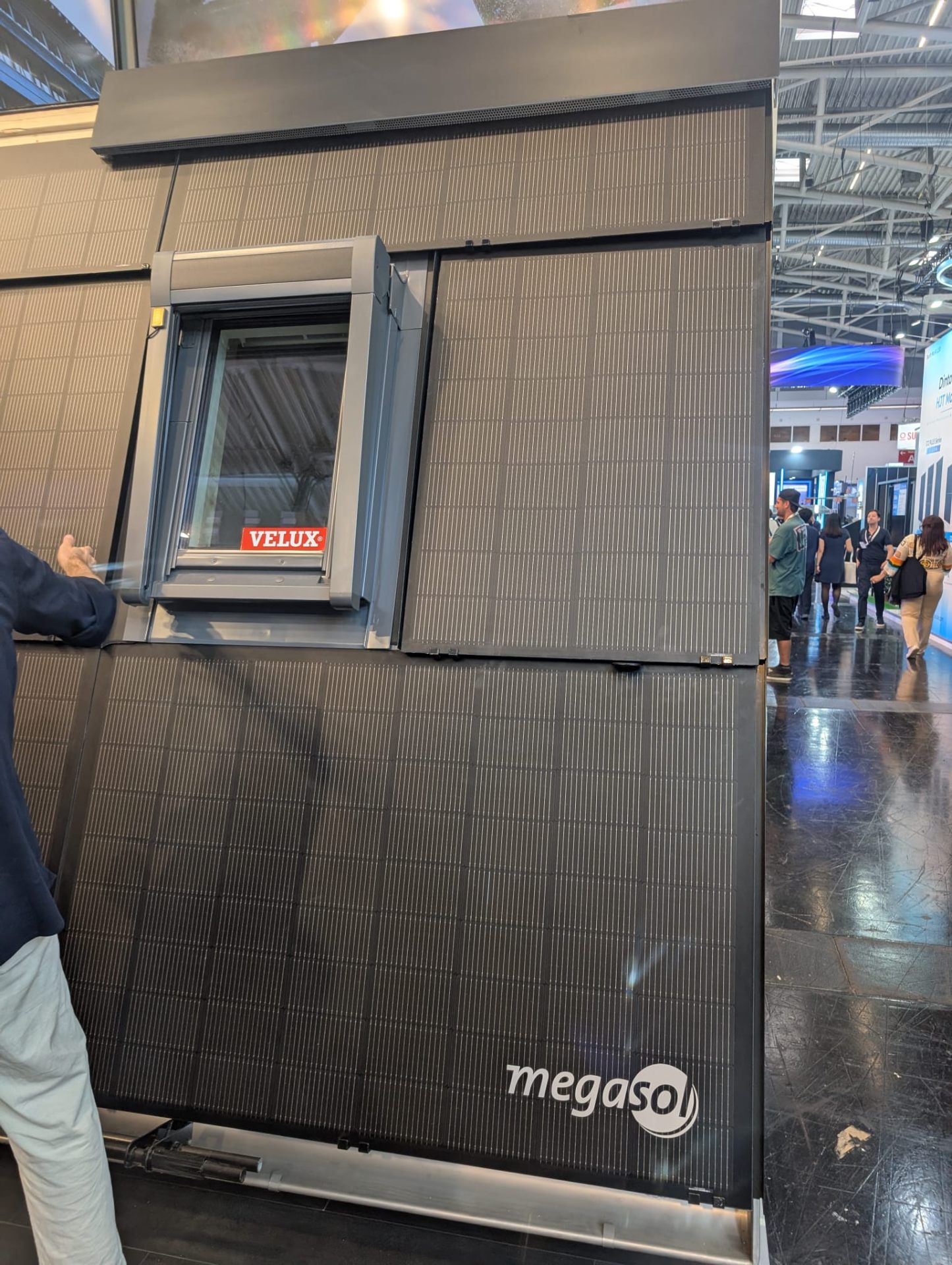
In-roof mounting cut cleanly around roof windows, the flush-integrated detail that most UK installers still treat as a special case, and Alpine roofers have been detailing for years.
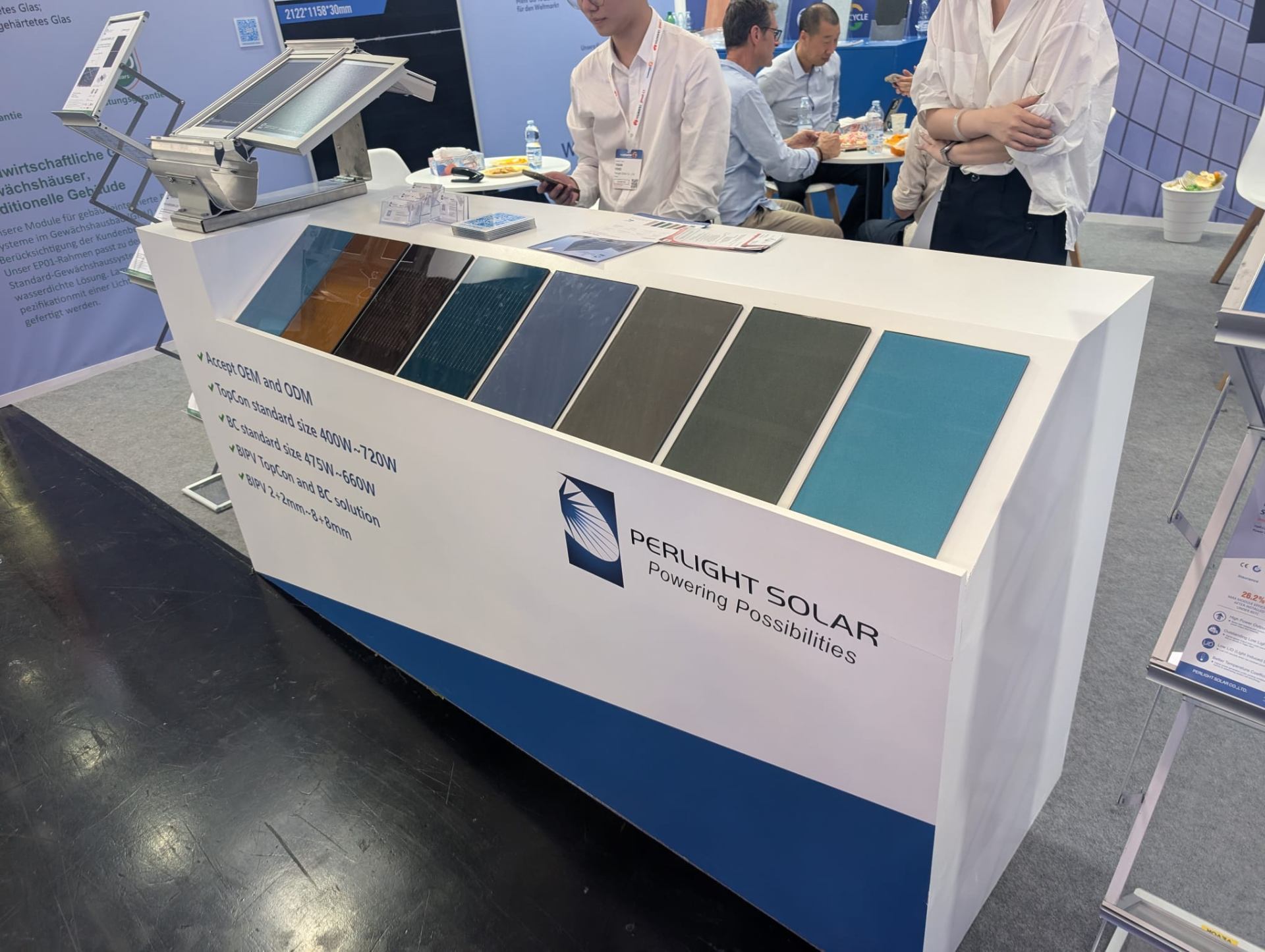
Direct-from-manufacturer coloured modules, 400–720W standard, 475–660W BIPV. For projects that need spec, not a stock SKU.
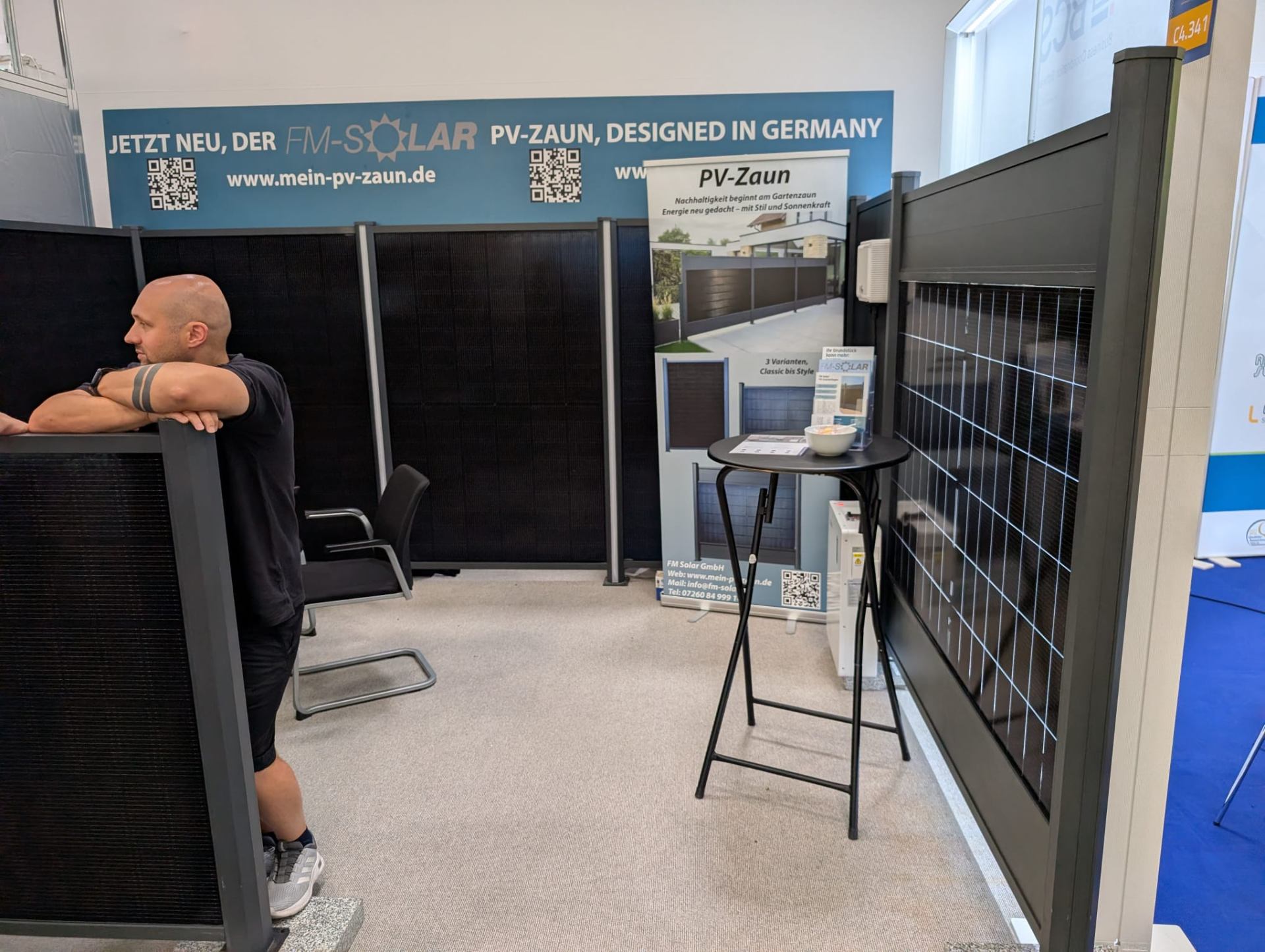
Solar fence panels for perimeters where roof and land are both spoken for, car parks, industrial estates, security lines.
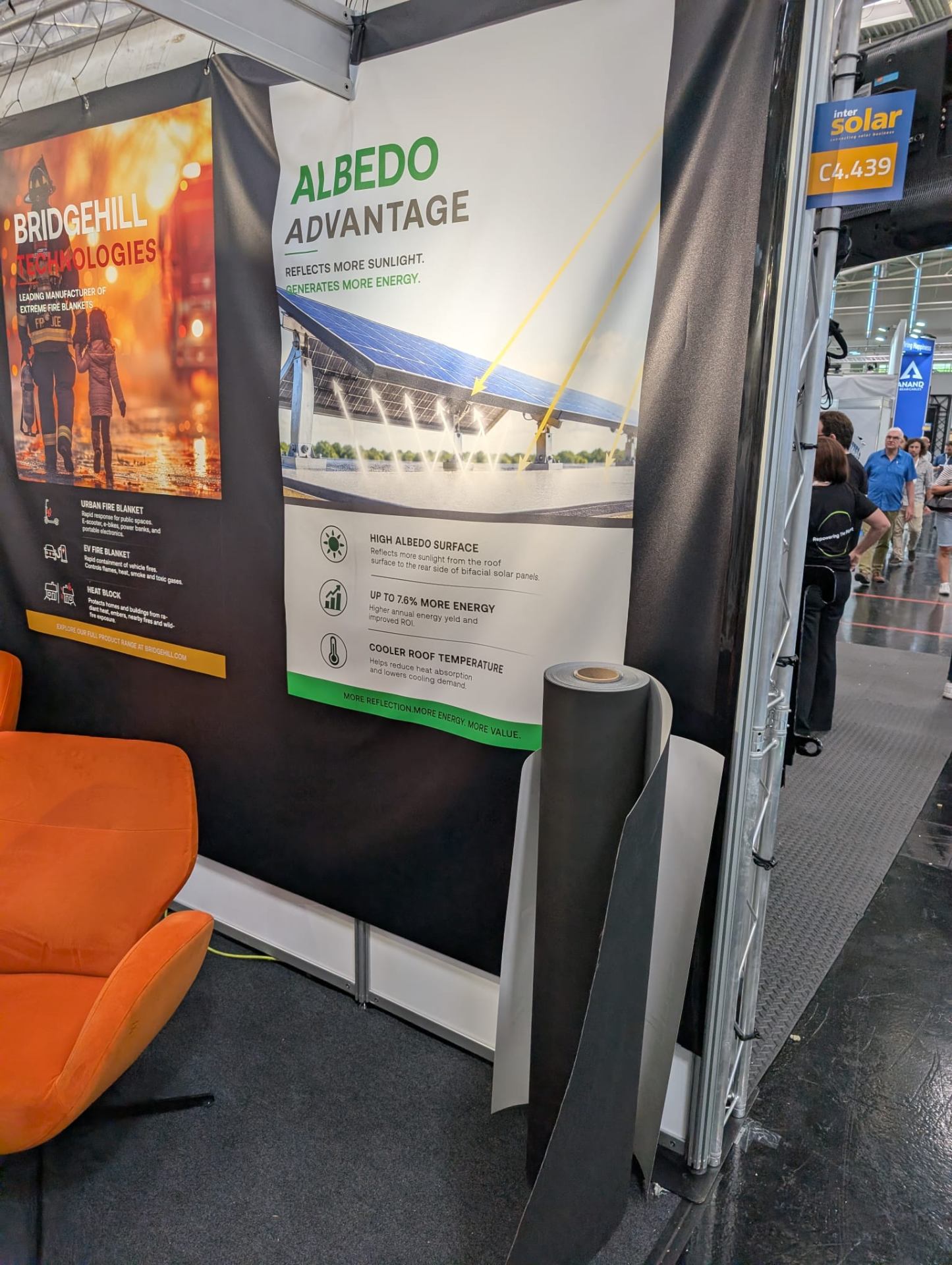
A high-reflectance membrane under a bifacial array cuts the roof's heat load and lifts the array's economics at the same time, a meaningful yield gain that shows up in the pro-forma, not just the datasheet. Rarely specified in the UK. It should be.
None of this is stock inventory. Every one is a live commercial relationship we've built. If your project needs something you don't see here, ask, the industry moves fast and we're at every show.
The industry's blind spots.
With export tariffs shaping revenue and DNO headroom shaping capacity, east/west and vertical arrays now beat south-facing on many sites. Most UK installers don't model this.
From coloured lamination to full façade cladding to solar slate, the trade-offs on cost, warranty and installer familiarity are wildly different. We can walk you through which is right for the brief.
If the grid connection isn't scoped before planning is submitted, you'll either downsize the array or wait 18 months. We'll run that conversation on your behalf.
Half the tier-2 module brands specified in 2020 no longer exist. We only spec manufacturers we believe will still be replacing panels in 2045.
A 30 kWp array that drifts 8% below expected yield for five years loses more than any capex saving on the panels. Monitoring and O&M are part of the spec, not an afterthought.
With half-hourly export markets, the right battery is often bigger than the load-shifting case suggests. We model this before you fix the plant room.
Three ways architects work with us.
Book a 30-minute call. We'll join a design-team meeting, review the massing, and give you a written PV feasibility note you can attach to the design and access statement.
We hold the PV package end-to-end: system design, DNO application, procurement, installation, commissioning, O&M contract. Fixed-price on scope you've agreed.
You've been given a PV spec by another consultant. We'll red-line it, module choice, inverter sizing, string layout, cable routing, warranty risk, before you sign it off to the client.
Send us the site, the brief and the client's ambition. We'll tell you in thirty minutes whether the project is a fit for what we do.