Let there be light: York Minster, and the cathedral as civic leader.
184 panels. £20,000 saved. 42,000 kWh produced in six months. If solar panels can go on this listed building, they can go on most.
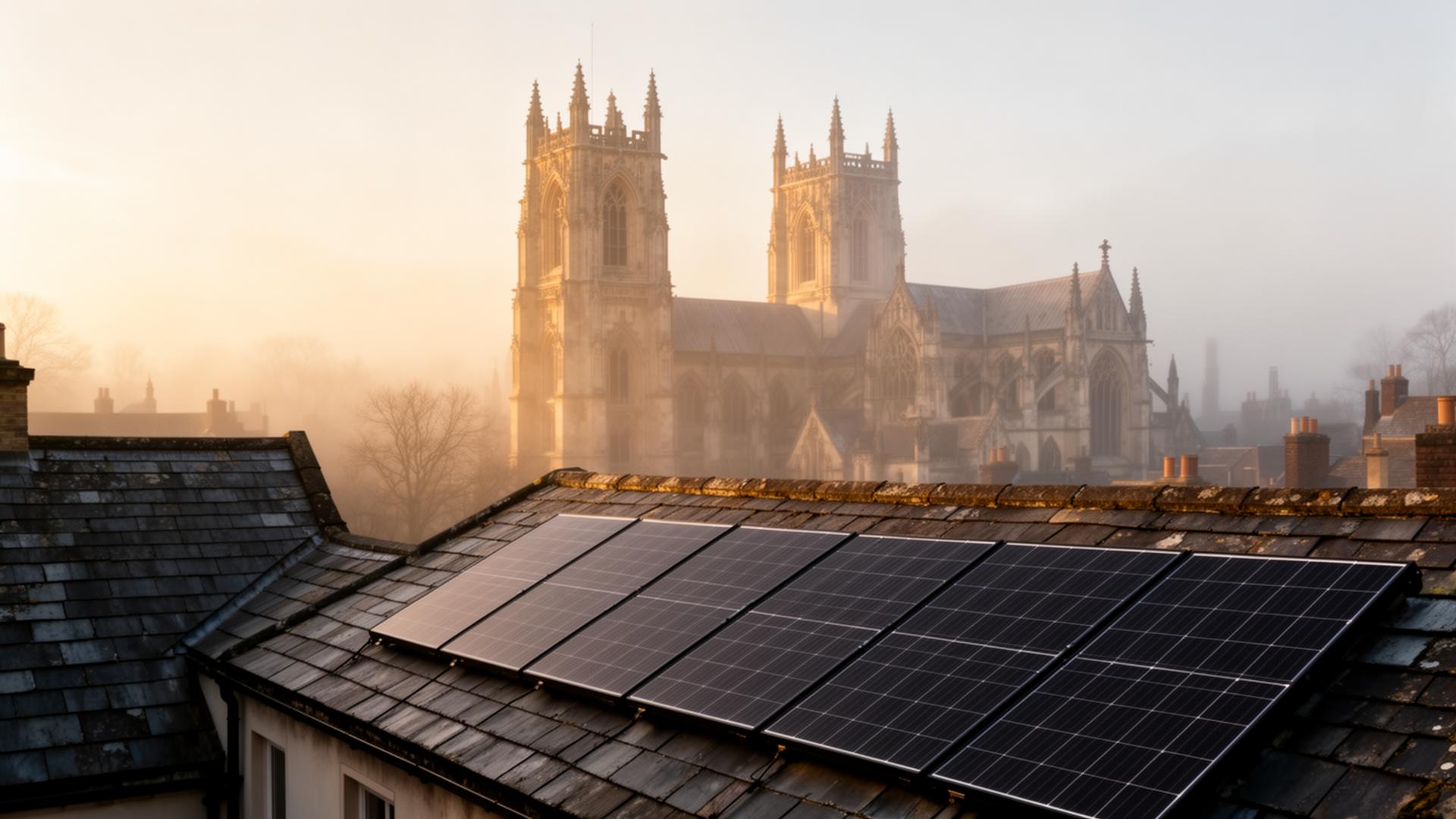
In late 2024 the Chapter of York installed 184 Solarwatt 440Wp solar panels directly onto the South Quire roof of York Minster itself, not an ancillary outbuilding, but the Grade I-listed, 800-year-old cathedral. Installation began in October 2024; the formal "switch-on" blessing followed in January 2025. The system is expected to generate roughly 70,000 kWh a year, about a third of the Minster's total electricity demand, and in the first six months of operation produced around 42,000 kWh and saved over £20,000 on the cathedral's energy bill. The technology was chosen, in part, for its advanced fire-safety credentials, non-trivial when you are responsible for a building with, as the Director of Works puts it, "an unfortunate history of fire."
The Minster project sits inside a wider rollout across the precinct under its Neighbourhood Plan: solar slates on the Refectory, conventional panels on the Heritage Quad, and solar film on the Works & Technology Hub. The 184-panel installation is the one that finally brought renewable energy to the roof of the masterpiece itself.
You can read the cathedral's own account of the project here: Let There Be Light: 184 Solar Panels Blessed on the Roof of York Minster (yorkminster.org).
The numbers are good. The signal is better.
1. The longest-lived institution moves first
Cathedrals are the deepest-rooted institutions in the British countryside. They predate the parish council, the limited company, the National Grid, and almost every village around them. They are also, by their nature, conservative: they do not adopt new technology lightly, and when they do, the rest of the community reads it as a permission slip.
When the Chapter of York chooses to put solar on its own roof, and to do so publicly, with a blessing, it is not just buying electricity. It is telling every farm, school, almshouse, parish church and village hall within sight of its towers that this is now a reasonable, dignified, well-considered thing for a serious institution to do.
You cannot manufacture this kind of leadership. You can only respect it when it appears.
2. Cathedrals are part of the landscape
Look at any English horizon and the cathedral or the parish church is the thing that locates you. They were built before maps were common. They are how generations of farmers, drovers and travellers oriented themselves across the shires.
That is why a project like this carries such weight. Solar on a warehouse is a procurement decision. Solar on a cathedral is a statement that the institution which has watched the landscape change the longest has decided that this particular change is one it wants to be part of.
3. Fire safety is not a footnote
The Chapter explicitly named fire safety as the reason it chose the technology it did. That is the right priority. A cathedral roof is not a generic asset; it is irreplaceable. The decision to install solar was inseparable from the decision about which solar. DC isolation, rapid shutdown, panel-level monitoring, and an installer prepared to engineer for a heritage roof rather than a flat industrial shed.
For any landowner or trustee with responsibility for a building that matters, listed farmhouses, almshouses, livery halls, school chapels, a vineyard's principal barn, this is the lesson to take home. The right system isn't the cheapest. It is the one whose failure modes you have already thought through.
4. The economics are not the headline. They are the proof.
£20,000 in six months on the right side of a cathedral's ledger is a real number. Annualised, it pays for clergy stipends, fabric repairs, a chorister's bursary. It is not abstract carbon, it is restored stained glass, maintained organ pipes, a heated nave on a January evening.
The reason this matters beyond York is that every comparable institution, parish church, charitable trust, livery company, vineyard, working farm, community centre, has the same arithmetic available to it. The roof is already there. The bill is already being paid. The only thing that has been missing, in most cases, is permission.
- Panels installed
- 184
- Energy produced (6 months)
- 42,000 kWh
- Energy savings (6 months)
- £20,000+
Source: York Minster. Let There Be Light.
The takeaway
We build for the same constituency the cathedral serves: the landowners and leaders who hold something in trust for the next generation. A vineyard owner thinking forty harvests ahead. A charity steward responsible for a Victorian schoolroom. A parish council weighing a village hall roof. A commercial estate manager looking at a row of barns.
York Minster has done what good institutions do: it has gone first, transparently, with the right partner and the right priorities. Our job at Shires Energy is to make the same decision quietly available, to the same standard, with the same care for the building, to every landowner and leader who reads about it and thinks, that is the kind of project I would like to be part of.
How do you feel about the balance between preserving historical architecture and adding modern green technology like this? Talk to us.
Heritage buildings, working farms, vineyards, charity premises, village halls. We engineer the system around the building, not the other way round, fire safety, fabric protection and grid economics in the same conversation.
Two minutes, three questions. No sales calls unless you ask for one.
In short
York Minster installed 184 solar panels, producing about 42,000 kWh and saving roughly £20,000 in six months. The significance is institutional as much as financial: when the most conservative listed buildings in the country adopt solar, the surrounding parishes and estates read it as permission.
Common questions
Can you put solar panels on a listed building?
Yes, with consent. Listed building consent, and for churches the faculty process, weighs the heritage impact against the benefit, which normally steers panels onto roof slopes out of public view or onto nearby ancillary buildings. York Minster's 184 panels show the answer is not automatically no.
How much did York Minster's solar save?
Roughly £20,000 in its first six months, from about 42,000 kWh generated by 184 panels. A cathedral draws power steadily through the day, so most of that generation is used on site at the full retail price rather than exported.
Do solar panels need planning permission in a conservation area?
Often yes, where permitted development rights are restricted, and always where the building is listed. The practical route is a pre-application conversation with the conservation officer about siting and visibility before the design is fixed.
Continue reading
All essays →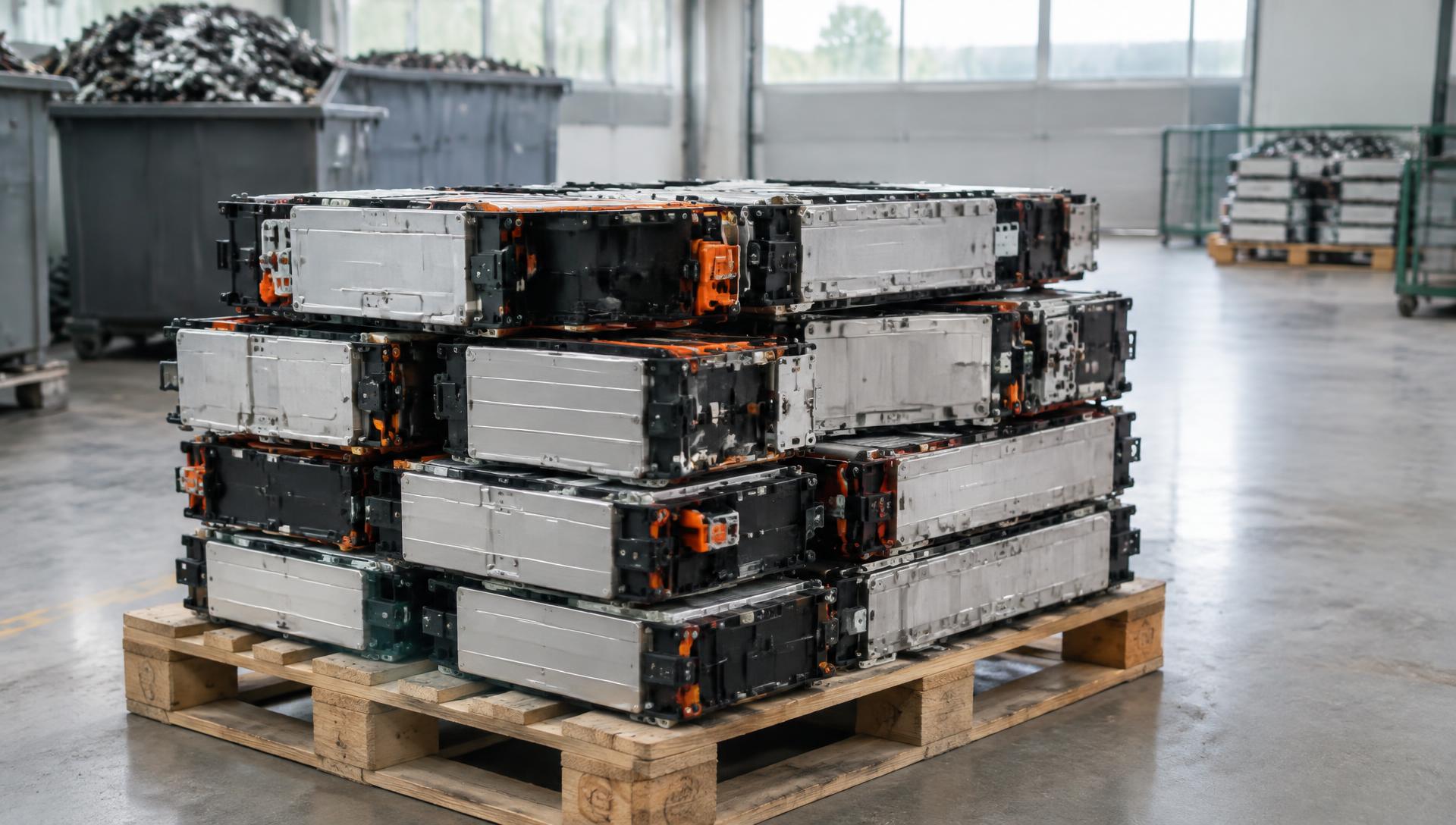
What happens to a home battery at the end of its life?
Extend first, recycle second, landfill never. Tesla's published end-of-life policy, and what to ask before you buy any battery.
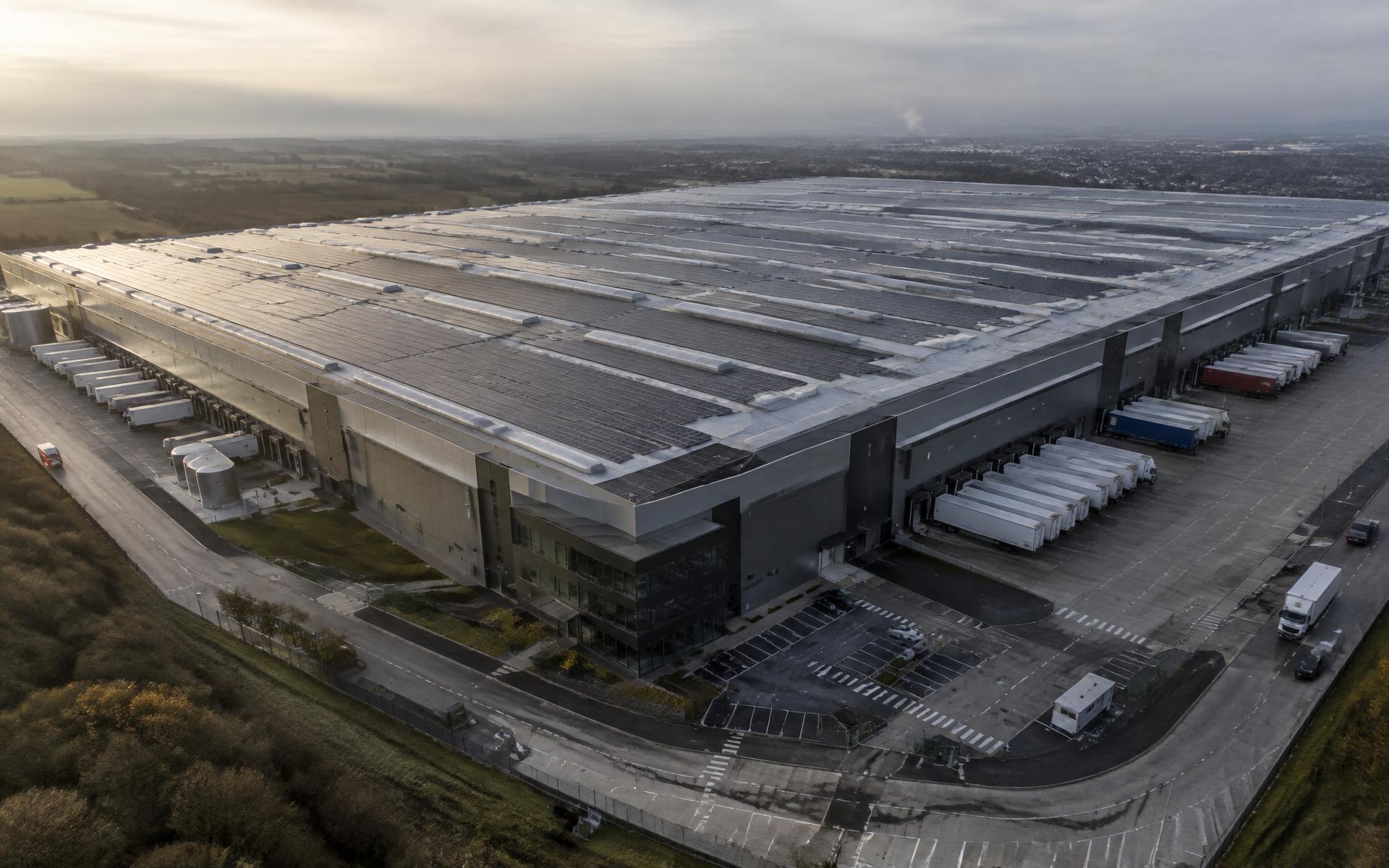
Solar on an east-west facing roof
Ten to twenty per cent less per panel, twice the roof to use, and output across the whole working day. The plain answer for a building that doesn't face south.
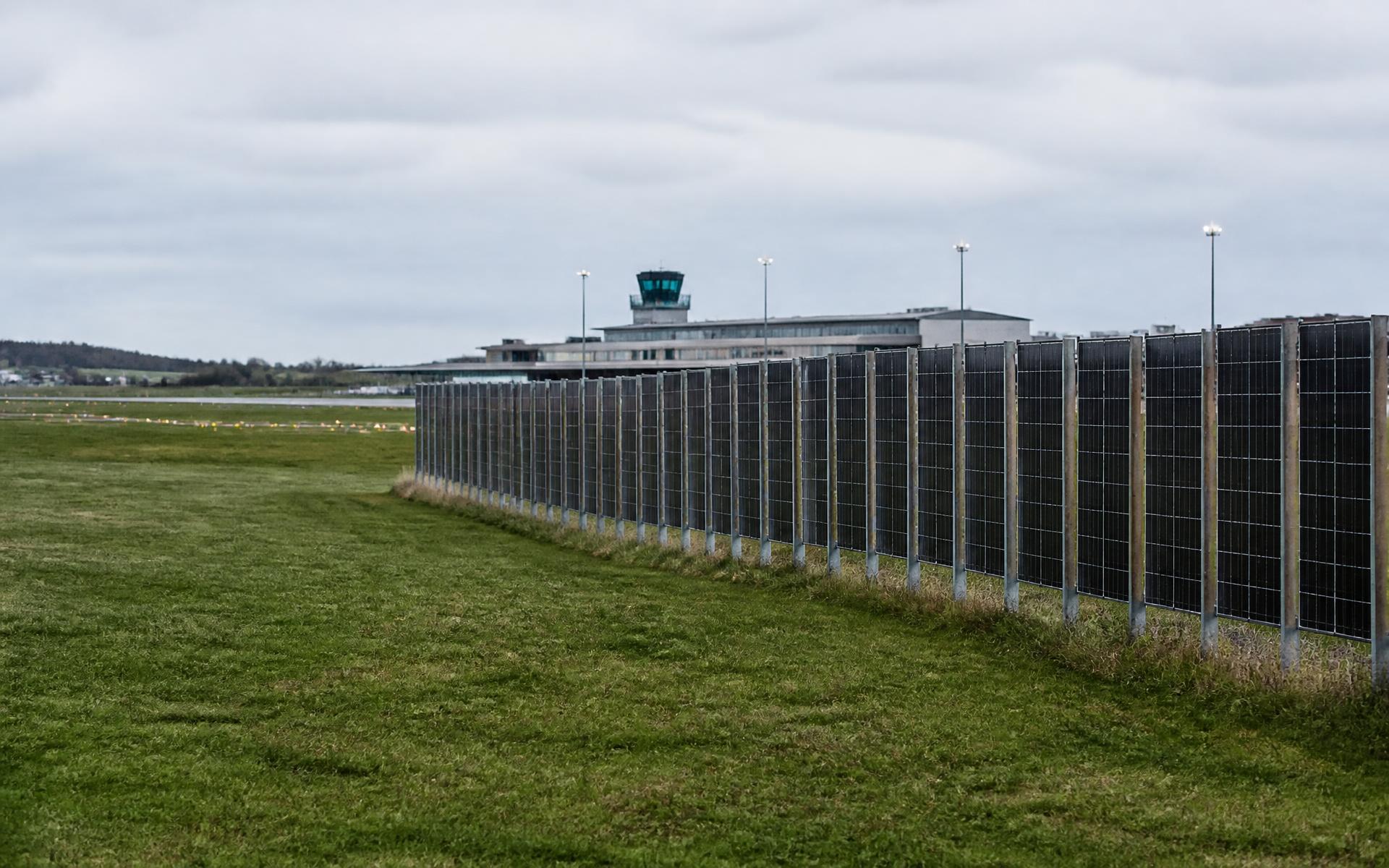
The best-defended solar site in Britain is behind an airport fence
Mown grass, kilometres of perimeter and a large continuous load next door. What an airport microgrid actually looks like.
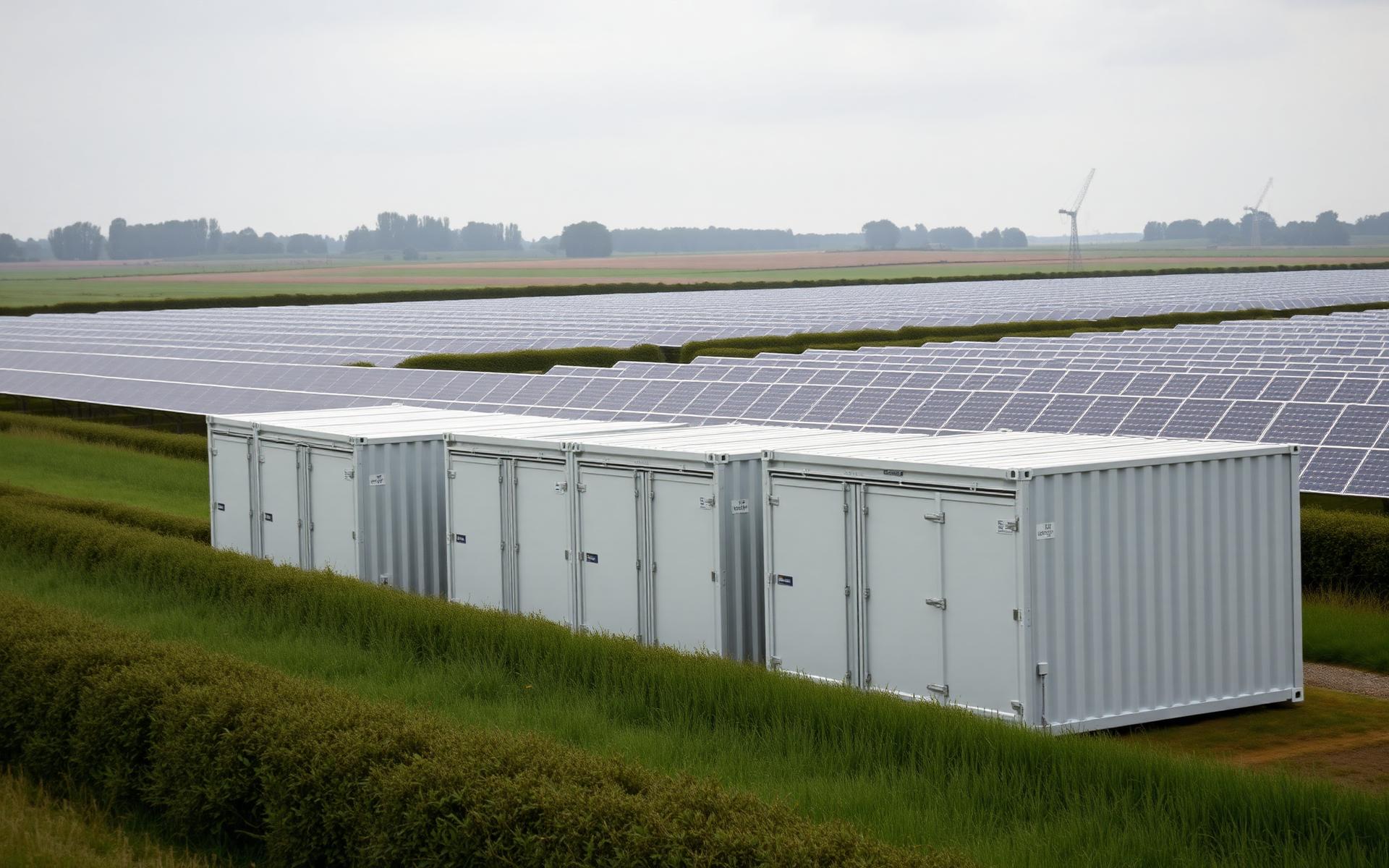
Use them where you make your own electrons
Serve the businesses next door over private wire, then let containerised compute eat whatever the grid won't take.

The eclipse and the grid
A predictable dive in national solar, a kettle surge on the other side, and a free rehearsal for every ordinary evening.
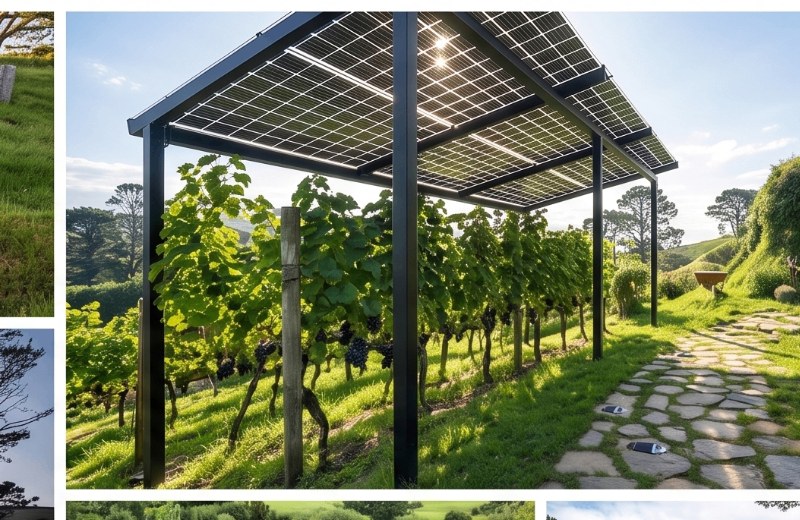
Why 1% of the UK is all we need
We don't have a land problem. We have a coordination problem.

Fragmented Funding
The capital is already there. It's just scattered across six different desks.
Powering the Future: Community Bonds
What if a community could keep the returns on its own infrastructure?
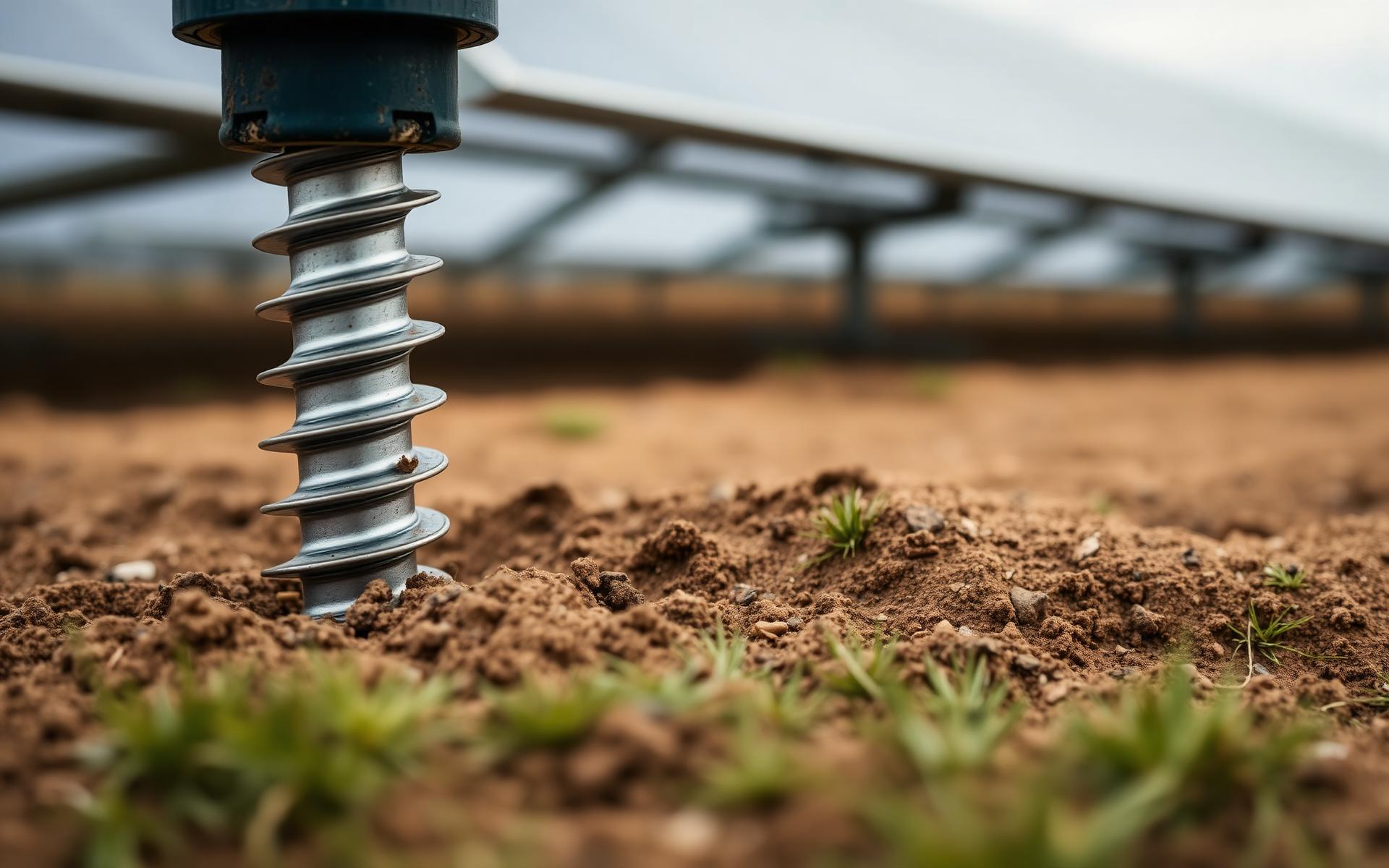
Why Ground Screws are the Future of UK Commercial Solar Farms
Time is capital. Earth is an asset. Concrete is a liability.
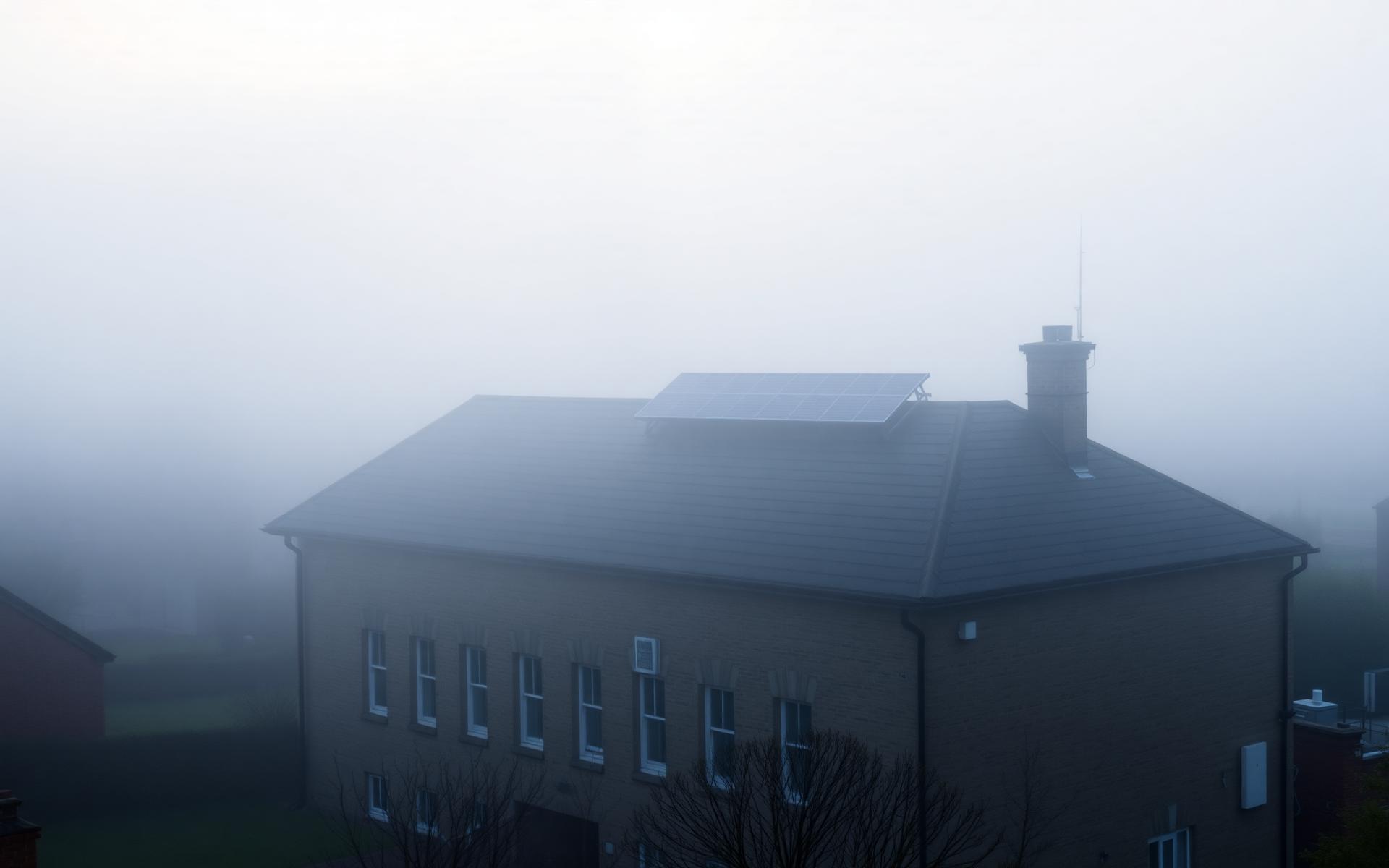
Local Net Zero: the support already on the table
Hubs, Accelerators, Great British Energy, the Community Fund, what's on offer, and how to find the door.
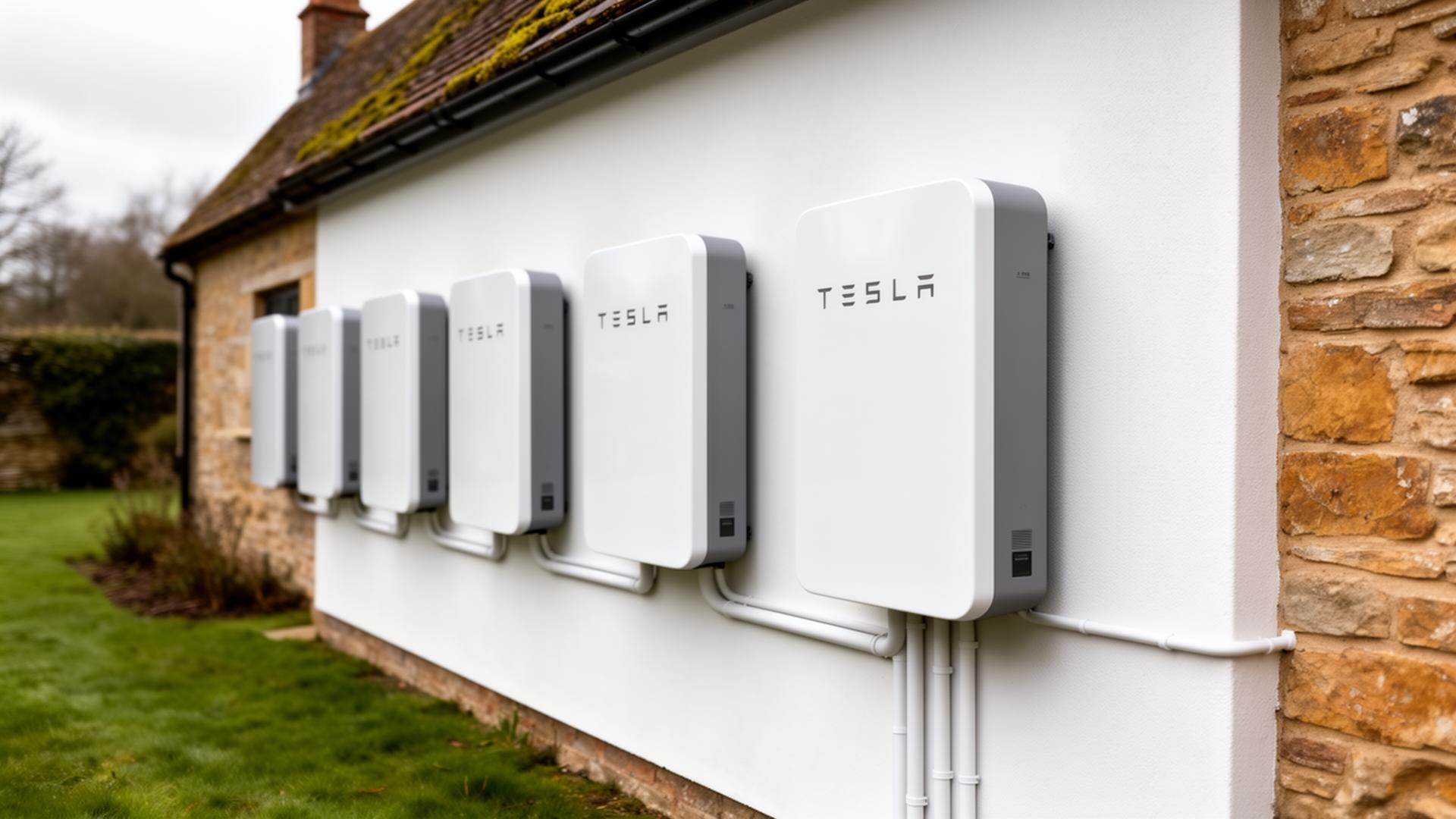
Global Quality, Local Installation
Why we install Tesla, and what a four-Powerwall replacement says about backing customers for decades.
The Evolution of Work: From Watt to Joule
Joule gave the scientific 'why' to the practical 'how' Watt had already commercialized, and that's why your bill is in kWh.
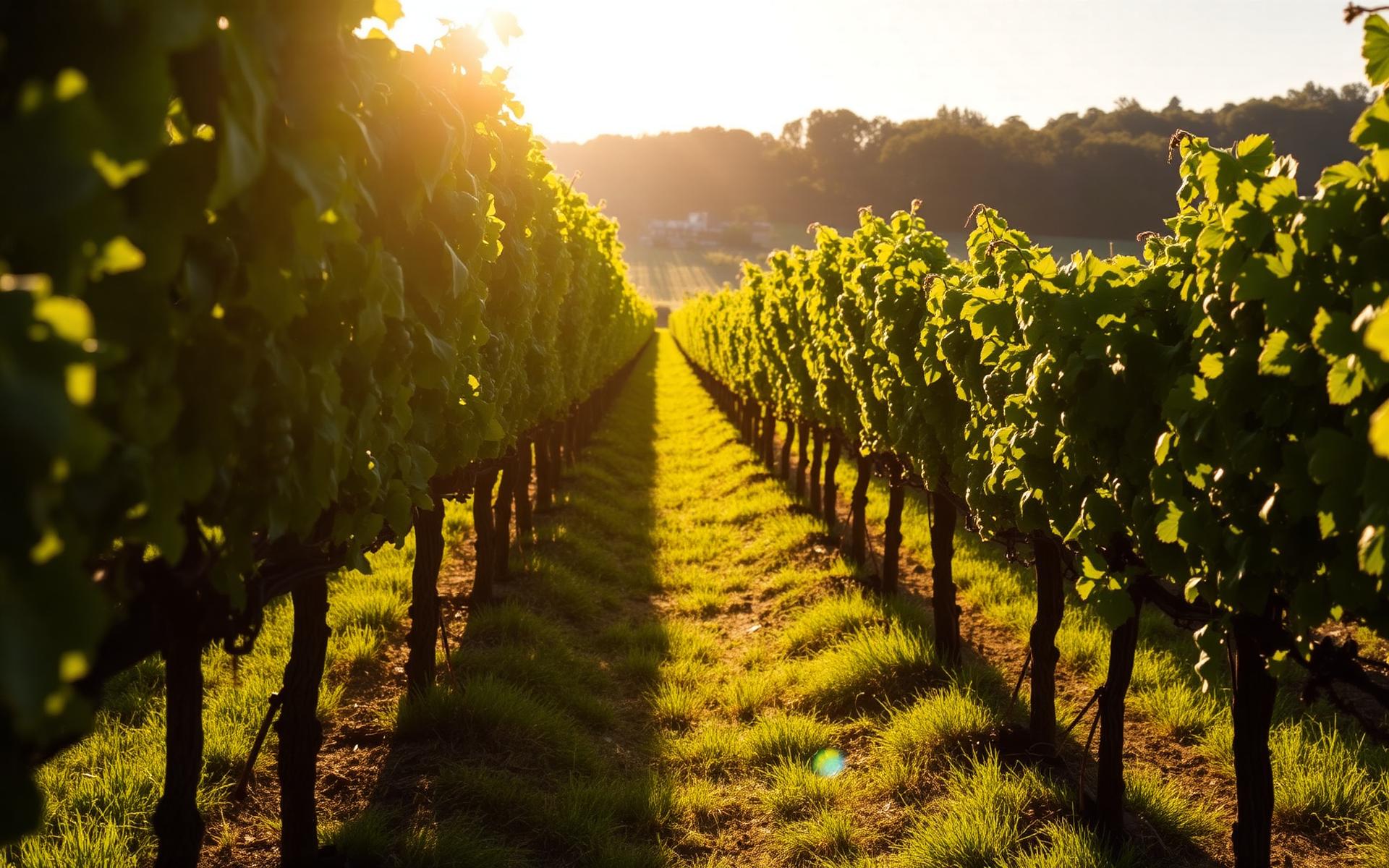
Shade as a Resource: agrivoltaics for British vineyards
What a 2018 Oregon study tells us, and what it doesn't, about putting solar above vines.
SEG, PPAs and the rise of symmetric pricing
Three layers for selling solar back to the grid, and a fourth idea that aligns the home with the system operator.
Mini Rails vs Long Rails
The mounting structure is the second-largest source of embodied carbon in a solar system. Two short profiles or one long one, it matters.
Playing the DNO: how to fast-track a slow connection
You can't choose your Distribution Network Operator. You can choose how you submit, and that is usually the whole game.
Biodiversity Net Gain: the 10% that changes the maths
Statutory BNG is now the law for almost every piece of development in England. For solar, it is an opportunity hiding inside an obligation.
Reclaiming VAT on farm solar
Solar panels are plant and machinery. For most VAT-registered farms, that means the 20% input tax comes back, and capital allowances stack on top.
East-West arrays: the economics on constrained UK sites
Lower yield per panel, higher revenue per hectare. Why midday peaks are now a liability.
The hop garden that became a power station
977 kWp seven metres above a working hop garden. What Fraunhofer's HoPVen trial means for British growers, and what it doesn't yet prove.
Should you wait for better panels?
Cadmium telluride is real, cheap at gigawatt scale and not sold to you. The choice on a British roof is which silicon, and why we specify glass-glass.
The hill made of rubbish that pays rent
New Haven put 1,900 panels on a capped landfill. Britain has twenty thousand of these hills and no policy pointing at one of them.