Why East-West solar layouts outperform South-facing arrays on constrained UK sites.
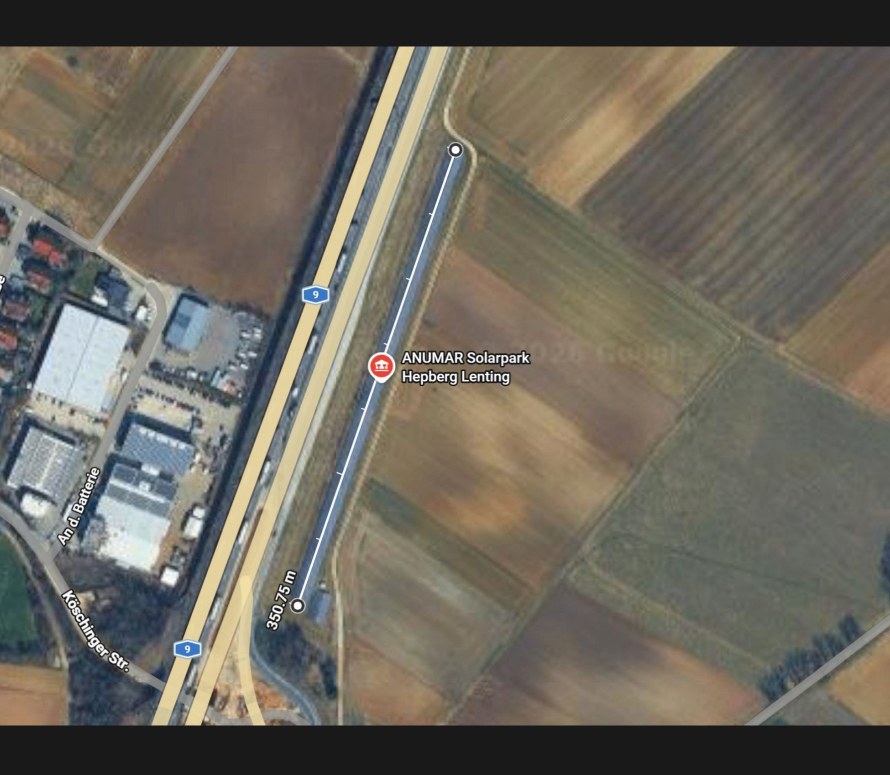
Lower yield per panel. Higher revenue per hectare. A full, evergreen breakdown of the economics, the geometry, and a 350-metre piece of evidence sitting alongside the A9 in Bavaria.
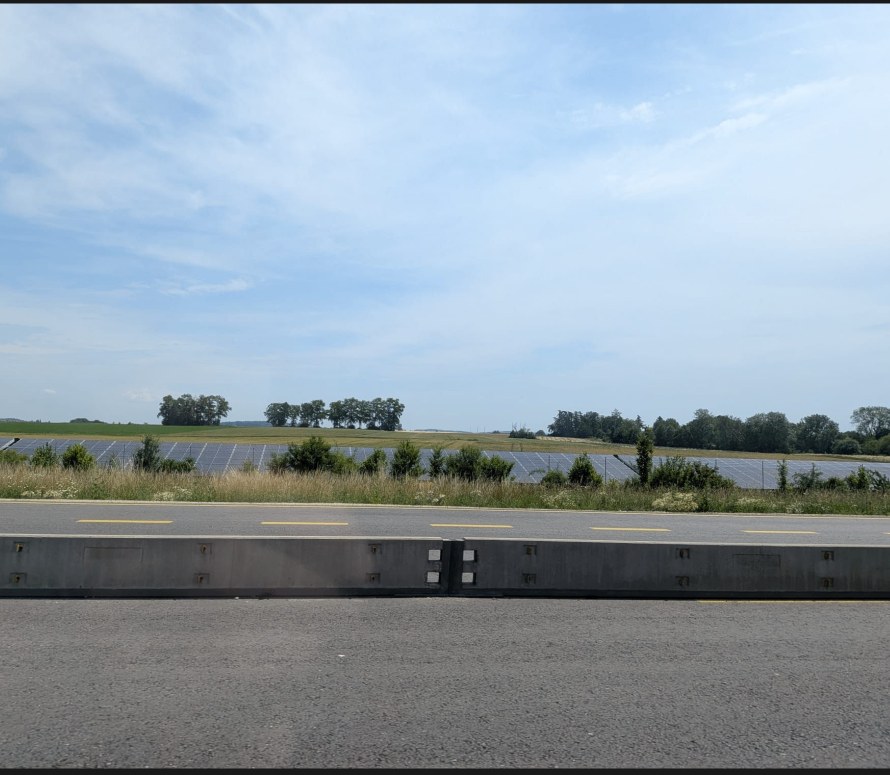
When planning a commercial or utility-scale solar installation in the UK, defaulting to a traditional South-facing layout can be an operational mistake. South-facing panels deliver the highest theoretical yield per individual module, but they do so by compressing generation into a sharp midday peak, exactly when the wholesale price of that electricity is collapsing.
For modern UK landowners and commercial operators, optimising an energy asset requires looking beyond peak module efficiency. The questions that matter are land utilisation, grid export constraints, and the shifting market value of power through the day. On constrained sites, an East-West configuration systematically delivers better commercial returns. Here is the operational data explaining why.
Peak module yield is not the same as peak project return.
1. Avoiding the midday price-cannibalisation trap
Traditional South-facing arrays produce a steep generation curve that peaks heavily between 11:00 and 14:00. Because the vast majority of legacy UK solar infrastructure faces South, the national grid experiences massive surges of power during these exact hours. This localised oversupply increasingly leads to wholesale price cannibalisation, driving down the financial value of the electricity precisely when a South-facing system is producing its maximum volume.
An East-West array flattens that profile into a wider, dual-peak curve. East-facing panels catch the low-angle morning sun, ramping up generation hours before a South-facing array. West-facing panels maintain high output late into the afternoon and early evening as the sun sets. The asset shifts its peak production into the periods of the day when grid demand, and electricity pricing, is highest. For businesses consuming power on-site, it also matches standard operational shift patterns far more accurately than a brief midday spike.
2. The mathematics of land-use density
For UK estate managers and commercial operators, land is a finite asset with competing uses. Traditional South-facing rows must be spaced significantly apart to prevent the front row of panels from casting shadows on the row behind it during the low UK winter sun. That necessary spacing leaves substantial amounts of land unutilised between rows.
East-West systems resolve this spatial limitation by using a back-to-back dome structure. Because the panels slope away from each other rather than queue behind one another, the requirement for wide inter-row spacing largely disappears.
It is a mechanical reality that individual panels on an East-West configuration produce roughly 12% less annual energy than a perfectly optimised South-facing panel. But because the dome eliminates the dead space between rows, you can install 30% to 40% more panels on the exact same land footprint. The net result is a significantly higher total energy output per hectare. If site acreage is restricted by boundary lines, planning constraints, or ongoing operations, the East-West layout yields the superior financial return per square metre of real estate.
3. Overcoming local grid export caps
The single biggest bottleneck for UK solar development is securing a grid connection from the local Distribution Network Operator. Many commercial yards and agricultural estates are hit with strict export capacity caps, for example a hard 1 MW limit on the point of connection.
If you deploy a South-facing system on a capped site, your midday generation spike will frequently exceed the DNO limit, forcing the inverters to actively curtail production. That wasted energy is lost revenue you can never recover. An East-West system spreads its production smoothly across a 12-to-14-hour window. By flattening the curve, you can install a larger total volume of panels and export more total kilowatt-hours over the day without ever breaching your DNO export cap. You sell more total power through the same restricted grid connection.
On a capped site, the right question is not "how many kWp can I install?" It is "how many kWh can I export before I hit the ceiling?"
4. Lower structural and civil engineering overheads
The physical geometry of an East-West array gives a quiet but significant civil engineering advantage. A long row of South-facing panels tilted at 20 or 30 degrees behaves like a giant sail, experiencing large wind uplift forces during UK winter storms. To anchor those systems safely, engineers must specify heavy structural steel, deep ground screw penetrations, or extensive concrete ballast blocks.
An East-West array sits in a low-profile, continuous aerodynamic wedge. Wind rolls over the structure rather than catching underneath it. Reduced wind load means the framework requires less steel reinforcement and shallower ground fixings. For the asset owner that translates directly into lower civil engineering procurement costs, faster installation timelines, and less ground disruption on site.
When East-West may be the better choice
The strongest case for East-West appears when you are optimising for value rather than raw volume, particularly on sites where self-consumption matters. If your on-site electricity demand peaks in the morning and late afternoon, while your generation would otherwise peak at midday, an East-West layout naturally pushes production into the hours when you actually use power. It shifts your generation curve to follow your load curve.
Ideally, the design objective is to make generation follow on-site use. A South-facing array dumps most of its output into a narrow window when your site may be drawing little; East-West stretches production across the operational day, so a larger share of the energy is consumed directly on-site at the moment it is generated.
If you cannot store on-site, or if your battery capacity is small, this load-following behaviour becomes even more important. Without storage, every kilowatt-hour that is not consumed when it is generated must be exported or lost. The flatter East-West curve produces more usable hours of generation across your typical consumption window, reducing the volume of surplus power that leaves the site at unfavourable prices.
When storage is available, it acts as a buffer to redistribute any remaining surplus from the day into the evening or early morning. The goal is to use on-site storage to redistribute effectively, so you import less from the grid during high-price periods. If you cannot redistribute effectively with on-site storage, then you want symmetric pricing: a favourable export tariff for the surplus you do sell, and a favourable import rate for the power you still buy. The value of East-West's wider production window compounds when you can either consume it directly or sell it back on reasonable terms.
When South still wins
East-West is not a universal answer. If land is genuinely cheap and unconstrained, and the grid connection is large enough to absorb a midday peak without curtailment, a South-facing layout will still produce more kWh per pound of CapEx. The economics flip at the moment the site becomes constrained, by acreage, by the DNO, or by the merchant value of midday power. In the UK in 2026, most commercial and utility sites are constrained on at least one of those three axes.
Layout optimisation and site assessment
There is no single configuration that suits every utility-scale energy project. Determining the correct layout requires matching precise spatial data against your site's specific grid constraints, soil profiles, and half-hourly energy consumption patterns.
At Shires Energy we provide data-driven layout modelling to ensure your infrastructure project delivers predictable energy costs and clear financial yields. Contact our engineering team directly to arrange a site capacity assessment.
If the connection is the binding constraint, the other move is to put the load on the site rather than shrink the array: use them where you make your own electrons.
If your question is about a building rather than a field, the roof version of this argument is here: solar on an east-west facing roof.
In short
East-West solar layouts produce about 10 to 20 per cent less per panel than South-facing rows but far more per hectare, because the rows sit back to back with no inter-row shading gap. On grid-constrained UK sites with a capped export limit, and in a market where midday power is worth least, revenue per hectare beats yield per panel.
Common questions
Are East-West solar arrays better than South-facing?
On constrained sites, usually yes. East-West rows give up roughly 10 to 20 per cent of per-panel yield but can fit 50 to 70 per cent more capacity on the same ground, and they spread output into the morning and evening when power is worth more than at midday.
How much less do East-West solar panels produce?
About 10 to 20 per cent less per panel over a year than the same panel facing south at an ideal pitch in the UK. Because East-West rows need almost no inter-row spacing, total output from a given site is normally higher, not lower.
Do East-West solar arrays need less space?
Yes. South-facing rows must be spaced so the front row does not shade the row behind in low winter sun. East-West panels slope away from each other in a back-to-back dome, so that gap largely disappears and 30 to 40 per cent more panels fit in the same footprint.
Why does midday solar earn less?
Because every South-facing array peaks at the same hour. That simultaneous peak pushes the wholesale price down, an effect called price cannibalisation, so the marginal midday kilowatt hour is the least valuable one a project can make.
Does an East-West layout help with a capped grid connection?
Yes. A capped connection limits instantaneous export, not annual energy. An East-West array spreads output across a twelve to fourteen hour window instead of a narrow midday spike, so more total kilowatt hours pass through the same limit without curtailment.
Continue reading
All essays →
What happens to a home battery at the end of its life?
Extend first, recycle second, landfill never. Tesla's published end-of-life policy, and what to ask before you buy any battery.
Solar on an east-west facing roof
Ten to twenty per cent less per panel, twice the roof to use, and output across the whole working day. The plain answer for a building that doesn't face south.
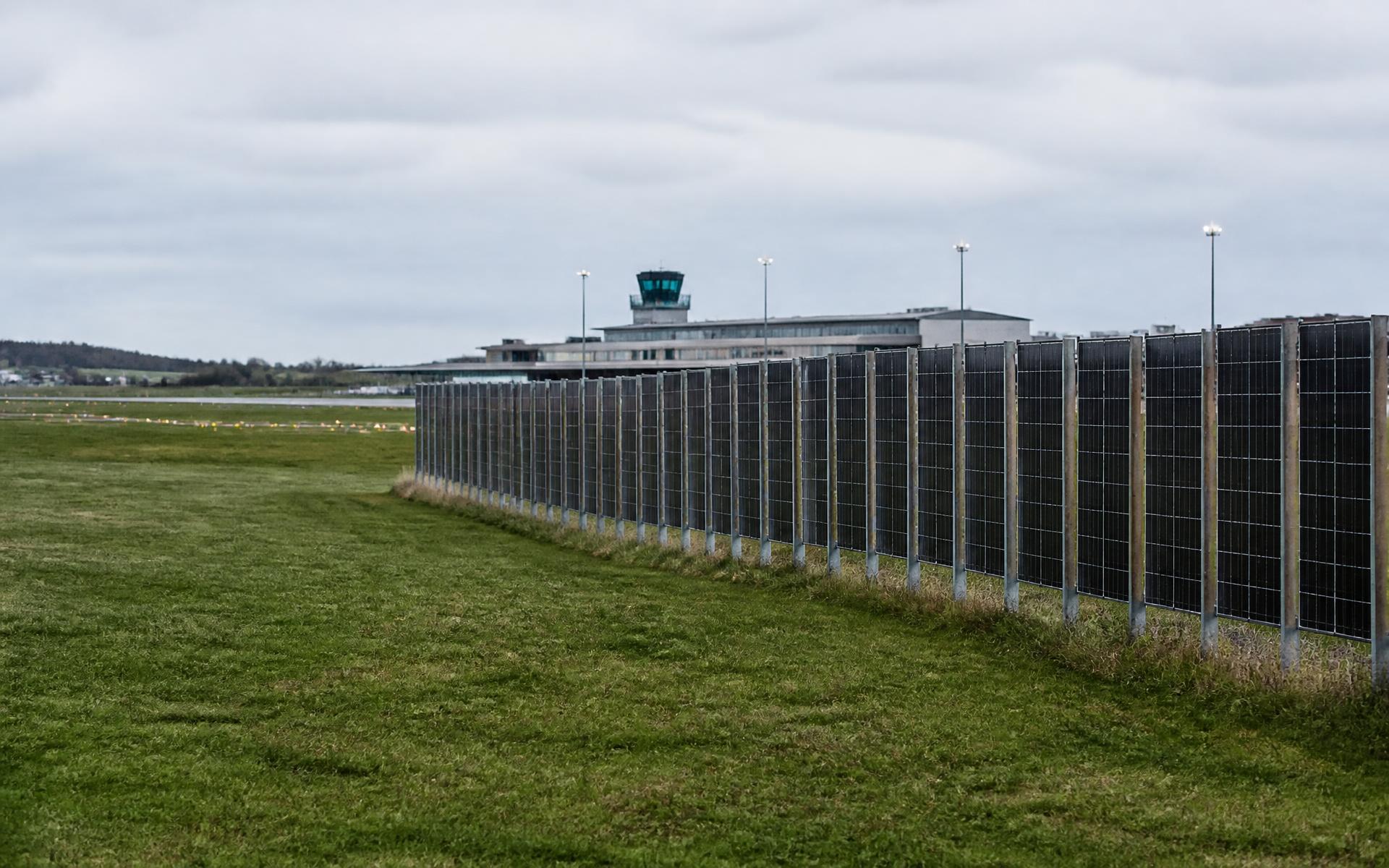
The best-defended solar site in Britain is behind an airport fence
Mown grass, kilometres of perimeter and a large continuous load next door. What an airport microgrid actually looks like.
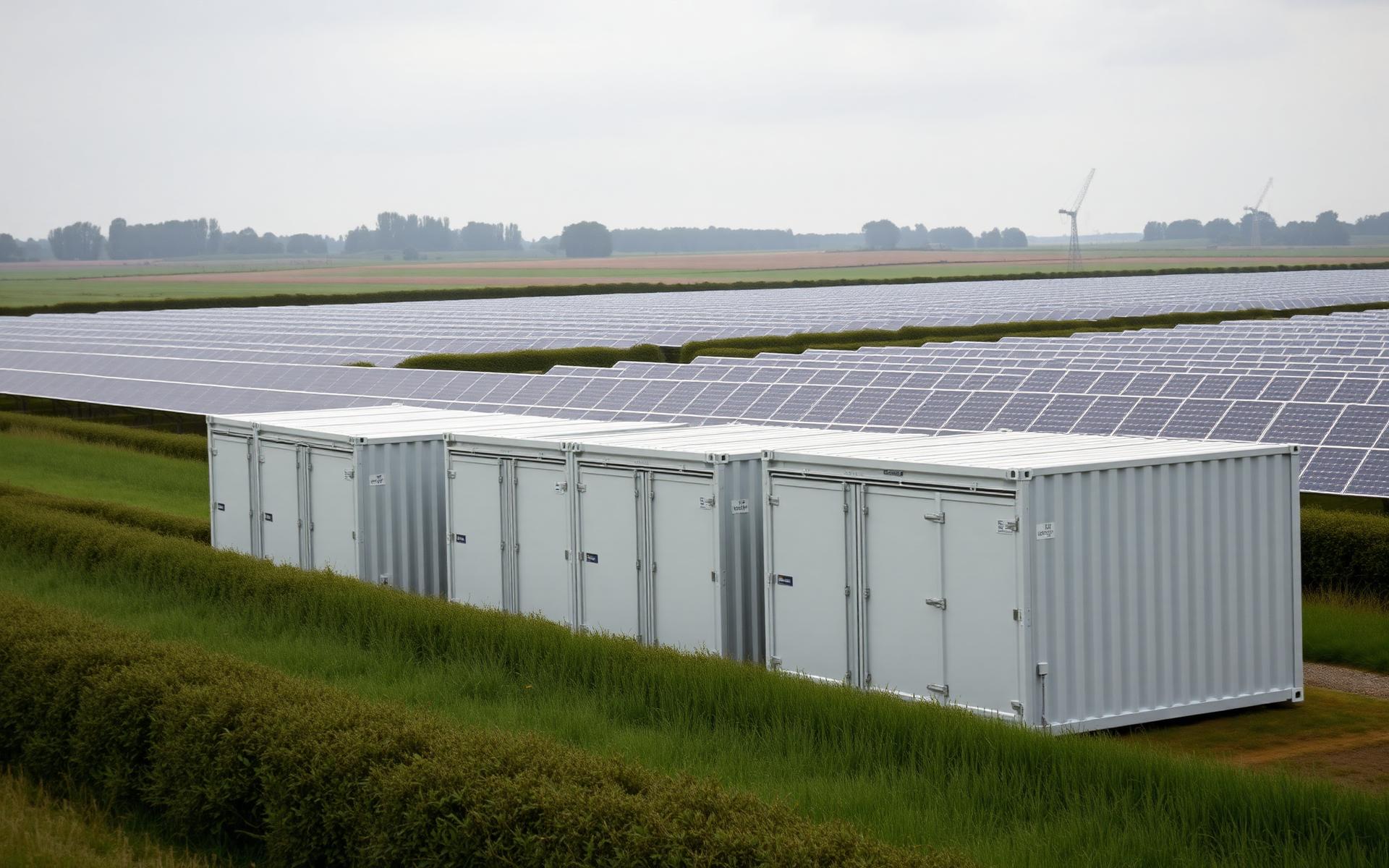
Use them where you make your own electrons
Serve the businesses next door over private wire, then let containerised compute eat whatever the grid won't take.

The eclipse and the grid
A predictable dive in national solar, a kettle surge on the other side, and a free rehearsal for every ordinary evening.
Why 1% of the UK is all we need
We don't have a land problem. We have a coordination problem.

Fragmented Funding
The capital is already there. It's just scattered across six different desks.

Powering the Future: Community Bonds
What if a community could keep the returns on its own infrastructure?

Why Ground Screws are the Future of UK Commercial Solar Farms
Time is capital. Earth is an asset. Concrete is a liability.
Local Net Zero: the support already on the table
Hubs, Accelerators, Great British Energy, the Community Fund, what's on offer, and how to find the door.
Global Quality, Local Installation
Why we install Tesla, and what a four-Powerwall replacement says about backing customers for decades.

The Evolution of Work: From Watt to Joule
Joule gave the scientific 'why' to the practical 'how' Watt had already commercialized, and that's why your bill is in kWh.
Let There Be Light: York Minster and the cathedral as civic leader
184 panels, £20,000 saved in six months, and a signal from the institution that has watched the British landscape the longest.

Shade as a Resource: agrivoltaics for British vineyards
What a 2018 Oregon study tells us, and what it doesn't, about putting solar above vines.
SEG, PPAs and the rise of symmetric pricing
Three layers for selling solar back to the grid, and a fourth idea that aligns the home with the system operator.
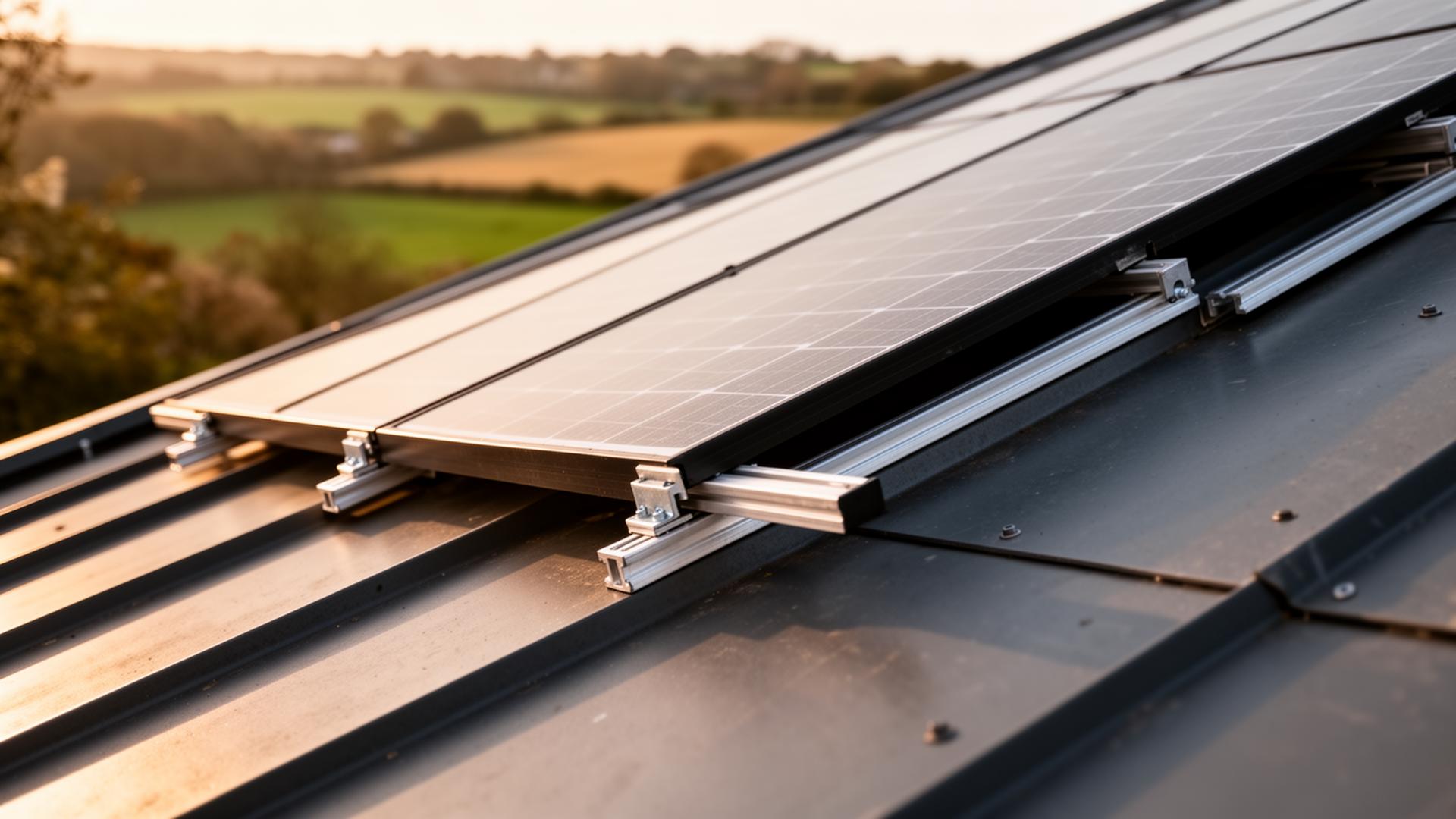
Mini Rails vs Long Rails
The mounting structure is the second-largest source of embodied carbon in a solar system. Two short profiles or one long one, it matters.
Playing the DNO: how to fast-track a slow connection
You can't choose your Distribution Network Operator. You can choose how you submit, and that is usually the whole game.
Biodiversity Net Gain: the 10% that changes the maths
Statutory BNG is now the law for almost every piece of development in England. For solar, it is an opportunity hiding inside an obligation.
Reclaiming VAT on farm solar
Solar panels are plant and machinery. For most VAT-registered farms, that means the 20% input tax comes back, and capital allowances stack on top.

The hop garden that became a power station
977 kWp seven metres above a working hop garden. What Fraunhofer's HoPVen trial means for British growers, and what it doesn't yet prove.
Should you wait for better panels?
Cadmium telluride is real, cheap at gigawatt scale and not sold to you. The choice on a British roof is which silicon, and why we specify glass-glass.
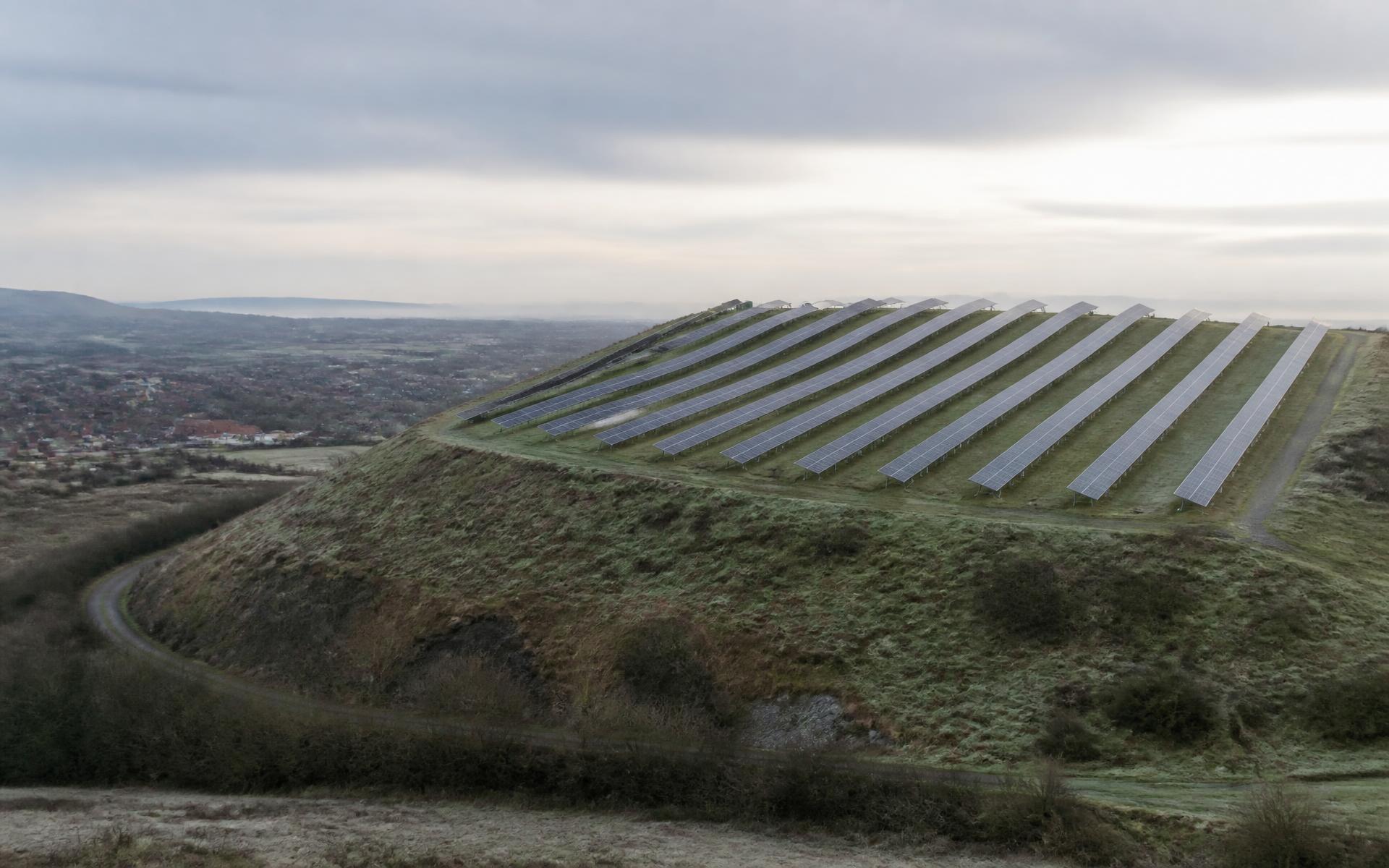
The hill made of rubbish that pays rent
New Haven put 1,900 panels on a capped landfill. Britain has twenty thousand of these hills and no policy pointing at one of them.