Solar on an east-west facing roof
Nobody chooses the direction their roof faces. The useful question is not whether east-west is ideal, it is what an east-west roof actually earns, and whether it earns enough.
Is an east-west roof any good for solar?
Yes. An east-west facing roof is a perfectly good place for solar panels in the UK. A panel on an east or west slope produces roughly 10 to 20 per cent less electricity over a year than the same panel on a south slope at an ideal pitch. That is the whole penalty. It is not half, it is not a third, and on most buildings it is recovered by fitting more panels than a south-only layout would allow.
The old advice that solar must face south comes from a period when panels were the expensive part of the system. They are now among the cheapest parts. Once modules are cheap, the sensible thing is to cover both slopes rather than leave half a roof empty waiting for a direction it will never have.
How much less will it generate, in pounds?
Take a typical 10 kWp array in the Midlands. South-facing at 35 degrees it might make around 9,000 kWh a year. Split east-west on the same pitch, expect roughly 7,600 to 8,100 kWh. At 26p a unit of avoided import, that difference is about £230 to £360 a year.
Now put the missing slope back. An east-west roof lets you use both faces, so the same building frequently takes 16 to 20 kWp where the south face alone took 10. The array that generates 19 per cent less per panel ends up generating substantially more in total, from the same building, for a smaller cost per installed kilowatt because the scaffold, the survey, the inverter work and the grid application are paid once.
Why you fit more panels on an east-west roof
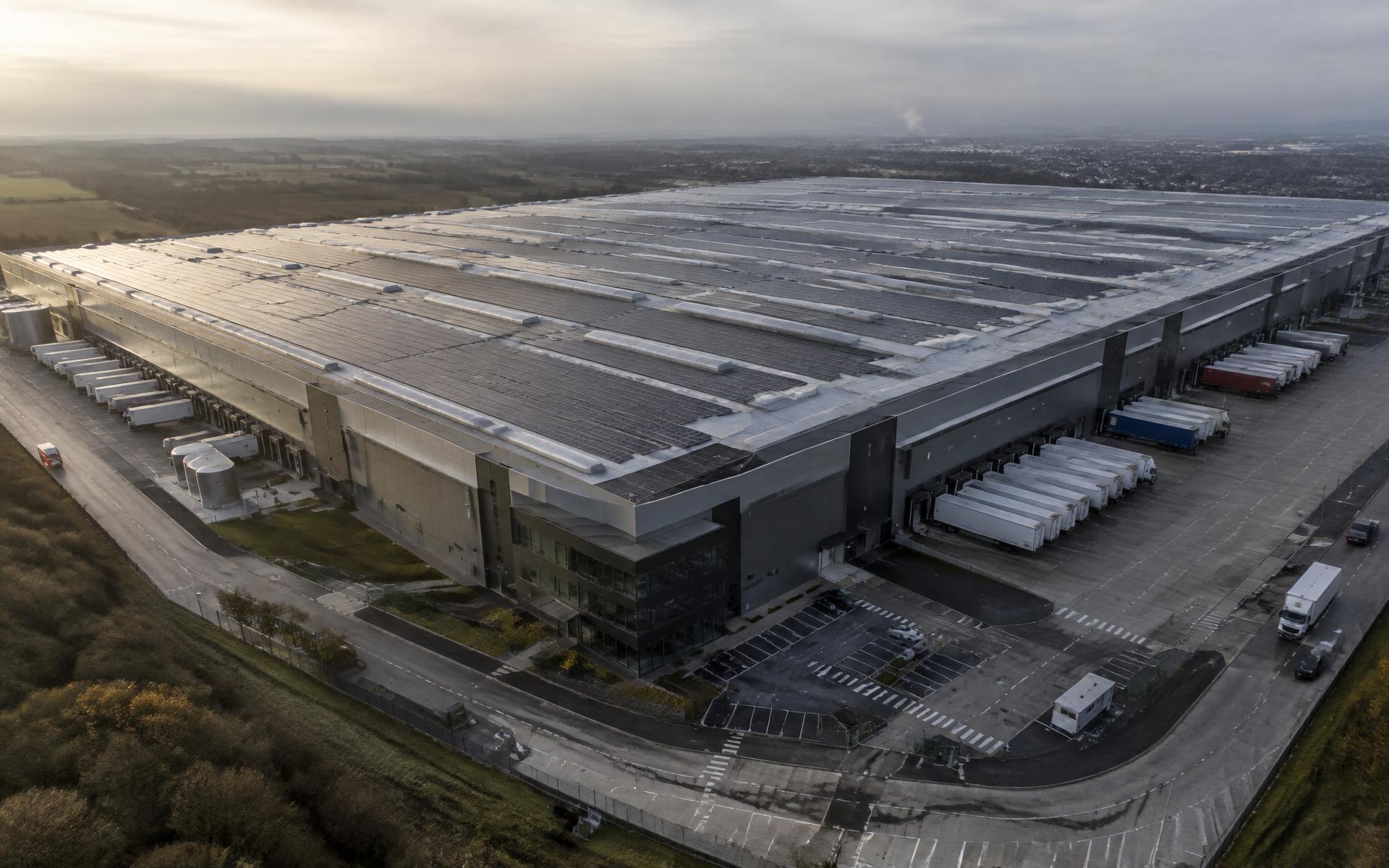
On a pitched east-west roof the reason is obvious: two usable slopes rather than one. On a flat or very shallow roof, which is what most warehouses, barns and modern industrial units have, the reason is spacing.
South-facing frames on a flat roof must be spaced apart so the front row does not shade the row behind it in low winter sun. That gap is dead roof. East-west frames sit back to back in a continuous shallow dome, panels sloping away from each other, so the gap largely disappears. The same flat roof takes something like 30 to 40 per cent more panels in east-west than in spaced south rows.
There is a second benefit that surveyors care about more than owners do. A low east-west dome catches far less wind than a row of tilted south-facing sails, so the ballast needed to hold it down is lighter. On an older roof with limited spare load capacity, that is sometimes the difference between a viable scheme and none at all.
Morning and evening, which is when you work
A south array delivers a tall, narrow spike between about 11am and 2pm. An east-west array delivers a broad, two-humped curve: east panels waking early, west panels still working late into the afternoon.
For a business that opens at seven and closes at six, that broad curve is worth more than the spike, because more of the electricity is used on site instead of exported. Self-consumed power is worth the full retail rate you would otherwise pay. Exported power is worth a fraction of it. A layout that generates slightly less but is used far more thoroughly usually beats a layout that generates slightly more into an empty building.
The question is not how much you generate. It is how much you use.
What changes about the mounting and the cost
On a pitched roof, nothing changes at all. The same hooks, the same rails, the same clamps, chosen by the roof covering rather than by the compass. An east-west pitched install costs what a south one costs.
On a flat roof, you use an east-west ballasted system rather than a south-facing tilt frame. The frames are usually cheaper per panel, the ballast is lighter, and the install is faster because the rows butt together. The extra cost sits in the electrical design: two orientations often want separate strings, or an inverter with two independent trackers, so both faces work at their own best voltage instead of dragging each other down. That is a design decision, not a surcharge.
Optimisers or microinverters are worth pricing on any east-west roof where shading is awkward, because they stop a shaded panel on one slope pulling down the string on the other.
A large shed roof, worked through
Take a big distribution shed of the Drumsheds type: a very large, shallow-pitched roof running east-west, a landlord with a load of steel above and a tenant with a serious electricity bill below.
A south-only layout on that roof would use one slope and leave the other bare, generating a midday spike that overshoots the site's own demand and spills into an export limit the network operator has already capped. The east-west layout covers both slopes, produces across a twelve to fourteen hour window instead of a four hour one, and keeps peak output under the export cap. The result is more total kilowatt hours sold or saved through the same connection, which on a capped site is the only number that matters.
That is the same logic applied to land rather than roof in East-West arrays: the economics on constrained UK sites, and the same reason a capped connection is sometimes better answered by putting the load on the site than by shrinking the array.
When we would say don't bother
An east-west roof with heavy shading on both slopes from a taller neighbouring building. A roof with less than about five years of covering left, where the right order is re-roof first, panels after. A roof whose structure cannot take even a light ballasted system, which a structural check will tell you before any money is spent. A site with almost no daytime electricity use and no battery, where nearly everything generated is exported at a poor rate.
None of those are objections to east-west. They are objections to that roof, and they would apply just as firmly if it faced due south.
What to do next
The honest answer for a specific building comes from three things: the roof's pitch and covering, the half-hourly electricity consumption underneath it, and what the local network operator will let you export. We model all three before quoting. Ask us to look at your roof and we will tell you what both slopes are worth.
In short
An east-west facing roof is a good place for solar in the UK. Each panel makes roughly 10 to 20 per cent less than a south-facing one, but both slopes can be used, and on a flat roof east-west frames sit back to back without the spacing south-facing rows need, so 30 to 40 per cent more panels fit. Output arrives across the whole working day rather than in a midday spike, which raises the share used on site.
Common questions
Are east-west facing roofs good for solar panels?
Yes. An east or west slope produces roughly 10 to 20 per cent less per panel over a year than an ideal south slope in the UK, and because both slopes can be covered, an east-west roof usually carries more total capacity and generates more electricity than a south-only layout on the same building.
How much less do panels on an east-west roof generate?
About 10 to 20 per cent per panel. A 10 kWp south-facing array in the Midlands might make around 9,000 kWh a year; the same array split east-west makes roughly 7,600 to 8,100 kWh. Using both slopes normally more than recovers that difference.
East-west or south facing solar, which is better?
South wins on yield per panel. East-west wins on total output per roof, on self-consumption, and on cost per installed kilowatt, because both slopes are used and the morning and evening peaks match when a building actually draws power.
Can you put solar panels on a flat roof facing east-west?
Yes, and it is the usual choice. East-west ballasted frames sit back to back in a low dome with almost no gap between rows, so 30 to 40 per cent more panels fit than in spaced south-facing rows, and the lower wind load means lighter ballast on the roof structure.
Do east-west panels need two inverters?
Not two inverters, but two independent MPPT trackers or separate strings, so each orientation works at its own best voltage instead of dragging the other down. Most modern string inverters have this built in.
Continue reading
All essays →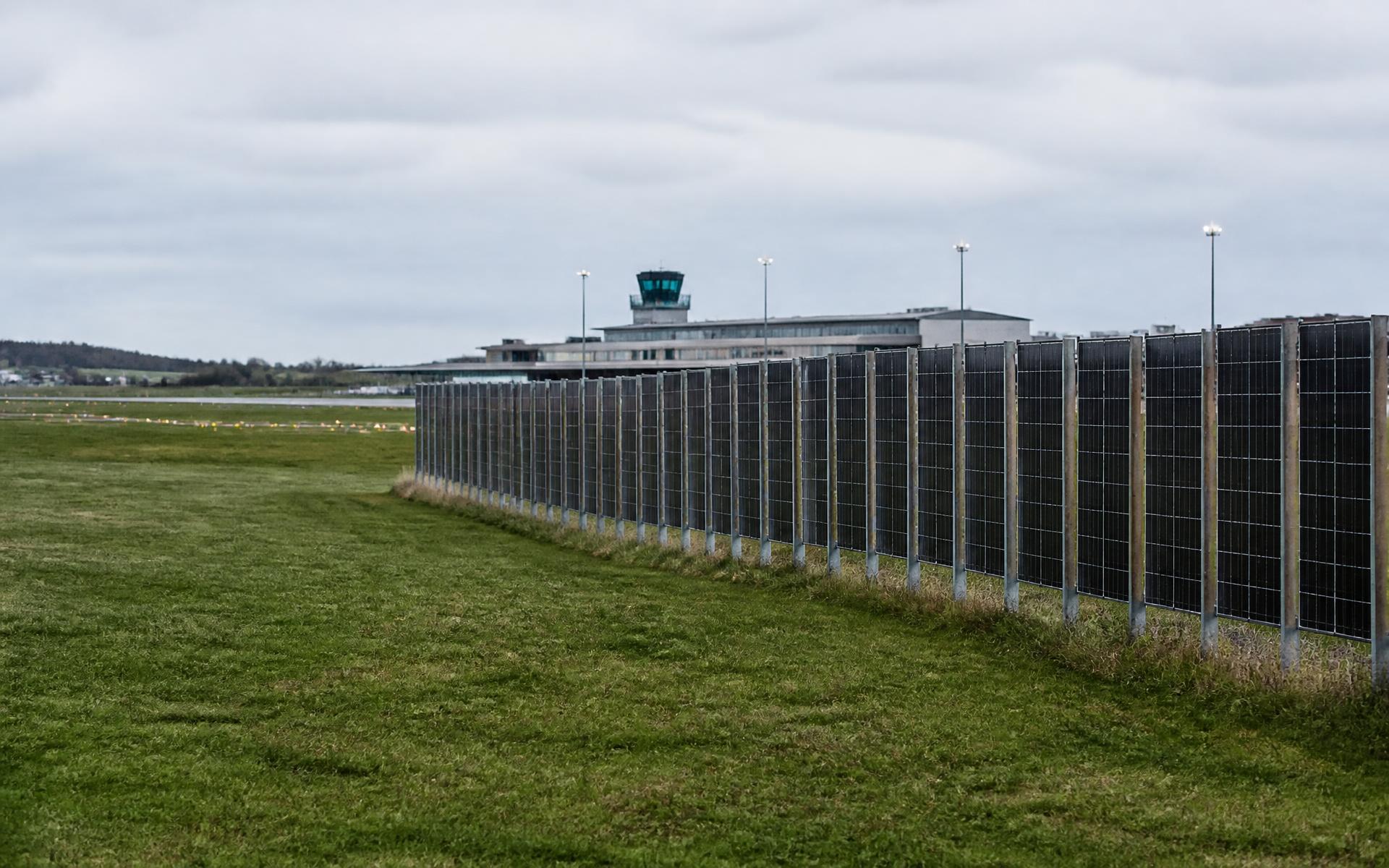
The best-defended solar site in Britain is behind an airport fence
Mown grass, kilometres of perimeter and a large continuous load next door. What an airport microgrid actually looks like.
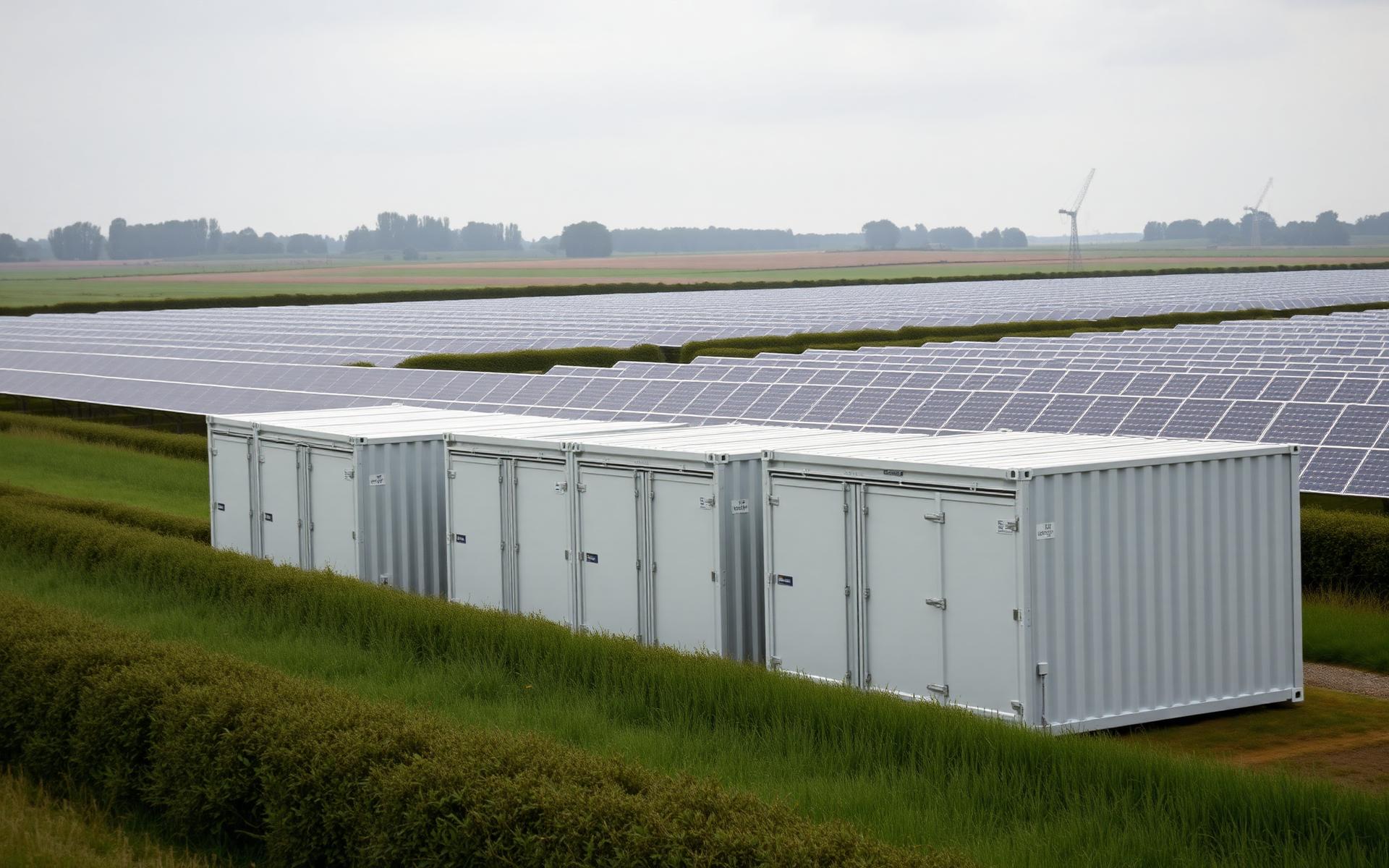
Use them where you make your own electrons
Serve the businesses next door over private wire, then let containerised compute eat whatever the grid won't take.

The eclipse and the grid
A predictable dive in national solar, a kettle surge on the other side, and a free rehearsal for every ordinary evening.
Why 1% of the UK is all we need
We don't have a land problem. We have a coordination problem.

Fragmented Funding
The capital is already there. It's just scattered across six different desks.

Powering the Future: Community Bonds
What if a community could keep the returns on its own infrastructure?
Why Ground Screws are the Future of UK Commercial Solar Farms
Time is capital. Earth is an asset. Concrete is a liability.
Local Net Zero: the support already on the table
Hubs, Accelerators, Great British Energy, the Community Fund, what's on offer, and how to find the door.
Global Quality, Local Installation
Why we install Tesla, and what a four-Powerwall replacement says about backing customers for decades.

The Evolution of Work: From Watt to Joule
Joule gave the scientific 'why' to the practical 'how' Watt had already commercialized, and that's why your bill is in kWh.
Let There Be Light: York Minster and the cathedral as civic leader
184 panels, £20,000 saved in six months, and a signal from the institution that has watched the British landscape the longest.

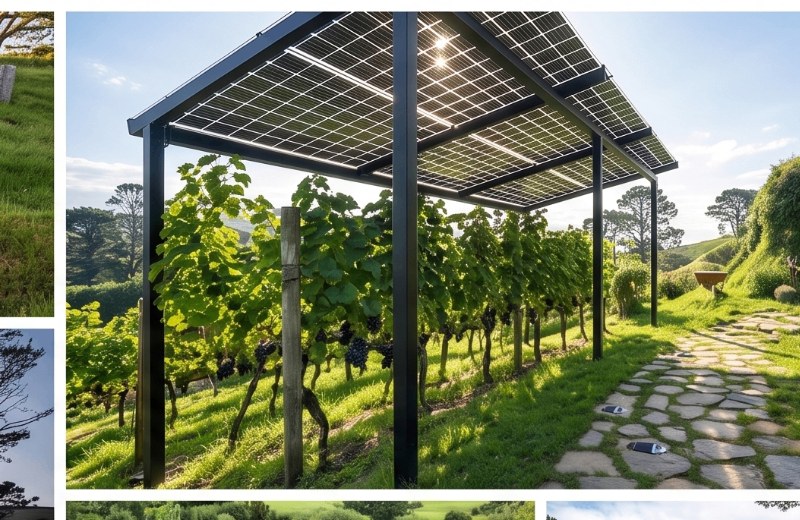
Shade as a Resource: agrivoltaics for British vineyards
What a 2018 Oregon study tells us, and what it doesn't, about putting solar above vines.
SEG, PPAs and the rise of symmetric pricing
Three layers for selling solar back to the grid, and a fourth idea that aligns the home with the system operator.
Mini Rails vs Long Rails
The mounting structure is the second-largest source of embodied carbon in a solar system. Two short profiles or one long one, it matters.
Playing the DNO: how to fast-track a slow connection
You can't choose your Distribution Network Operator. You can choose how you submit, and that is usually the whole game.
Biodiversity Net Gain: the 10% that changes the maths
Statutory BNG is now the law for almost every piece of development in England. For solar, it is an opportunity hiding inside an obligation.
Reclaiming VAT on farm solar
Solar panels are plant and machinery. For most VAT-registered farms, that means the 20% input tax comes back, and capital allowances stack on top.
East-West arrays: the economics on constrained UK sites
Lower yield per panel, higher revenue per hectare. Why midday peaks are now a liability.
The hop garden that became a power station
977 kWp seven metres above a working hop garden. What Fraunhofer's HoPVen trial means for British growers, and what it doesn't yet prove.
Should you wait for better panels?
Cadmium telluride is real, cheap at gigawatt scale and not sold to you. The choice on a British roof is which silicon, and why we specify glass-glass.
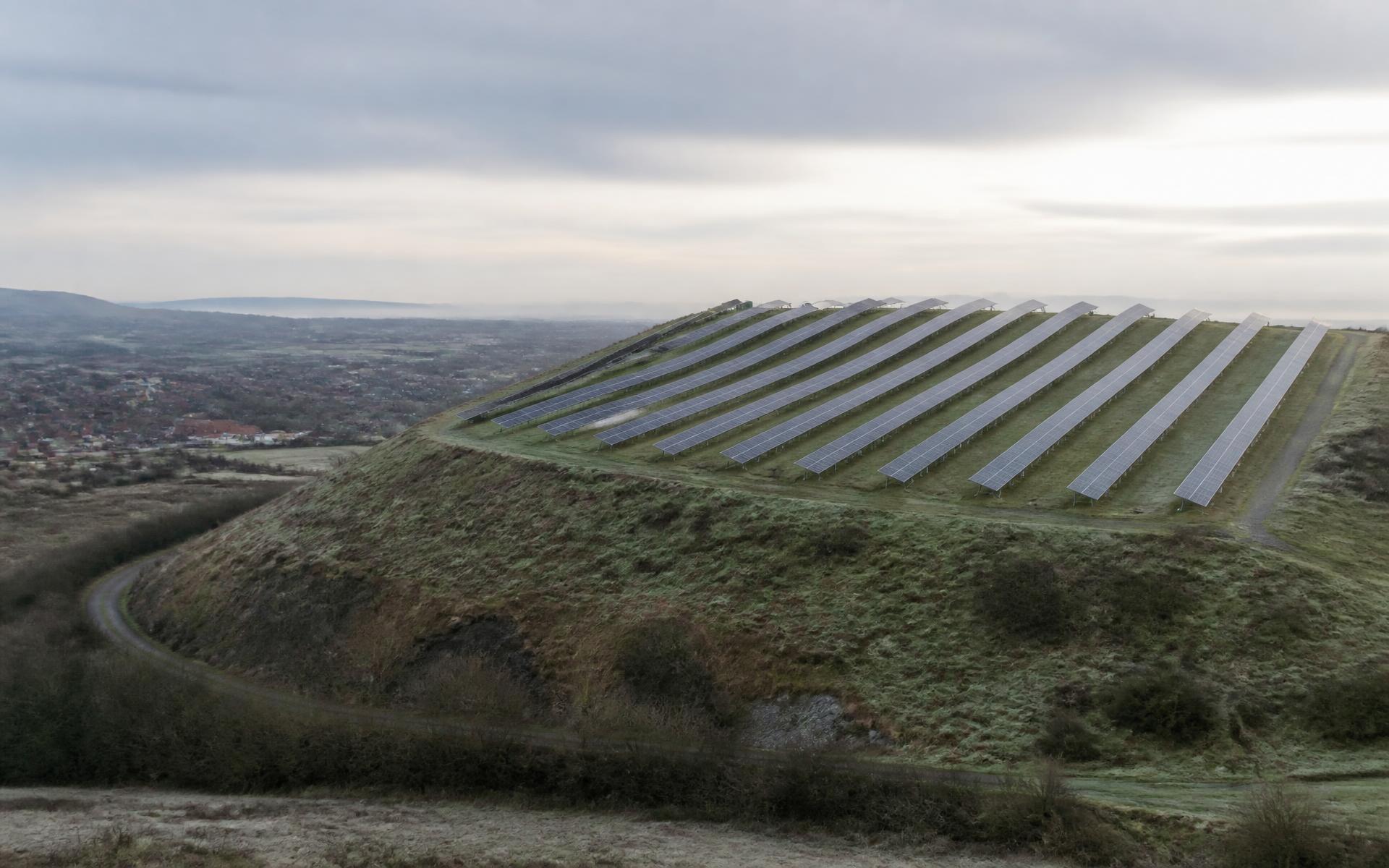
The hill made of rubbish that pays rent
New Haven put 1,900 panels on a capped landfill. Britain has twenty thousand of these hills and no policy pointing at one of them.