The hill made of rubbish that pays rent.
A capped landfill is one of the very few pieces of ground where solar is not competing with anything. New Haven has just proved the point. Britain has roughly twenty thousand of these hills and no policy pointing at a single one of them.
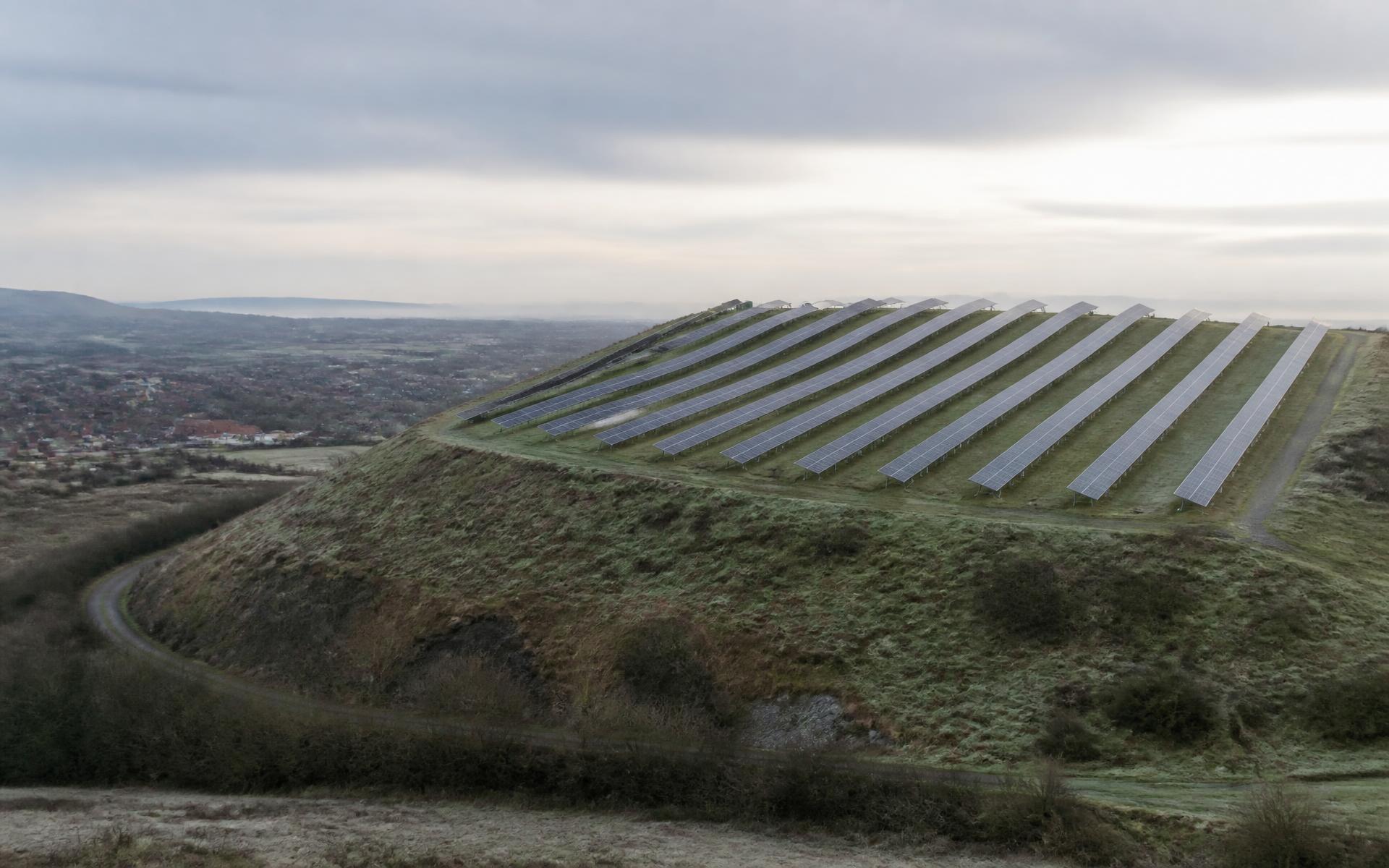
There is a grassy mound beside the highway on the edge of New Haven, Connecticut. For decades it took the city's rubbish. Then it was sealed, planted over and left alone, which is what happens to a landfill when it is full. In July a crew finished bolting about 1,900 solar panels along the slope and switched them on.
Nobody dug a hole to do it, and that is the whole story.
Why almost nothing can be built on a tip
A closed landfill is not empty land, it is a sealed system. The cap laid over the waste is the engineering. It keeps rainwater from getting in and leachate from getting out, and it has to go on doing that for decades after the last lorry left. Break the cap and the whole arrangement fails, which is why you cannot put footings, basements or drainage through one. Councils and their insurers know this, so the standard answer to any proposal on a capped tip is no.
Solar is one of the few things that fits, because it does not need to go through anything. The arrays sit on ballasted supports that press down on the surface rather than driving foundations into it. Nothing punctures the seal, nothing disturbs what is buried, and if the cap ever needs work the array can be lifted off and put back. It is a use that respects the constraint instead of fighting it.
The numbers from New Haven
The developer, Greenskies Clean Energy, leases the land from the city and owns the array. New Haven paid nothing to build it and takes roughly $1.5 million in rent across a twenty year lease, on ground that previously earned nothing and could not be sold. Six more arrays are planned across the city, about four megawatts, and another quarter of a million dollars a year in rent.
The mayor, Justin Elicker, put the site's old value plainly. "We can't use it for much of anything, so really it was just a large mound that people drove by every day on the highway," he said, "and now we have on top of it an actual production of energy."
A hundred and twenty acres of anything is a fight. A capped landfill is not, because nobody else wants it. That is the asymmetry worth understanding.
The bit that made it happen was not the panels
Connecticut has quietly stacked the deck. Every round of its shared clean energy procurement carries a bid preference for projects sited on landfills and brownfields. A scarred site can therefore beat an open field on score even when it loses on price, and a developer who would otherwise take the easy greenfield option has a commercial reason to take the hard hill.
That is the transferable part. The engineering of ballasted racking has been solved for years. What was missing was a reason to prefer the awkward site, and Connecticut wrote one into procurement.
Ten thousand more hills
New Haven is one dot. The United States has more than ten thousand closed landfills, capped, fenced, mown occasionally and otherwise doing nothing. A research group went through the subset with usable data, a little over four thousand three hundred sites, and added up what would physically fit: about 63 gigawatts of solar, roughly 83 terawatt hours a year.
Against that, only about five hundred megawatts of landfill solar had actually been built when the count was made, and three quarters of it sat in four north-eastern states. That is not a forecast. It is a map of what has not happened.
Now translate it to Britain
England alone has on the order of twenty thousand historic landfill sites on the Environment Agency's register, most of them closed long ago, many of them capped, fenced and sitting in exactly the condition that makes them useless for everything except this. Some are on the edge of towns, which is to say near demand, near substations, and near the roads a construction crew needs.
We should be honest about the three things that stop a given hill working, because they are real and they kill projects.
The first is settlement. Waste consolidates unevenly for years after capping, and a surface that moves differentially will pull a ballasted array out of alignment and load the frames in ways nobody designed for. Some caps are stable enough. Some are not, and the survey has to come before the enthusiasm.
The second is the grid. A tip is often exactly where the network is thinnest, and a site with no connection worth having is not a site. This is the same question we ask on any field, and it is answerable early, cheaply, before anyone spends money on design.
The third is the permitting overhead. Work on contaminated ground brings the environmental permit, the gas management system and the landfill operator into the room, and every one of them can add months. Not fatal, but it has to be in the programme from day one rather than discovered in month six.
And then there is the fourth, which is ours rather than the ground's. Nobody in Britain has written a bid preference for brownfield and capped landfill into any procurement that matters. A former tip competes with a flat green field on price alone, and it loses, because the field is cheaper to build on and easier to consent. Until someone tilts that, these hills stay mown.
Why we care about it here
We have argued before that Britain does not have a land problem, it has a coordination problem, and that roughly one per cent of the country would do the whole job. Landfill sites are the purest version of that argument. Every acre of ruined ground carrying panels is an acre of farmland nobody has to defend at a parish meeting, an acre of hedge nobody has to justify, an objection that never gets written.
Solar on council land, closed tips included
Most councils own more ground than they think of as an asset: a closed tip, a depot roof, a park-and-ride, a surplus yard behind a leisure centre. The structure that works on a capped landfill works on all of them. The council keeps the freehold and grants a lease, usually twenty to forty years. A developer funds, builds, insures and operates the array, and the council takes ground rent, or takes the power itself at a fixed price and stops buying it at retail. New Haven paid nothing to build and takes roughly $1.5 million over its lease.
The order of the questions matters more than the answers. First the grid, because capacity at the boundary sets the size of everything that follows, and you can check the network at a postcode before spending a penny. Then the cap: how much has it settled, and is the survey record good enough to design ballast against. Then the permit, the gas management system and the landfill operator, all of which belong in the programme from day one. Only after those three does the money question mean anything.
A hill made of rubbish is generating electricity, and the rubbish underneath it has not moved an inch.
If you sit on a closed tip, or a council that owns one, the first question is not what it would cost. It is what the grid looks like at the boundary and how much the cap has settled. Both are answerable in a few weeks. We are happy to do the looking.
Sources: the Greenskies press release on the completed array, and Ecoportal's account of the switching ceremony and the national landfill solar potential figures.
Common questions
Can you put solar panels on a closed landfill site?
Yes. Solar is one of the few uses that suits a capped landfill, because the array sits on ballasted supports that press down on the surface instead of driving foundations through the cap. Nothing punctures the seal, nothing disturbs the waste, and the array can be lifted off if the cap ever needs repair. The three things that decide whether a particular tip works are cap settlement, the grid connection at the boundary, and the environmental permitting overhead.
Can a council lease its land for solar?
Yes, and it is usually the lowest-risk route. The council keeps ownership and grants a lease, typically 20 to 40 years, while a developer funds, builds and operates the array. New Haven paid nothing to build its landfill array and takes about $1.5m in ground rent over a twenty year lease. The same structure works in Britain on closed tips, depot roofs, car parks and unused council land.
How much can a council earn from solar on a closed landfill?
Income comes either as ground rent from a leased site or as avoided electricity cost if the council takes the power itself. Rent depends on capacity, and capacity depends on the grid connection more than the acreage, which is why the connection question should be answered before anything else.
What stops landfill solar happening in the UK?
Mostly economics rather than engineering. A former tip competes with a flat green field on price alone and loses, because the field is cheaper to build on and easier to consent. Connecticut fixed that with a bid preference for landfill and brownfield sites in its clean energy procurement. No comparable preference exists in any UK procurement that matters.
How much solar could go on landfill sites?
In the United States, a survey of about 4,300 closed landfills with usable data found room for roughly 63 GW, about 83 TWh a year, against roughly 500 MW actually built. England alone has on the order of 20,000 historic landfill sites on the Environment Agency's register.
Two minutes, three questions. No sales calls unless you ask for one.
In short
New Haven, Connecticut, built a 1,900 panel solar array on a capped landfill using ballasted supports that sit on the cap rather than piles driven through it, and takes roughly $1.5m in ground rent over a twenty year lease. Britain has around twenty thousand closed landfill sites and no policy that points solar at any of them.
Common questions
Can you build a solar farm on a landfill site?
Yes, and closed landfill is well suited to it: the land cannot be built on, it is already disturbed, and it is often council-owned with a grid connection nearby. The constraint is the cap, which must not be punctured, so the array sits on ballasted supports rather than driven piles or screws.
How are solar panels fixed on a capped landfill?
On ballast. Concrete or aggregate weights hold a shallow frame on top of the membrane, so nothing penetrates the cap and nothing disturbs the gas collection system. It costs more in mounting and less in groundworks than a conventional field array.
Is landfill land cheaper for solar?
Usually, because it has no agricultural or development value and the owner is often a local authority looking for income from a liability. New Haven's twenty year lease brings in roughly $1.5m of ground rent from land that previously cost money to maintain.
How much closed landfill does the UK have?
Around twenty thousand closed sites. There is currently no national policy directing renewable development towards them, so each scheme is negotiated individually with the landowning authority and the Environment Agency permit holder.
Continue reading
All essays →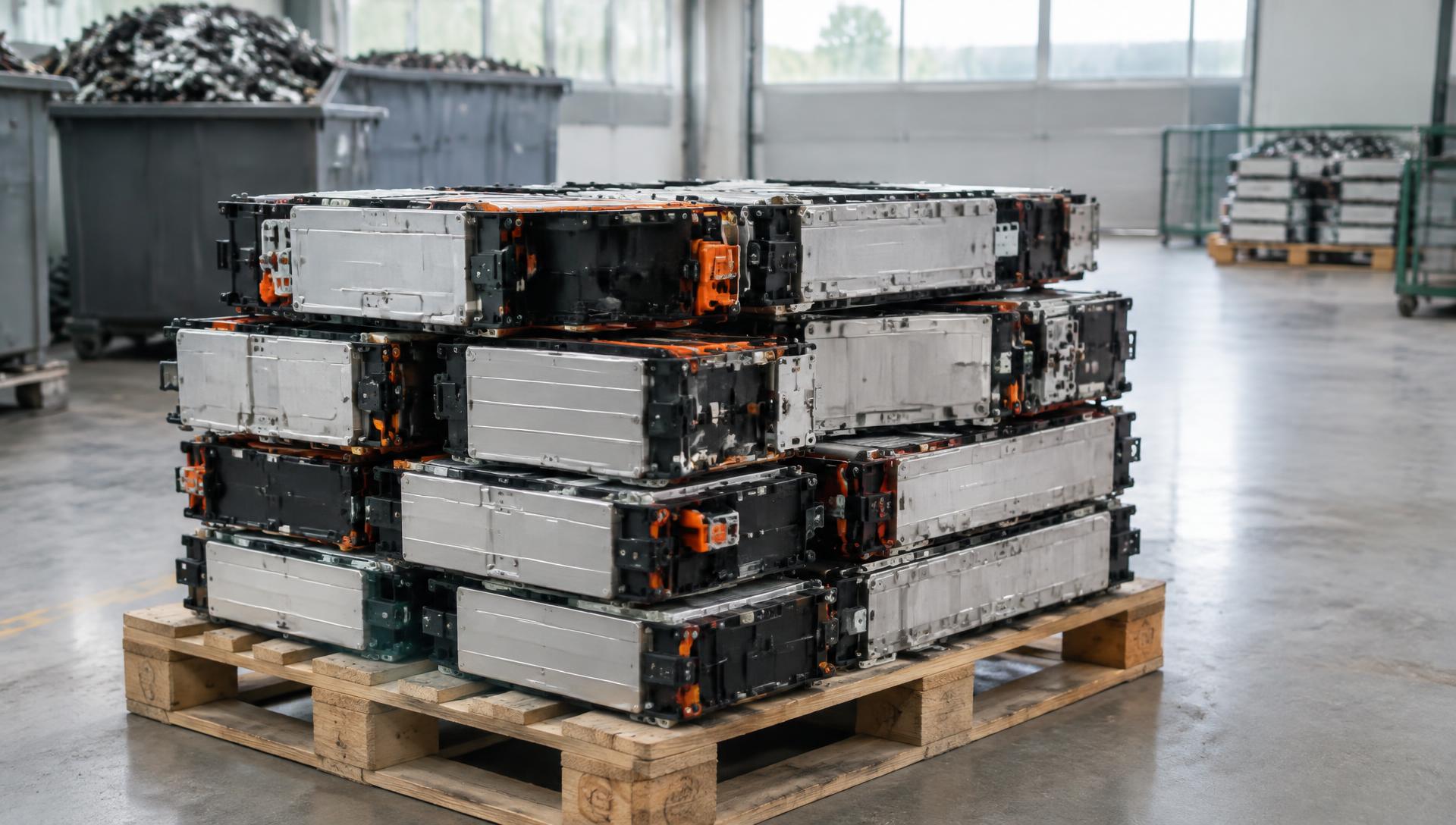
What happens to a home battery at the end of its life?
Extend first, recycle second, landfill never. Tesla's published end-of-life policy, and what to ask before you buy any battery.
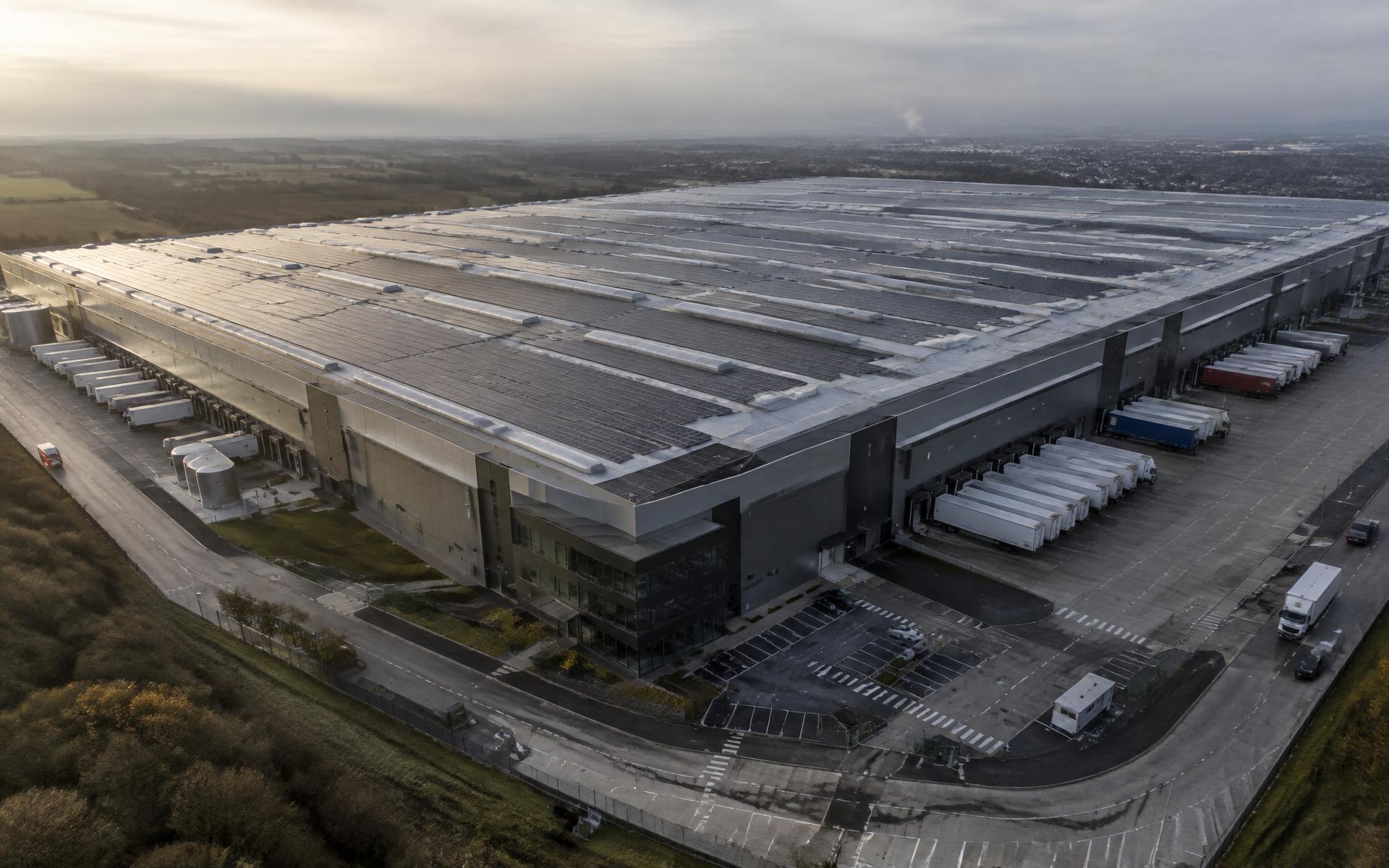
Solar on an east-west facing roof
Ten to twenty per cent less per panel, twice the roof to use, and output across the whole working day. The plain answer for a building that doesn't face south.
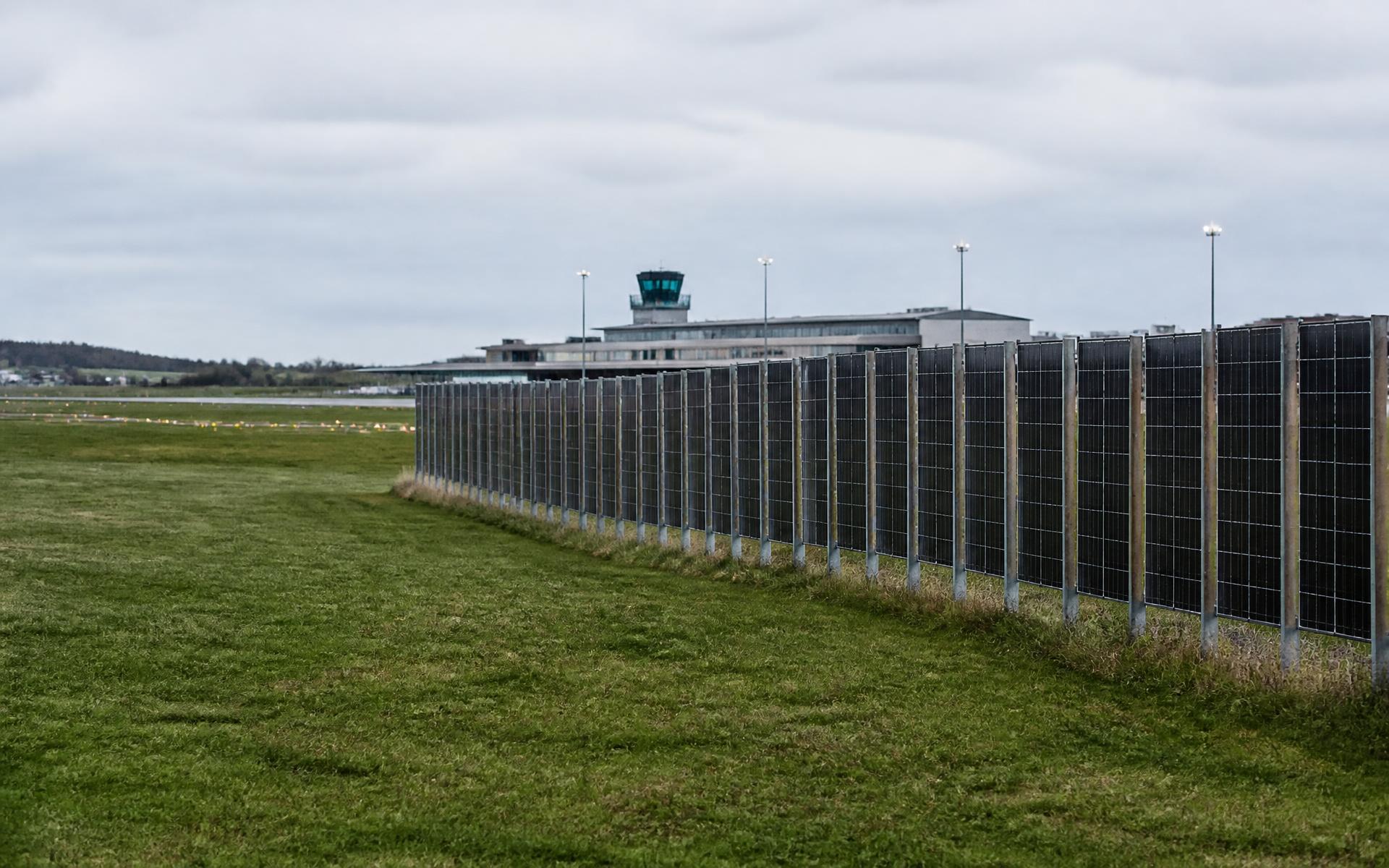
The best-defended solar site in Britain is behind an airport fence
Mown grass, kilometres of perimeter and a large continuous load next door. What an airport microgrid actually looks like.
Use them where you make your own electrons
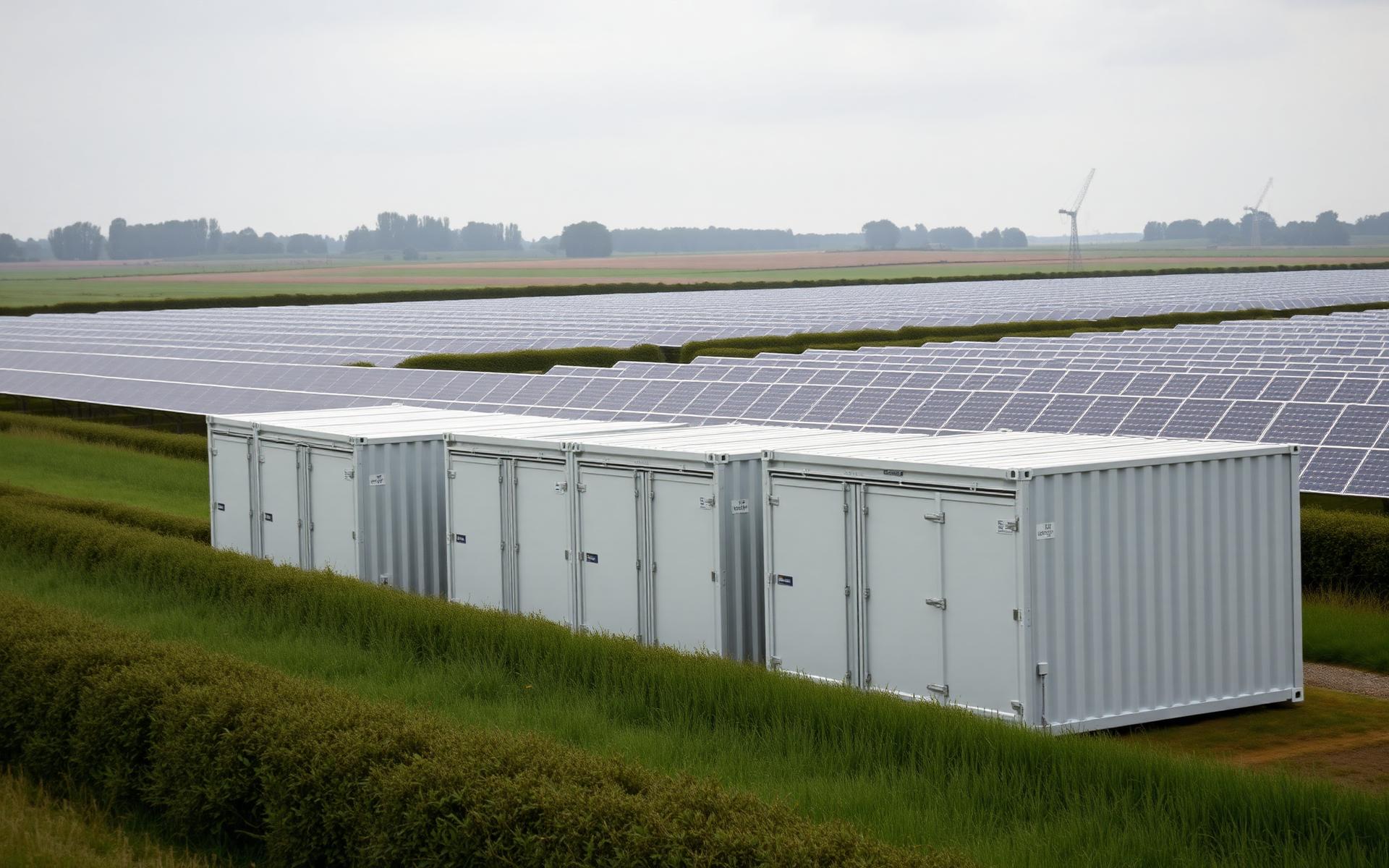
Serve the businesses next door over private wire, then let containerised compute eat whatever the grid won't take.

The eclipse and the grid
A predictable dive in national solar, a kettle surge on the other side, and a free rehearsal for every ordinary evening.
Why 1% of the UK is all we need
We don't have a land problem. We have a coordination problem.

Fragmented Funding
The capital is already there. It's just scattered across six different desks.

Powering the Future: Community Bonds
What if a community could keep the returns on its own infrastructure?
Why Ground Screws are the Future of UK Commercial Solar Farms
Time is capital. Earth is an asset. Concrete is a liability.
Local Net Zero: the support already on the table
Hubs, Accelerators, Great British Energy, the Community Fund, what's on offer, and how to find the door.
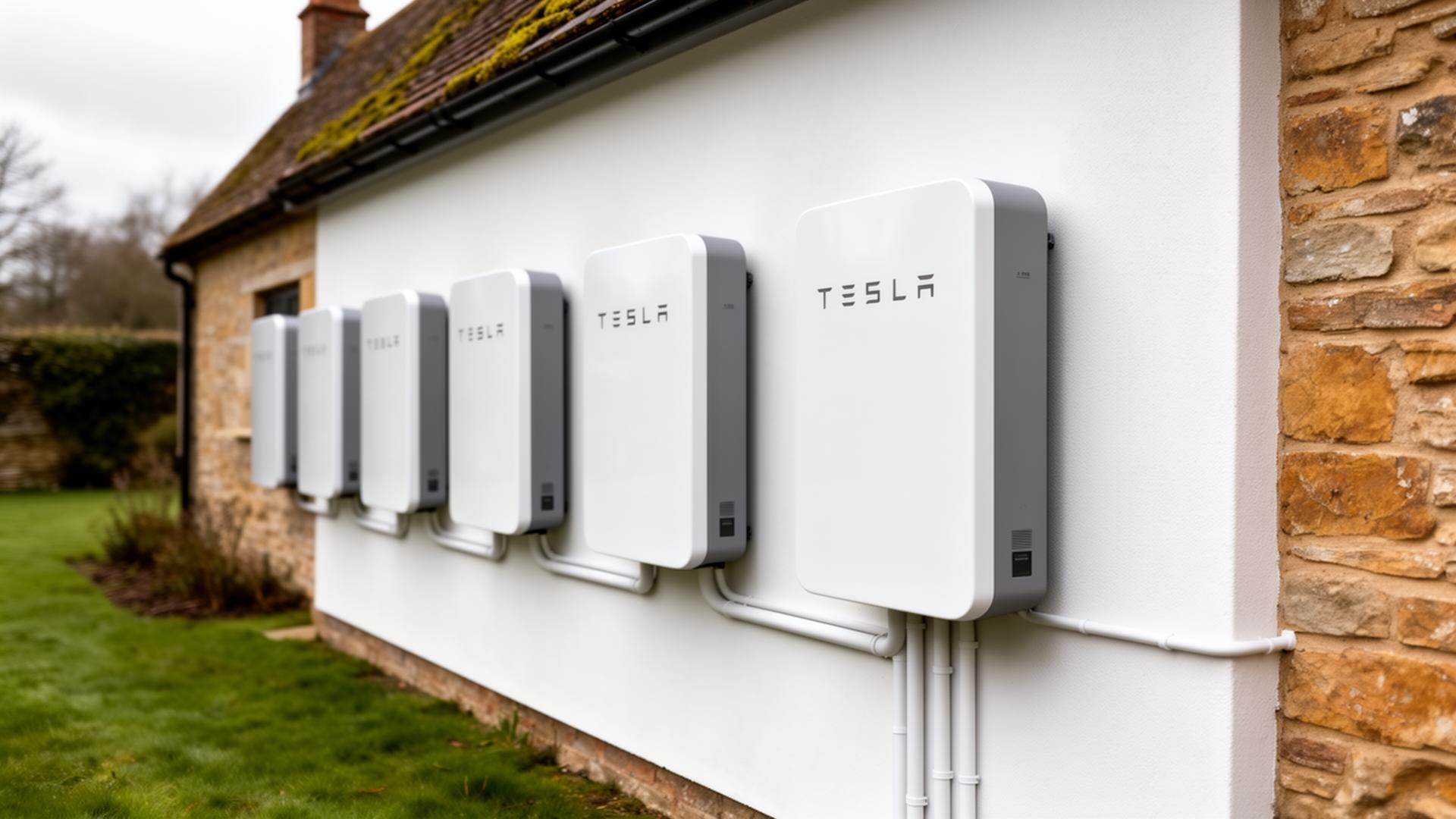
Global Quality, Local Installation
Why we install Tesla, and what a four-Powerwall replacement says about backing customers for decades.

The Evolution of Work: From Watt to Joule
Joule gave the scientific 'why' to the practical 'how' Watt had already commercialized, and that's why your bill is in kWh.
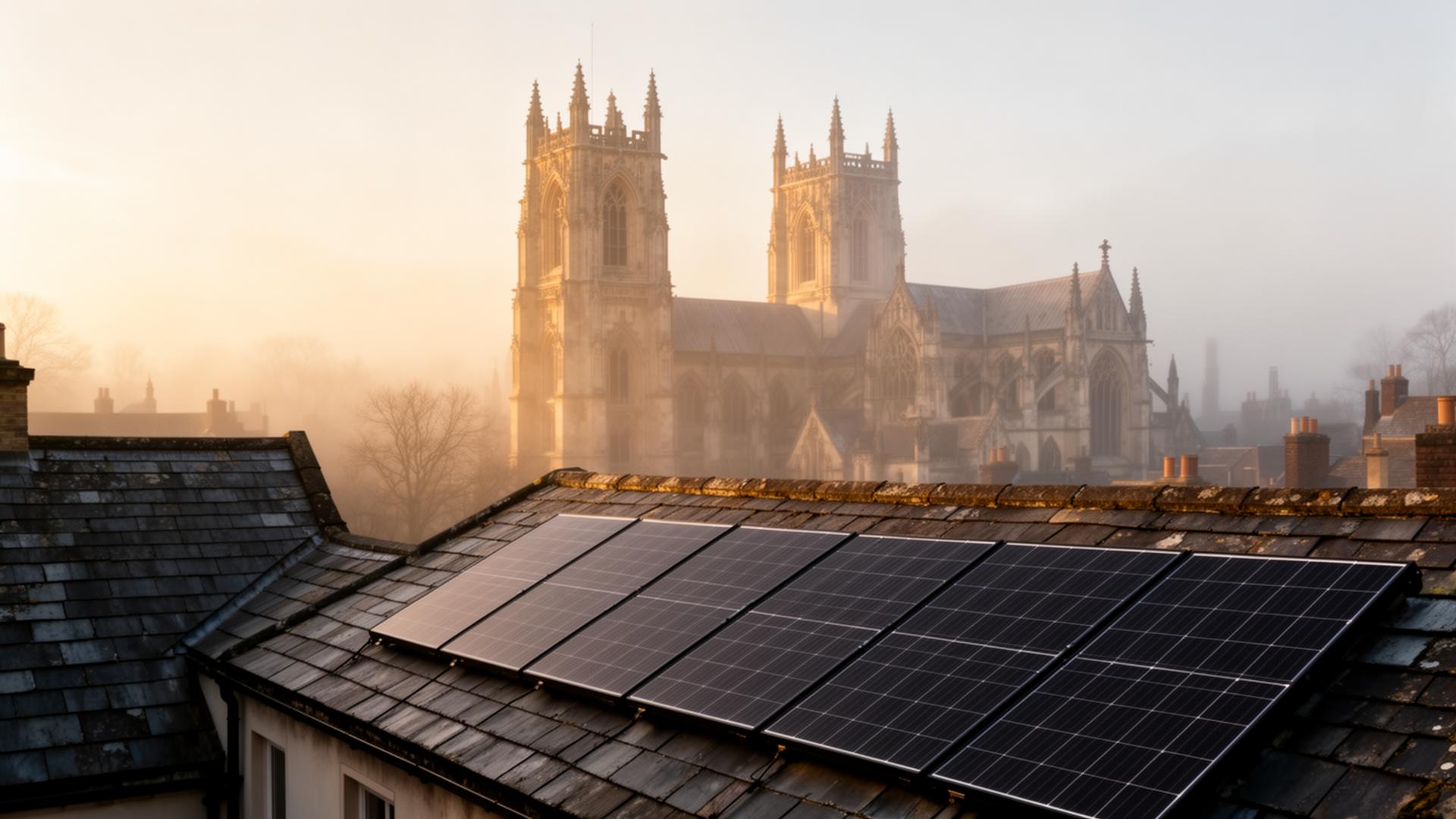
Let There Be Light: York Minster and the cathedral as civic leader
184 panels, £20,000 saved in six months, and a signal from the institution that has watched the British landscape the longest.

Shade as a Resource: agrivoltaics for British vineyards
What a 2018 Oregon study tells us, and what it doesn't, about putting solar above vines.
SEG, PPAs and the rise of symmetric pricing
Three layers for selling solar back to the grid, and a fourth idea that aligns the home with the system operator.
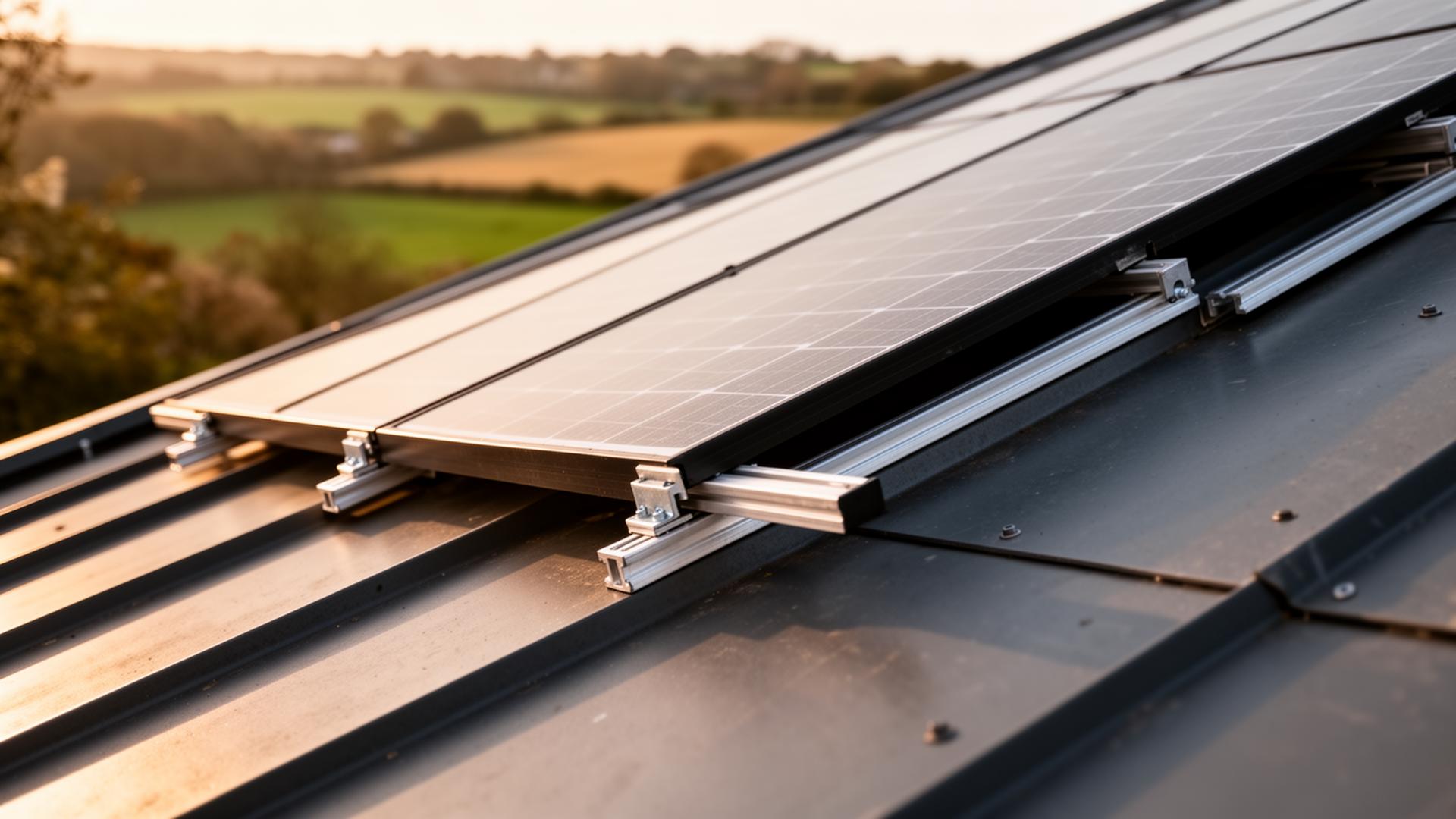
Mini Rails vs Long Rails
The mounting structure is the second-largest source of embodied carbon in a solar system. Two short profiles or one long one, it matters.
Playing the DNO: how to fast-track a slow connection
You can't choose your Distribution Network Operator. You can choose how you submit, and that is usually the whole game.
Biodiversity Net Gain: the 10% that changes the maths
Statutory BNG is now the law for almost every piece of development in England. For solar, it is an opportunity hiding inside an obligation.
Reclaiming VAT on farm solar
Solar panels are plant and machinery. For most VAT-registered farms, that means the 20% input tax comes back, and capital allowances stack on top.
East-West arrays: the economics on constrained UK sites
Lower yield per panel, higher revenue per hectare. Why midday peaks are now a liability.

The hop garden that became a power station
977 kWp seven metres above a working hop garden. What Fraunhofer's HoPVen trial means for British growers, and what it doesn't yet prove.
Should you wait for better panels?
Cadmium telluride is real, cheap at gigawatt scale and not sold to you. The choice on a British roof is which silicon, and why we specify glass-glass.