What happens to a home battery at the end of its life?
Most battery brands sell you the first fifteen years. Tesla has written down what happens after them, and has done so since its early years.
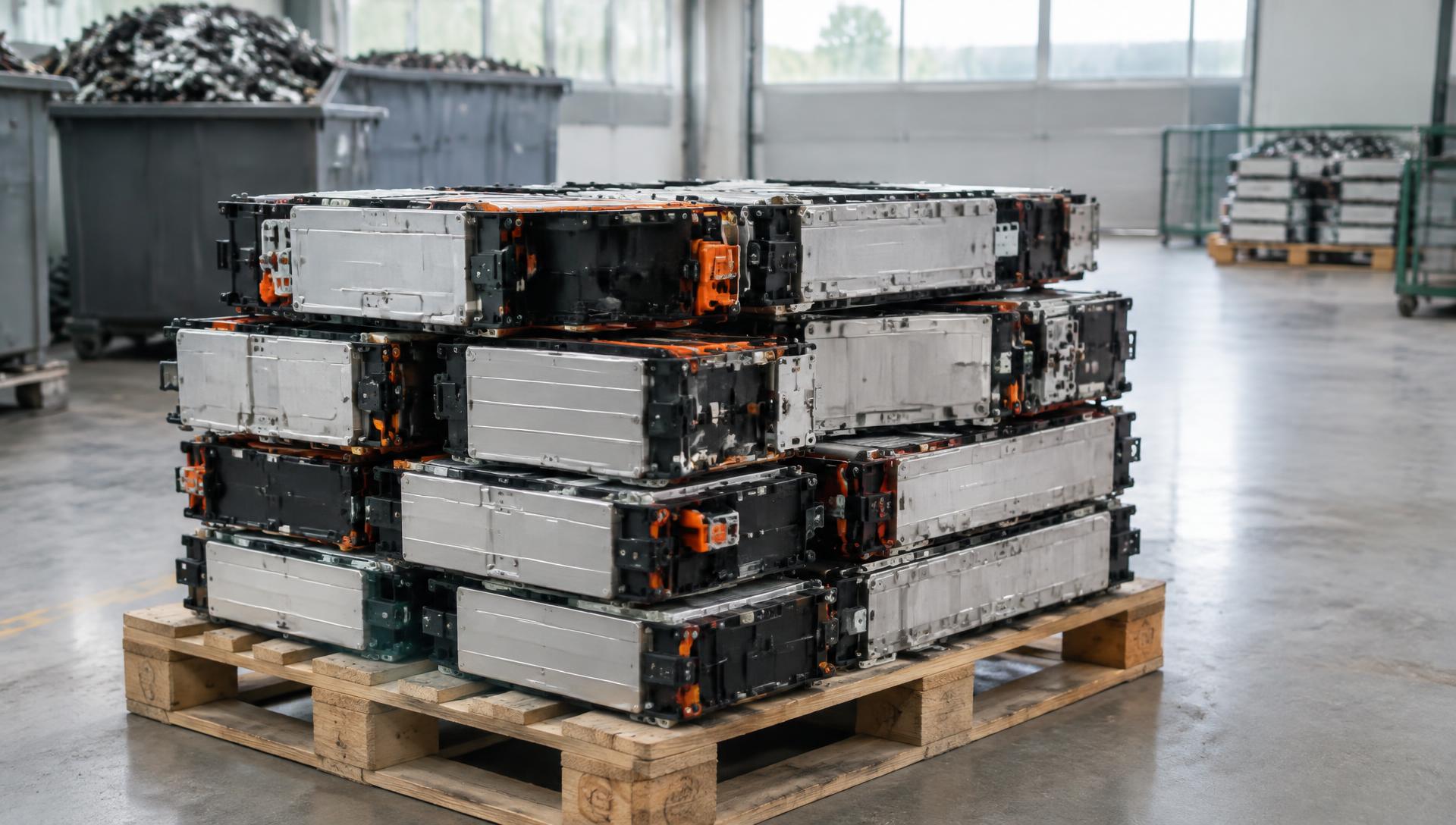
When you buy a home battery you are asked about capacity, power, warranty and price. You are almost never told what happens when it is finished. That is a strange gap for a product with a working life of fifteen years or more, that contains lithium, nickel, cobalt or iron phosphate, copper and aluminium, and that sits on the wall of your house or barn.
Tesla is the exception we point customers to. Its public battery recycling policy, published on its support pages and repeated in its annual Impact Reports, sets out a simple order of priorities. It has been part of how the company describes its batteries since the Roadster, its first car.
The policy, in three lines
Extend first. Tesla's position is that keeping a battery in service is better, environmentally and commercially, than recycling it. A battery that no longer meets a customer's needs is serviced before it is decommissioned.
Recycle second. Unlike burnt fuel, the metals in a lithium-ion cell are not consumed. They remain in the cell at the end of its life and can be recovered and refined into new cells, over and over again.
Landfill never. Tesla states that none of its scrapped lithium-ion batteries go to landfill, and that 100% are recycled, either through its own recycling lines or through partners.
A battery is not a fuel tank. It is a store of metal that happens to hold energy for a while.
Why it matters that it is written down
Almost every manufacturer will tell you its batteries are "recyclable". That is a statement about chemistry, not a promise about what happens. A published policy is different: it names who is responsible, it can be checked year on year in the company's own reports, and it survives a change of installer.
That last point is the one we care about most. Installers come and go. The customer who fits a battery in 2026 may be selling the house, or the farm, in 2041. A policy owned by the manufacturer travels with the product, not with the company that fitted it.
What a battery owner should actually know
Wear is gradual, not sudden. A home battery rarely "dies". It loses usable capacity slowly. Powerwall's warranty in the UK is ten years with a guaranteed minimum of 70% of original capacity at the end of that period. Many batteries will be useful well past that point, just holding a little less.
Removal is a job for an electrician. A battery is wired into your consumer unit and, often, your solar inverter. Do not unbolt it and take it to the tip. Ask your installer, or the manufacturer's service team, to decommission it safely.
The law is on your side. In the UK, home storage batteries count as industrial batteries under the Waste Batteries and Accumulators Regulations 2009. The producer, or the person supplying the replacement, is obliged to take back waste industrial batteries free of charge. They must not be landfilled or incinerated.
Keep the paperwork. Serial number, installation certificate, installer and date. Future you, or the next owner, will need them to claim warranty or arrange collection.
The panels are covered too. Solar panels fall under the WEEE regulations, so the producer is responsible for collecting and recycling them at end of life. Glass, aluminium frames and silicon make up most of a panel's weight and are largely recoverable.
Questions to ask any installer
- Does the battery manufacturer publish an end-of-life or recycling policy? Can I read it?
- Who removes the battery when it is finished, and is there a charge?
- What capacity is guaranteed, for how long, and is the warranty transferable to a new owner?
- If your company no longer exists, who do I call?
A good answer to the fourth question is the one that matters. With Tesla, the answer is Tesla. That is one of the reasons we install it, and why we wrote about it in Global Quality, Local Installation.
Sources
Tesla, Battery Recycling (support page); Tesla Impact Reports, 2019 onwards (tesla.com/impact); The Waste Batteries and Accumulators Regulations 2009; The Waste Electrical and Electronic Equipment Regulations 2013. Warranty terms change: check the current Powerwall warranty for your country before relying on the figures above.
We will talk you through the first fifteen years, and the ones after.
Two minutes, three questions. No sales calls unless you ask for one.
In short
Tesla publishes a battery end-of-life policy: extend a battery's life through servicing first, recycle it second, and never landfill it; the company states that 100% of its scrapped lithium-ion batteries are recycled. In the UK, home batteries are industrial batteries under the Waste Batteries and Accumulators Regulations 2009, so producers must take them back free of charge, and solar panels are covered by WEEE. Owners should keep serial numbers and certificates and have an electrician decommission the battery.
Common questions
What happens to a Tesla Powerwall at the end of its life?
Tesla's policy is to extend a battery's useful life through servicing first, then recycle it. Tesla states none of its scrapped lithium-ion batteries go to landfill and 100% are recycled, recovering metals such as lithium, nickel, cobalt and copper for new cells.
Can home solar batteries be recycled in the UK?
Yes. Home storage batteries are treated as industrial batteries under the Waste Batteries and Accumulators Regulations 2009. Producers must take back waste industrial batteries free of charge, and they must not be landfilled or incinerated.
How long does a home battery last?
Typically fifteen years or more, with capacity fading gradually rather than failing suddenly. Powerwall's UK warranty is ten years with at least 70% of original capacity retained, and many batteries remain useful beyond that.
Can I take an old home battery to the tip?
No. A home battery is wired into your electrics and should be decommissioned by an electrician or the manufacturer's service team, then returned through the producer take-back route.
Are solar panels recycled at end of life?
Solar panels fall under the UK WEEE regulations, so producers are responsible for collection and recycling. Most of a panel's weight is glass, aluminium and silicon, which are largely recoverable.
Continue reading
All essays →
Solar on an east-west facing roof
Ten to twenty per cent less per panel, twice the roof to use, and output across the whole working day. The plain answer for a building that doesn't face south.
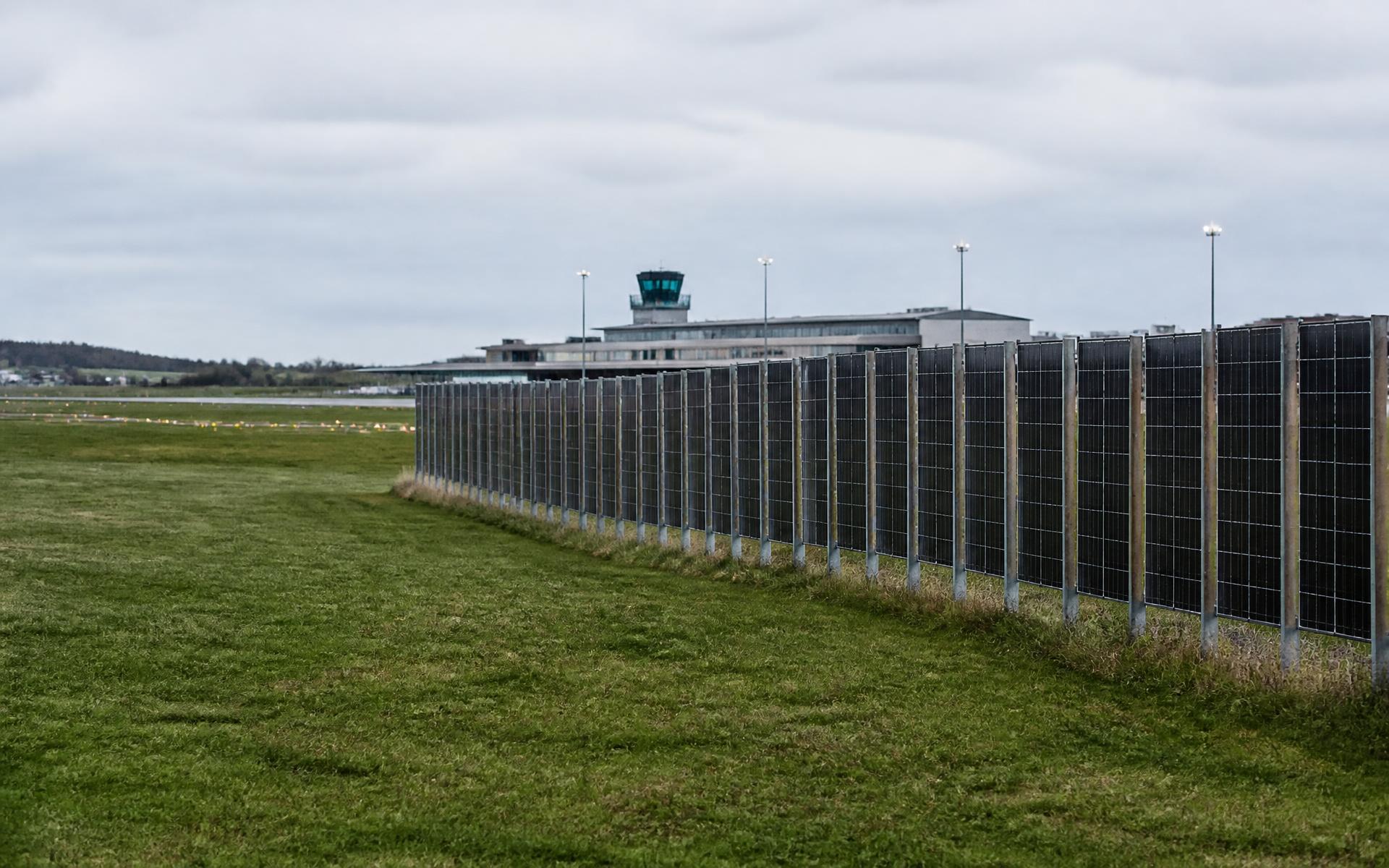
The best-defended solar site in Britain is behind an airport fence
Mown grass, kilometres of perimeter and a large continuous load next door. What an airport microgrid actually looks like.
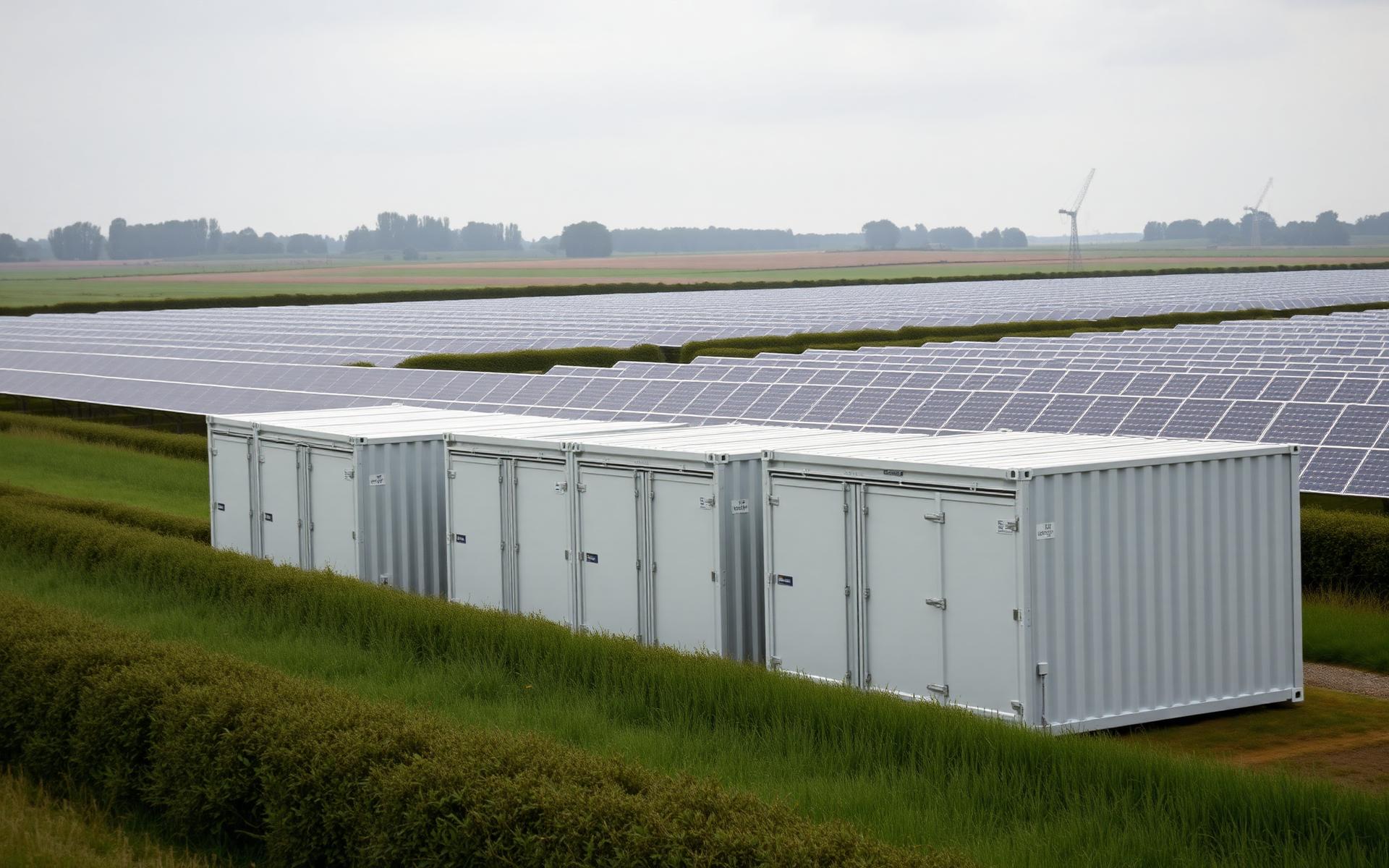
Use them where you make your own electrons
Serve the businesses next door over private wire, then let containerised compute eat whatever the grid won't take.

The eclipse and the grid
A predictable dive in national solar, a kettle surge on the other side, and a free rehearsal for every ordinary evening.
Why 1% of the UK is all we need
We don't have a land problem. We have a coordination problem.

Fragmented Funding
The capital is already there. It's just scattered across six different desks.

Powering the Future: Community Bonds
What if a community could keep the returns on its own infrastructure?
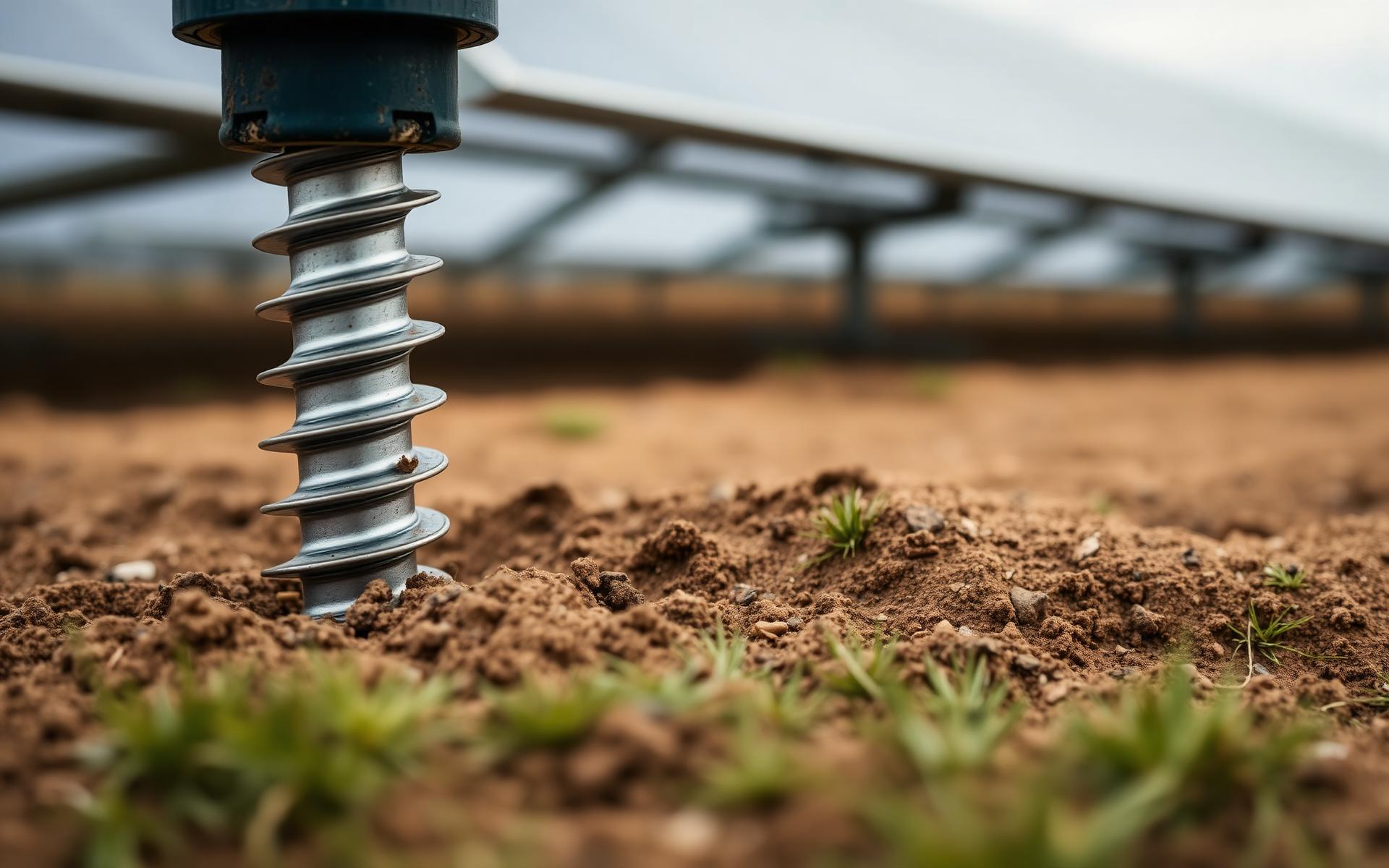
Why Ground Screws are the Future of UK Commercial Solar Farms
Time is capital. Earth is an asset. Concrete is a liability.
Local Net Zero: the support already on the table
Hubs, Accelerators, Great British Energy, the Community Fund, what's on offer, and how to find the door.
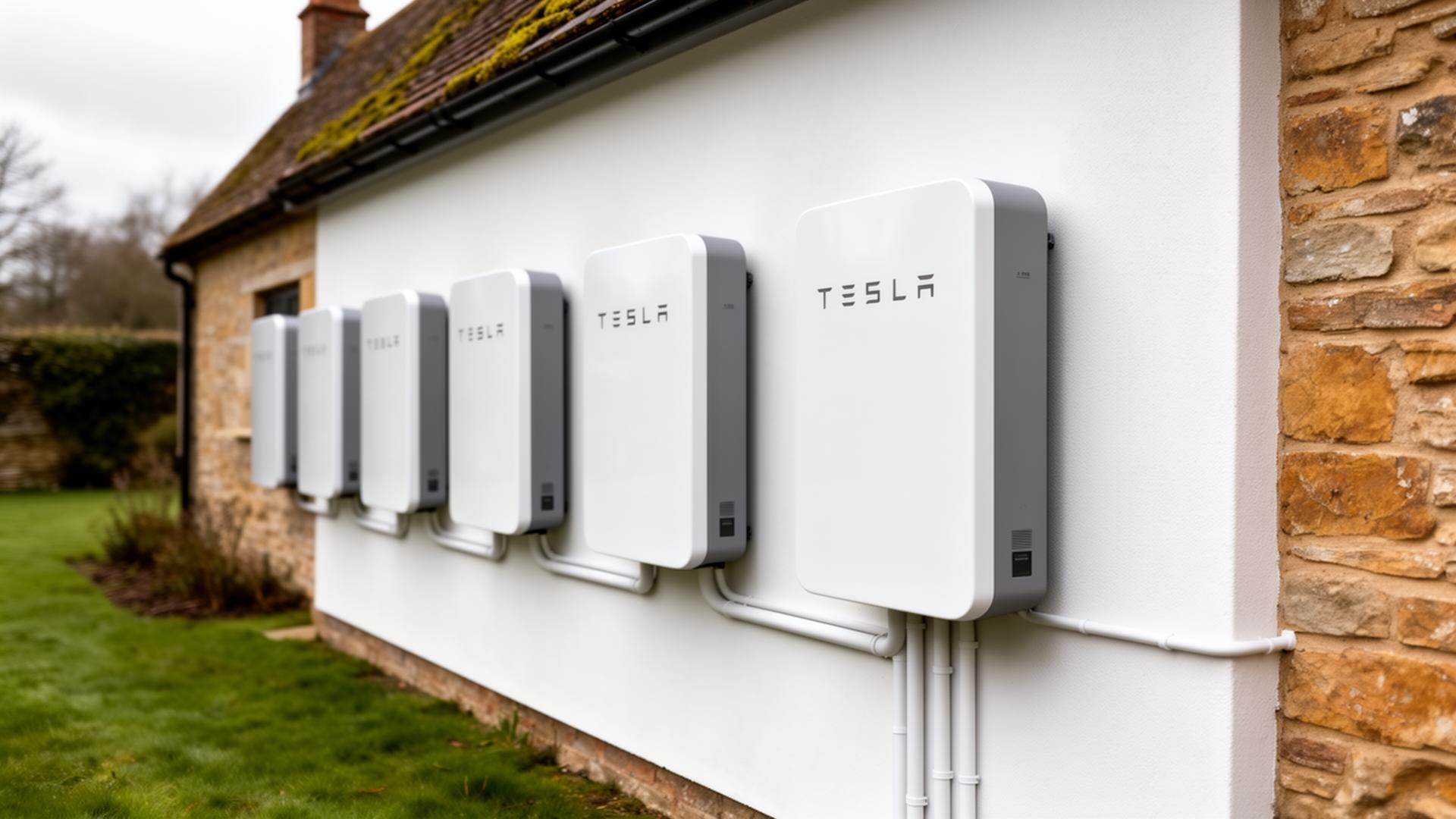
Global Quality, Local Installation
Why we install Tesla, and what a four-Powerwall replacement says about backing customers for decades.

The Evolution of Work: From Watt to Joule
Joule gave the scientific 'why' to the practical 'how' Watt had already commercialized, and that's why your bill is in kWh.
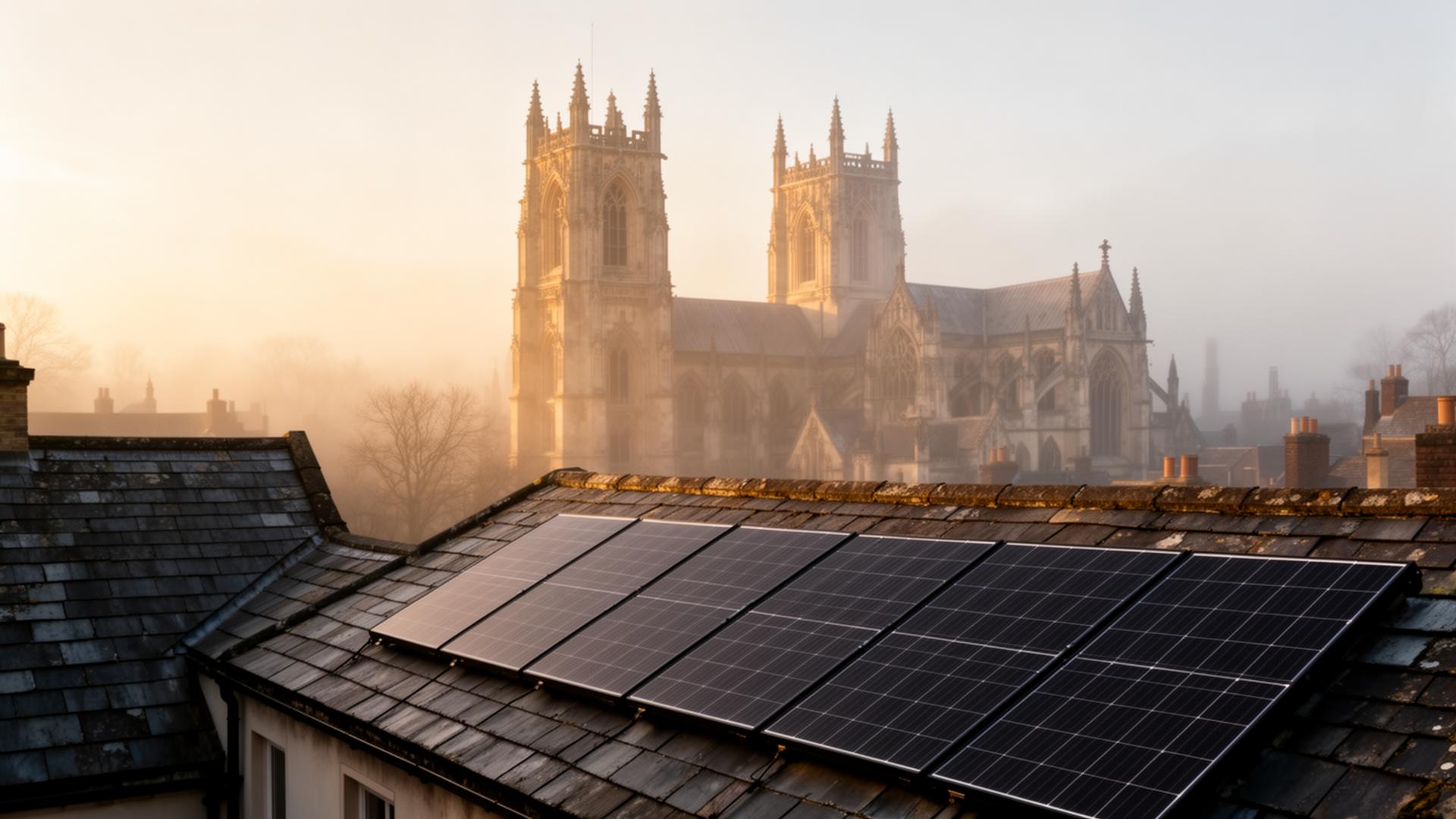
Let There Be Light: York Minster and the cathedral as civic leader
184 panels, £20,000 saved in six months, and a signal from the institution that has watched the British landscape the longest.

Shade as a Resource: agrivoltaics for British vineyards
What a 2018 Oregon study tells us, and what it doesn't, about putting solar above vines.
SEG, PPAs and the rise of symmetric pricing
Three layers for selling solar back to the grid, and a fourth idea that aligns the home with the system operator.
Mini Rails vs Long Rails
The mounting structure is the second-largest source of embodied carbon in a solar system. Two short profiles or one long one, it matters.
Playing the DNO: how to fast-track a slow connection
You can't choose your Distribution Network Operator. You can choose how you submit, and that is usually the whole game.

Biodiversity Net Gain: the 10% that changes the maths
Statutory BNG is now the law for almost every piece of development in England. For solar, it is an opportunity hiding inside an obligation.
Reclaiming VAT on farm solar
Solar panels are plant and machinery. For most VAT-registered farms, that means the 20% input tax comes back, and capital allowances stack on top.
East-West arrays: the economics on constrained UK sites
Lower yield per panel, higher revenue per hectare. Why midday peaks are now a liability.

The hop garden that became a power station
977 kWp seven metres above a working hop garden. What Fraunhofer's HoPVen trial means for British growers, and what it doesn't yet prove.
Should you wait for better panels?
Cadmium telluride is real, cheap at gigawatt scale and not sold to you. The choice on a British roof is which silicon, and why we specify glass-glass.
The hill made of rubbish that pays rent
New Haven put 1,900 panels on a capped landfill. Britain has twenty thousand of these hills and no policy pointing at one of them.