The best-defended solar site in Britain is behind an airport fence.
One owner, one boundary, a large continuous load, and kilometres of mown grass that can never be built on. An airport is a microgrid that has not been asked to behave like one yet.
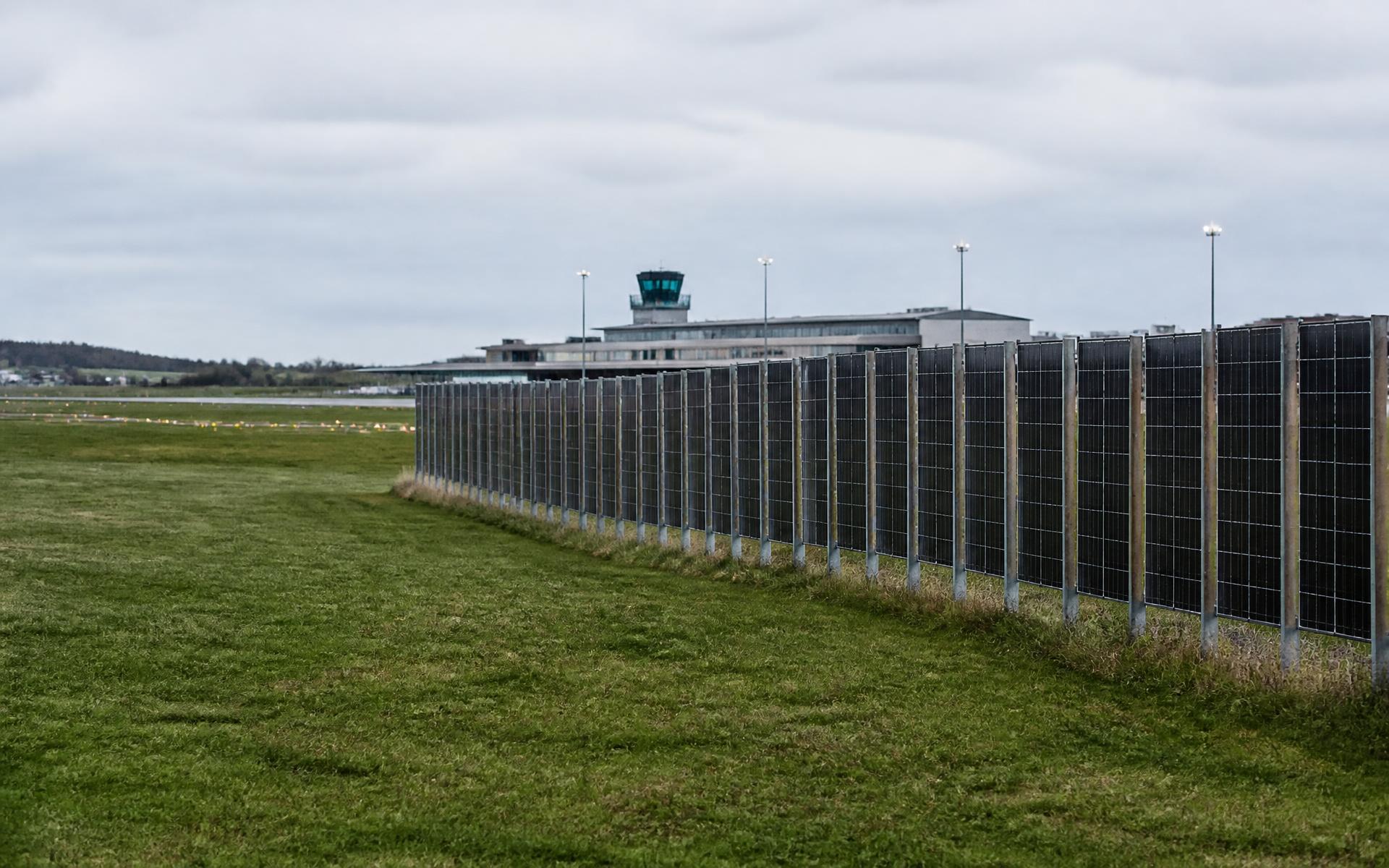
An airport operator is a steward before it is an energy buyer. It holds a piece of national infrastructure, a large part of a local economy, and a boundary that most of its neighbours will never cross. Very little of what happens inside that boundary is optional, which is exactly why the things that are optional deserve attention.
Electricity is one of them. An airport buys a great deal of it, continuously, at commercial retail prices, and it does so on a site that already has more of the ingredients of a microgrid than almost any farm or factory we work on: a single freeholder, a private distribution network behind one or two grid connections, standby generation, and an engineering team whose instinct is redundancy rather than novelty.
The arithmetic that governs everything else is the one we set out in use them where you make your own electrons. A unit made and used inside the fence displaces the full delivered price of electricity. The same unit exported earns a wholesale-linked rate, often three or four times less. An airport has the rare luxury of a load big enough to swallow almost everything it can make.
The land nobody can use
Walk the boundary of any regional airport and count the ground that is maintained but not used: the grass between taxiways, the strip inside the perimeter road, the noise bunds, the long car parks, the land under the approach that will never carry a building. It is mown at a cost every year and earns nothing.
This is the same argument we make about a capped landfill: the best solar site is usually the one with no competing use and a load nearby. An airfield has both, plus a security fence, a manned gate and CCTV already paid for. It is the best-defended solar site in the country and it is being cut with a tractor.
Why the panels stand up
The obvious answer, a field of tilted rows, is usually the wrong one airside. Flat, mown, drivable ground has operational value in itself, and anything that sits in the middle of it becomes a wildlife habitat, a snow trap and an obstruction argument.
A vertical bifacial fence line avoids most of that. Modules stood upright, glass on both faces, in a line along a boundary or between car park bays. The footprint is measured in centimetres. The mowing line stays clear. Snow does not sit on it. Sheep and machinery pass either side. And because it faces east and west rather than up, its output has two peaks, one in the morning and one in the late afternoon, instead of a single spike at noon.
That shape is worth money, for the reason set out in East-West arrays: every south-facing array in the country peaks at the same hour, and the market has responded by making that hour the least valuable one in the day. Airports are busiest at the shoulders, early departures and evening arrivals. Generation that arrives at the same time as the load is worth more than generation that arrives in a heap at midday and has nowhere to go.
The precedent is not theoretical. A major continental hub has run vertical bifacial fencing alongside its airfield infrastructure, on ground that had to stay clear, and it is producing. What that installation demonstrates is not a technology but a permission: an aerodrome safety case can be written for panels stood on end near operational surfaces.
Safeguarding comes first, not last
On any other site, planning is the gate. On an airfield, safeguarding is, and it should be engaged before a single layout is drawn. In practice that means four conversations.
None of these are reasons not to build. They are reasons to have the safeguarding manager in the room on day one rather than month nine, and to accept that the layout will be decided by the airfield rather than by the yield model. We would rather lose ten per cent of the generation and keep the scheme.
Foundations matter here too. Safeguarded land is land you may want back, and driven or wound-in ground screws can be unwound and the ground handed over as it was, which is a much easier conversation with an operations director than a line of concrete pads across the grass.
Where the electricity should go
In order, best first, because the order is the whole business case.
The terminal. Lighting, baggage systems, air handling, jet bridges, catering, IT rooms. A continuous base load, on the same site, at retail prices. Every unit that goes here is worth the most.
Ground support equipment and vehicles. Tugs, belt loaders, steps, buses and airside vans are electrifying, and the charging profile is dominated by turnaround gaps and overnight. Airports that electrify without generating simply move a fuel bill into an electricity bill and add a peak charge on top.
Passenger and staff charging. A car park is already a captive dwell of two hours to two weeks. Charging that is fed partly from the fence line beside it is both the cheapest kilowatt and the most visible one.
Batteries, for resilience as much as arbitrage. Peak shaving on the capacity charge, a smoother ride through the shoulders, and a genuine improvement to resilience that sits alongside standby generation rather than replacing it.
Then the neighbours. Cargo sheds, hotels, the maintenance apron, the business park at the gate. These buy at retail from a supplier today and sit within a few hundred metres of the generation, which is the private wire case in its simplest form. Export is what is left after all of that, not the plan.
The connection itself is usually the pinch point, and it is worth knowing early whether you are adding load, adding export, or both. That is a DNO conversation best had with a complete application rather than an optimistic one, and you can check the network at your postcode before spending anything.
The honest objections
Airside works are slow and expensive. Escorts, permits, night possessions, foreign object debris discipline. A cable run that costs a pound a metre on a farm does not cost a pound a metre across an operational apron. Price the access, not just the kit.
Airfield grassland is managed for bird hazard, not for wildflowers, so the biodiversity net gain story that works on a farm has to be rewritten here. The uplift is real but it has to be designed with the hazard management plan, not against it, and it may belong on the landside estate.
And solar does not touch the aircraft. It is worth saying plainly, because a scheme sold as decarbonising aviation will be judged against a standard it cannot meet. This decarbonises the airport as a building and a vehicle fleet, and it hedges a large operating cost for twenty-five years. That is enough.
An airport already owns the land, the load and the fence. All that is missing is the line along it.
We design and install for the people stewarding Britain's landscape and built environment, and an airfield is one of the largest single pieces of both that anyone is asked to look after. If you hold one, the first conversation is short: how long is your boundary, what does your half-hourly load look like, and who inside the organisation says yes to safeguarding.
Common questions
Can you put solar panels on an airfield?
Yes, and several European airports already have. The land inside an airport boundary is mown, undevelopable and sits next to a large continuous electrical load, which makes it unusually good solar ground. What governs the layout is not planning in the ordinary sense but aerodrome safeguarding: obstacle limitation surfaces, radar and instrument landing system clearances, glint and glare, and bird strike. Those are agreed with the airport's own safeguarding process before anything is priced.
Do solar panels cause glare for pilots?
Modern modules are designed to absorb light rather than reflect it, and reflect less than water, wet tarmac or a glasshouse roof. The risk is still assessed formally through a glint and glare study against approach paths and the control tower, and it is one of the reasons vertical panels suit airfields: standing upright, they present an edge to the sky rather than a face, and their reflections stay low and horizontal.
Why use vertical solar panels at an airport?
A vertical bifacial fence line generates on both faces, peaks in the morning and again in the late afternoon rather than at midday, takes a footprint measured in centimetres, keeps the mowing line clear, sheds snow, and does the job of a fence or a screen at the same time. On an airfield, where flat ground must stay flat and usable, a line rather than a field is often the only shape that works.
How much of an airport's electricity could it generate itself?
It depends on the boundary length, the available grass and the size of the terminal load, but the point is the value rather than the fraction. A unit generated and used inside the fence displaces electricity bought at the full delivered retail price, typically three to four times what the same unit would earn if it were exported, so the first megawatt of self-consumption is worth far more than the last megawatt of export.
Two minutes, three questions. No sales calls unless you ask for one.
In short
An airport is a microgrid in everything but name: one freeholder, a private network behind one or two grid connections, a large continuous terminal load, and kilometres of mown grass that can never be built on. Vertical bifacial fence lines suit airfields because they take almost no footprint, keep operational ground clear, present an edge rather than a face to the sky, and generate in the morning and late afternoon when an airport is busiest. Safeguarding, obstacle limitation surfaces, glint and glare, radar clearance and bird hazard set the layout before the yield model does.
Common questions
Can you put solar panels on an airfield?
Yes. Airport land is mown, undevelopable and sits beside a large continuous load, which makes it good solar ground. The layout is governed by aerodrome safeguarding rather than ordinary planning: obstacle limitation surfaces, radar and instrument landing system clearance, glint and glare, and bird hazard management.
Do solar panels cause glare for pilots?
Modules are designed to absorb rather than reflect light and reflect less than water or wet tarmac, but the risk is still assessed formally through a glint and glare study against every approach path and the control tower. Vertical panels help, because standing upright they present an edge to the sky and their reflections stay low and horizontal.
Why use vertical solar panels at an airport?
A vertical bifacial fence line generates on both faces, peaks morning and late afternoon rather than at midday, occupies centimetres of ground, sheds snow, keeps the mowing line clear and doubles as a fence or screen. On an airfield, where flat ground must stay flat and drivable, a line is often the only workable shape.
Do solar panels interfere with airport radar?
Primary and secondary surveillance radar, instrument landing systems and navigation aids all have protection zones, and any structure inside one needs assessment. Panels are low and non-metallic in their working face, so the usual finding is no effect, but the mounting steel, cabling runs and inverter cabinets are assessed with the array rather than after it.
Who owns the electricity from an airport solar array?
Usually the airport itself, because a single freeholder sits next to a large continuous load behind one or two grid connections. That is why airfield solar tends to be sized to the terminal's own demand rather than to an export tariff, which makes each unit worth the retail price avoided rather than the wholesale price earned.
Continue reading
All essays →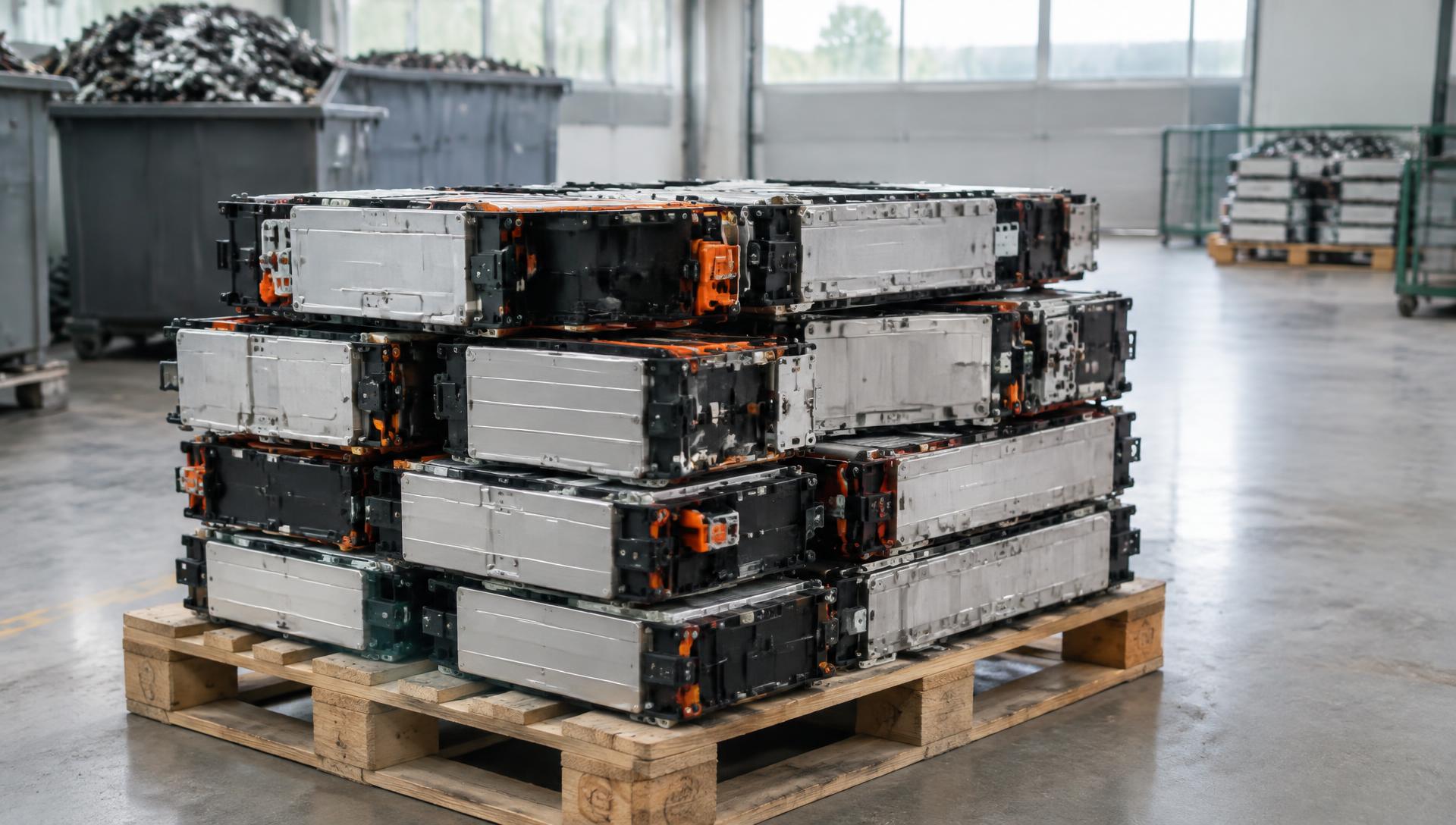
What happens to a home battery at the end of its life?
Extend first, recycle second, landfill never. Tesla's published end-of-life policy, and what to ask before you buy any battery.
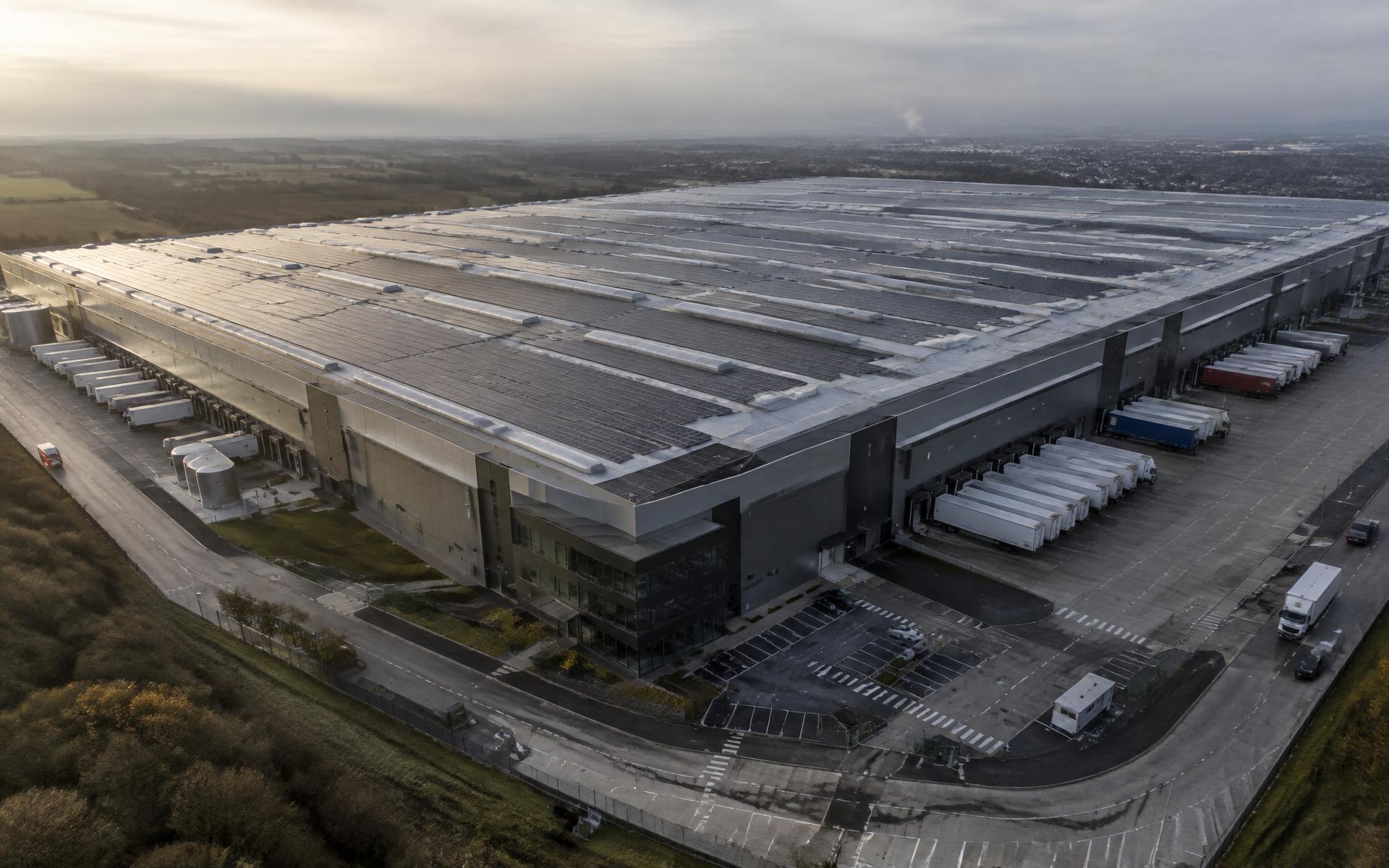
Solar on an east-west facing roof
Ten to twenty per cent less per panel, twice the roof to use, and output across the whole working day. The plain answer for a building that doesn't face south.
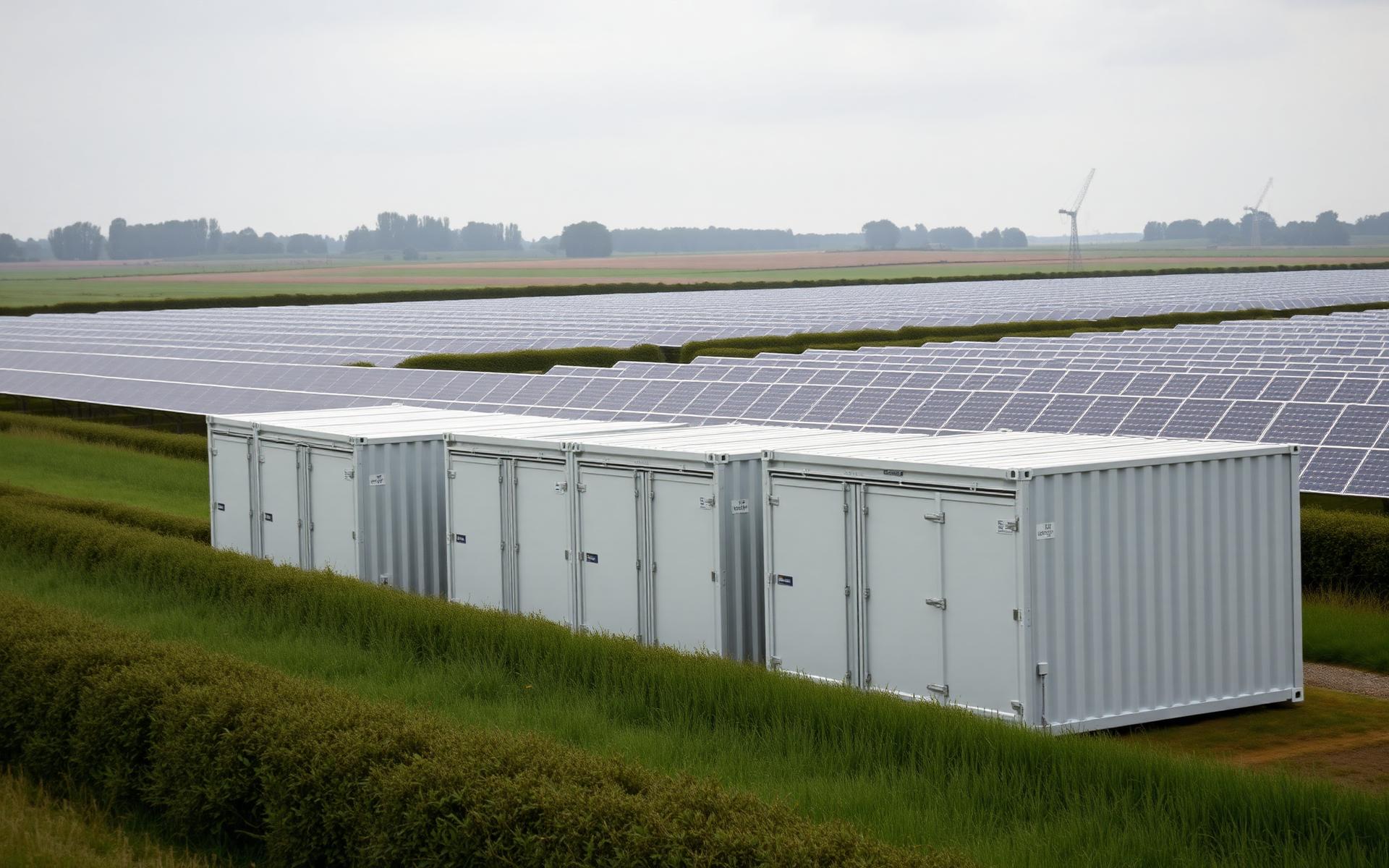
Use them where you make your own electrons
Serve the businesses next door over private wire, then let containerised compute eat whatever the grid won't take.

The eclipse and the grid
A predictable dive in national solar, a kettle surge on the other side, and a free rehearsal for every ordinary evening.
Why 1% of the UK is all we need
We don't have a land problem. We have a coordination problem.

Fragmented Funding
The capital is already there. It's just scattered across six different desks.

Powering the Future: Community Bonds
What if a community could keep the returns on its own infrastructure?
Why Ground Screws are the Future of UK Commercial Solar Farms
Time is capital. Earth is an asset. Concrete is a liability.
Local Net Zero: the support already on the table
Hubs, Accelerators, Great British Energy, the Community Fund, what's on offer, and how to find the door.
Global Quality, Local Installation
Why we install Tesla, and what a four-Powerwall replacement says about backing customers for decades.

The Evolution of Work: From Watt to Joule
Joule gave the scientific 'why' to the practical 'how' Watt had already commercialized, and that's why your bill is in kWh.
Let There Be Light: York Minster and the cathedral as civic leader
184 panels, £20,000 saved in six months, and a signal from the institution that has watched the British landscape the longest.

Shade as a Resource: agrivoltaics for British vineyards
What a 2018 Oregon study tells us, and what it doesn't, about putting solar above vines.
SEG, PPAs and the rise of symmetric pricing
Three layers for selling solar back to the grid, and a fourth idea that aligns the home with the system operator.
Mini Rails vs Long Rails
The mounting structure is the second-largest source of embodied carbon in a solar system. Two short profiles or one long one, it matters.
Playing the DNO: how to fast-track a slow connection
You can't choose your Distribution Network Operator. You can choose how you submit, and that is usually the whole game.
Biodiversity Net Gain: the 10% that changes the maths
Statutory BNG is now the law for almost every piece of development in England. For solar, it is an opportunity hiding inside an obligation.
Reclaiming VAT on farm solar
Solar panels are plant and machinery. For most VAT-registered farms, that means the 20% input tax comes back, and capital allowances stack on top.
East-West arrays: the economics on constrained UK sites
Lower yield per panel, higher revenue per hectare. Why midday peaks are now a liability.
The hop garden that became a power station
977 kWp seven metres above a working hop garden. What Fraunhofer's HoPVen trial means for British growers, and what it doesn't yet prove.
Should you wait for better panels?
Cadmium telluride is real, cheap at gigawatt scale and not sold to you. The choice on a British roof is which silicon, and why we specify glass-glass.
The hill made of rubbish that pays rent
New Haven put 1,900 panels on a capped landfill. Britain has twenty thousand of these hills and no policy pointing at one of them.